
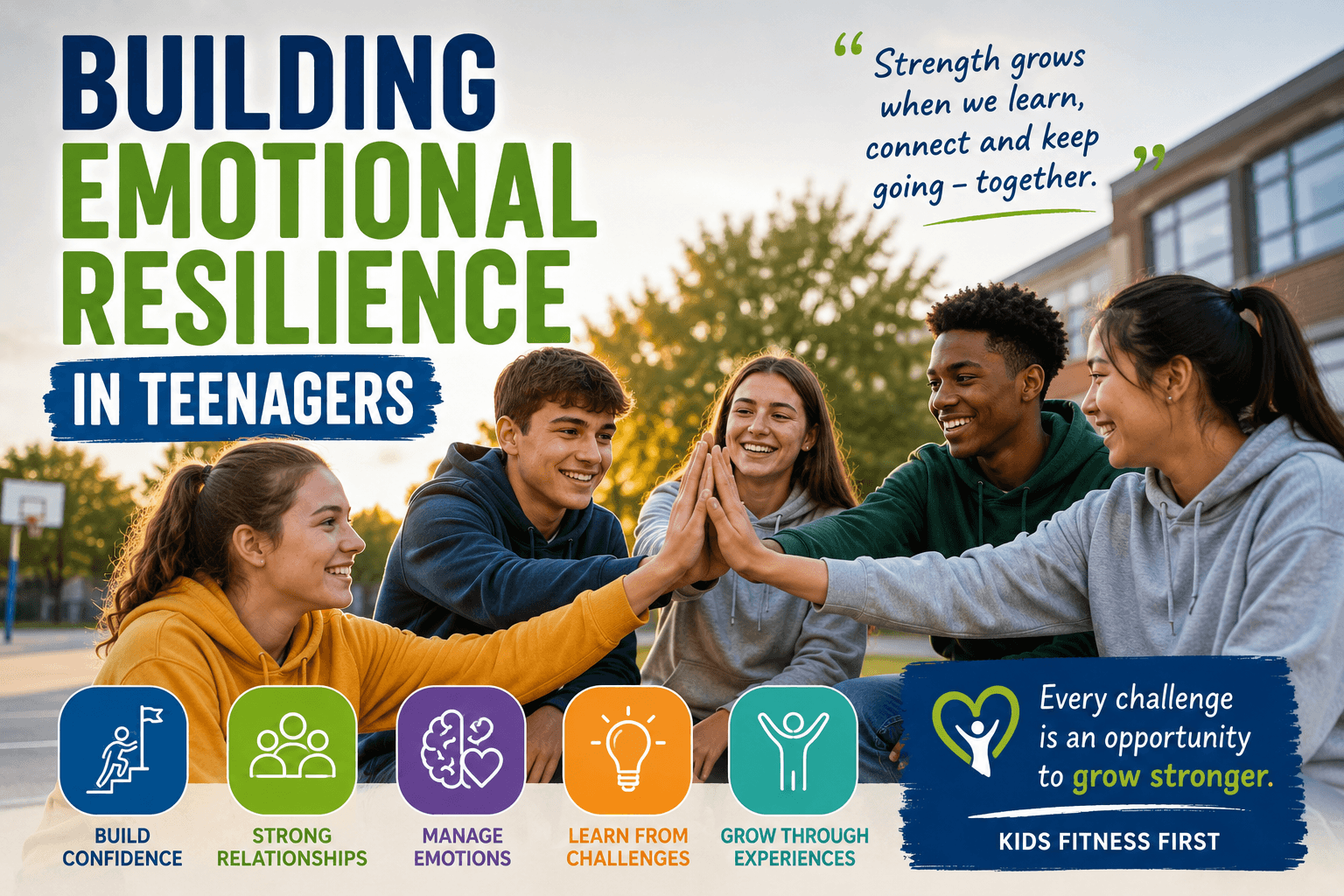
Building Emotional Resilience in Teenagers
Every young person experiences challenges as they grow. Building emotional resilience in teenagers is not about avoiding difficulties but about helping young people develop the confidence, adaptability and self-belief to respond positively when life becomes challenging.
Teenagers encounter many new experiences, including changing friendships, increasing academic expectations, growing independence and important decisions about their future. Although these experiences can sometimes feel overwhelming, they also provide valuable opportunities for learning and personal growth.
Parents, teachers and communities all play an important role in helping teenagers build resilience. By creating supportive environments that encourage participation, reflection and confidence, adults can help young people develop skills that benefit them throughout life. For the wider framework connecting resilience with confidence, communication, self-discipline, teamwork and other capabilities, see our Teen Life Skills and Development guide.
Why Building Emotional Resilience in Teenagers Matters
Building emotional resilience in teenagers prepares young people for the natural ups and downs of everyday life.
Resilience is not a fixed personality trait. Instead, it develops gradually through positive experiences, supportive relationships and opportunities to solve problems independently.
When teenagers believe they can learn from challenges, they often become more willing to try new activities, explore different interests and continue learning even when something feels difficult.
Confidence Grows Through Experience
Confidence is rarely created by simply being told to “believe in yourself.”
Instead, confidence develops through experience.
Every completed project, successful conversation, team activity or new achievement adds another layer of self-belief.
Likewise, small setbacks often become valuable learning experiences when adults encourage reflection rather than criticism.
For this reason, teenagers benefit from environments where effort is recognised alongside achievement.
Encouraging Positive Problem-Solving
Helping teenagers solve problems independently is one of the most effective ways to strengthen resilience.
Parents and teachers can support this by asking questions such as:
- What options do you have?
- What worked well before?
- What could you try differently next time?
- Who could help you?
- What have you learned from this experience?
Rather than providing every answer, these conversations encourage young people to develop their own confidence and decision-making skills.
Building Emotional Resilience in Teenagers Through Participation
Building emotional resilience in teenagers is closely connected to participation.
Taking part in sports, creative activities, volunteering, clubs and community projects allows young people to experience success, teamwork and responsibility.
Participation also helps teenagers discover interests and strengths that may not always be visible in traditional classroom settings.
Every positive experience contributes to long-term confidence.
The Value of Supportive Relationships
Positive relationships provide one of the strongest foundations for resilience.
Teenagers benefit from adults who:
- Listen without judgement.
- Encourage open conversations.
- Recognise individual strengths.
- Celebrate progress.
- Provide consistent support.
- Model calm and respectful behaviour.
Feeling understood helps young people approach challenges with greater confidence.
Why Mistakes Are Valuable Learning Opportunities
Every successful adult has learned through mistakes.
Teenagers should understand that mistakes are a natural part of learning rather than something to fear.
When adults respond calmly and positively, setbacks become opportunities to develop perseverance, creativity and problem-solving skills.
This mindset supports long-term resilience far more effectively than expecting perfection.
Schools Can Help Build Emotional Resilience
Schools provide daily opportunities for resilience to develop.
Teachers can encourage emotional growth by:
- recognising effort;
- encouraging teamwork;
- allowing different ways to demonstrate learning;
- providing constructive feedback;
- creating respectful classroom environments; and
- celebrating diverse strengths.
These everyday experiences help students develop confidence that extends beyond academic success.
Looking Towards the Future
The future will continue to present new opportunities and challenges.
Teenagers who develop resilience are often better prepared to adapt, continue learning and approach change with confidence.
Building resilience does not require extraordinary events.
Instead, it grows through everyday encouragement, positive relationships, meaningful participation and opportunities to discover personal strengths.
Conclusion
Building emotional resilience in teenagers is one of the greatest gifts parents, teachers and communities can provide.
By encouraging participation, recognising strengths, supporting independence and creating positive environments, adults help young people develop confidence that lasts well beyond their teenage years.
Every conversation, every opportunity and every encouraging word contributes to that journey.
Disclaimer
This article is provided for educational and informational purposes only. It does not provide medical, psychological or diagnostic advice. Every young person develops differently. If you have concerns about a child’s wellbeing, please seek advice from an appropriately qualified professional.