
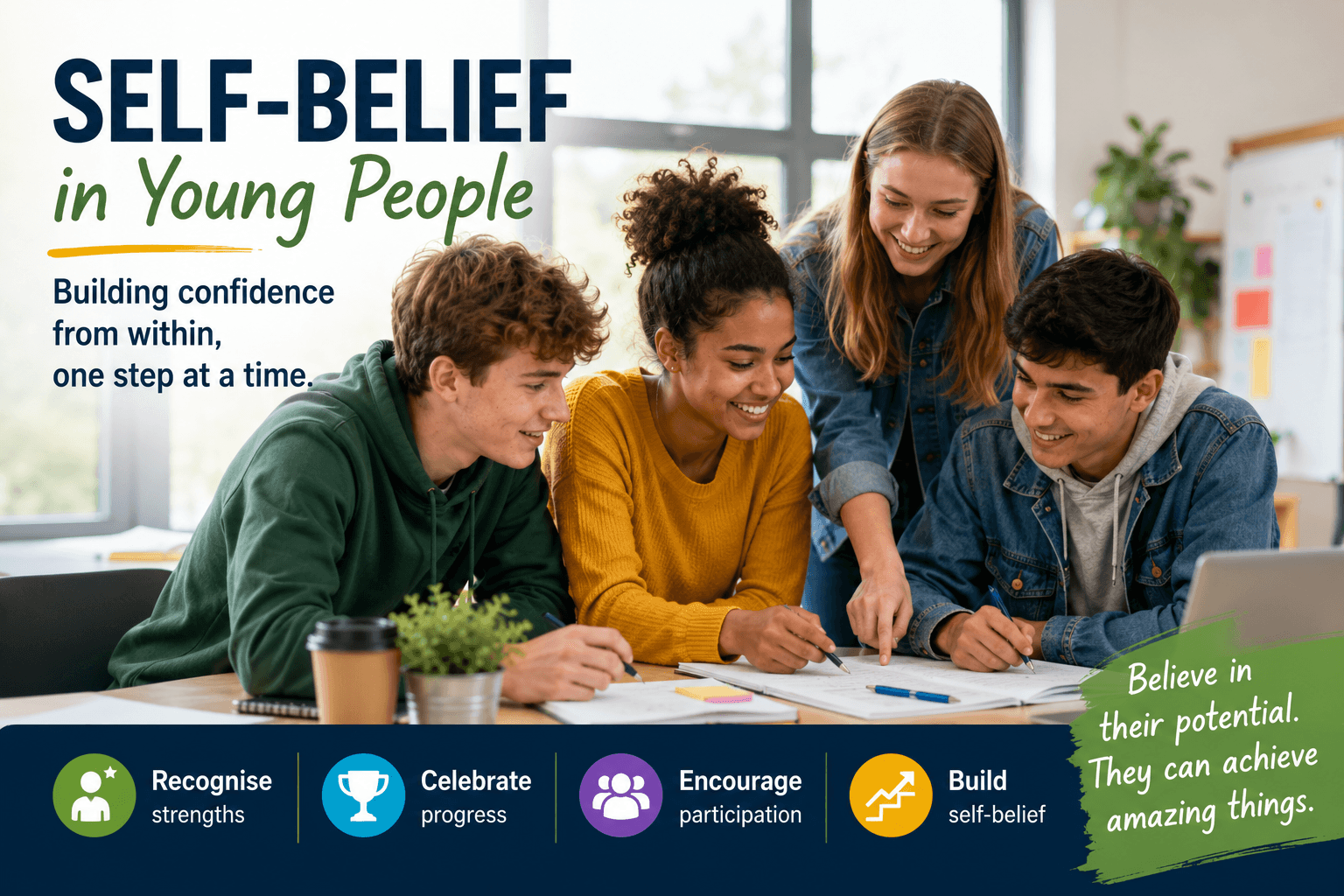
Self-belief in young people can influence many areas of life, including learning, relationships, decision-making and personal growth. While confidence is often visible through actions and behaviour, self-belief begins internally. It is the quiet understanding that challenges can be faced, new skills can be learned and mistakes do not define a person’s future. For the wider development pathway, see our Teen Life Skills and Development guide.
Many parents and teachers focus on achievement. However, achievement alone does not always create lasting confidence. Instead, self-belief often develops through experiences that help young people recognise their strengths, overcome obstacles and contribute in meaningful ways.
As a result, helping young people build self-belief may be one of the most valuable gifts adults can provide.
Understanding Self-Belief in Young People
Self-belief is not about thinking that everything will always go well.
Rather, it involves trusting that effort, learning and persistence can help someone move forward even when things are difficult.
For example, a teenager may feel nervous about speaking in front of a group. Nevertheless, if they believe they can learn and improve, they are more likely to take part. Over time, each positive experience strengthens that belief.
Consequently, self-belief grows through action rather than simply through encouragement.
Why Some Young People Doubt Their Abilities
Many young people compare themselves with others.
Social media, academic pressures and everyday expectations can sometimes create unrealistic standards. Furthermore, children often notice what they find difficult long before they recognise their strengths.
This can create a cycle where confidence gradually decreases.
However, self-belief is not fixed. It can develop throughout life when young people experience support, encouragement and opportunities to succeed.
How Positive Experiences Build Self-Belief
Every success story begins with a first step.
Importantly, success does not need to be dramatic. Small achievements often have the greatest long-term impact.
For instance:
- Completing a challenging task
- Learning a new skill
- Helping another person
- Contributing to a team
- Solving a problem independently
- Speaking up with an idea
Each experience provides evidence that effort can lead to progress.
Therefore, creating opportunities for these moments can help strengthen self-belief over time.
The Role of Strengths
One of the most effective ways to build self-belief is through strengths-based development.
When young people spend time using their natural abilities, they often experience greater engagement and enjoyment. In addition, they are more likely to recognise their own potential.
This does not mean ignoring challenges.
Instead, it means ensuring that strengths receive attention alongside areas that require development.
A teenager who enjoys creative thinking may build confidence through art, design or problem-solving. Similarly, another young person may discover confidence through sport, leadership or practical projects.
Why Mistakes Are Part of Growth
Many adults unintentionally send the message that mistakes should be avoided.
Yet mistakes often provide some of the most valuable learning opportunities.
When young people understand that setbacks are part of growth, they become more willing to try new things.
For example, learning a musical instrument involves many mistakes before improvement becomes visible. Likewise, developing sporting skills requires repeated practice and adjustment.
Therefore, helping young people view mistakes as learning opportunities can strengthen self-belief and resilience.
How Parents Can Support Self-Belief in Young People
Parents play an important role in shaping how young people see themselves.
First, recognise effort as well as outcomes.
Secondly, encourage independence where appropriate. Allowing children to solve problems and make decisions helps them develop confidence in their abilities.
Additionally, celebrate progress. Improvement often matters more than perfection.
Most importantly, create an environment where young people feel valued for who they are rather than only for what they achieve.
How Teachers Can Encourage Self-Belief
Teachers influence self-belief every day.
A supportive comment, an opportunity to contribute or recognition of a student’s strengths can have a lasting impact.
Furthermore, providing varied opportunities for success helps more young people experience achievement.
For example, some students shine through presentations, while others excel through practical work, creativity, teamwork or leadership.
As a result, a strengths-based approach can help a wider range of young people develop confidence.
Self-Belief in Young People and Future Success
The future will present many opportunities and challenges.
Young people who believe in their ability to learn, adapt and contribute are often better prepared to navigate change.
Importantly, self-belief does not guarantee success. However, it encourages persistence, curiosity and willingness to keep moving forward.
These qualities often prove valuable throughout education, employment and personal life.
Building a Strong Foundation
Self-belief develops gradually.
It grows through supportive relationships, meaningful experiences and opportunities to recognise strengths.
While every young person follows a different path, the underlying principle remains the same. When young people believe their actions can make a difference, they become more willing to participate, contribute and grow.
Therefore, parents, teachers and communities all have a role to play in helping young people build this foundation.
Final Thoughts
Self-belief in young people is not about perfection, popularity or constant success.
Instead, it is about helping young people understand that they are capable of learning, improving and making valuable contributions.
By recognising strengths, encouraging participation and supporting personal growth, adults can help young people develop the confidence they need to face future challenges and opportunities.
The journey may begin with a small step. However, the impact of self-belief can last a lifetime.
Disclaimer
This article is provided for educational and informational purposes only. It does not provide medical, psychological, diagnostic or professional advice. Every child is unique, and individual experiences may vary. If you have concerns about a child’s development, learning or wellbeing, please seek guidance from an appropriately qualified professional.