
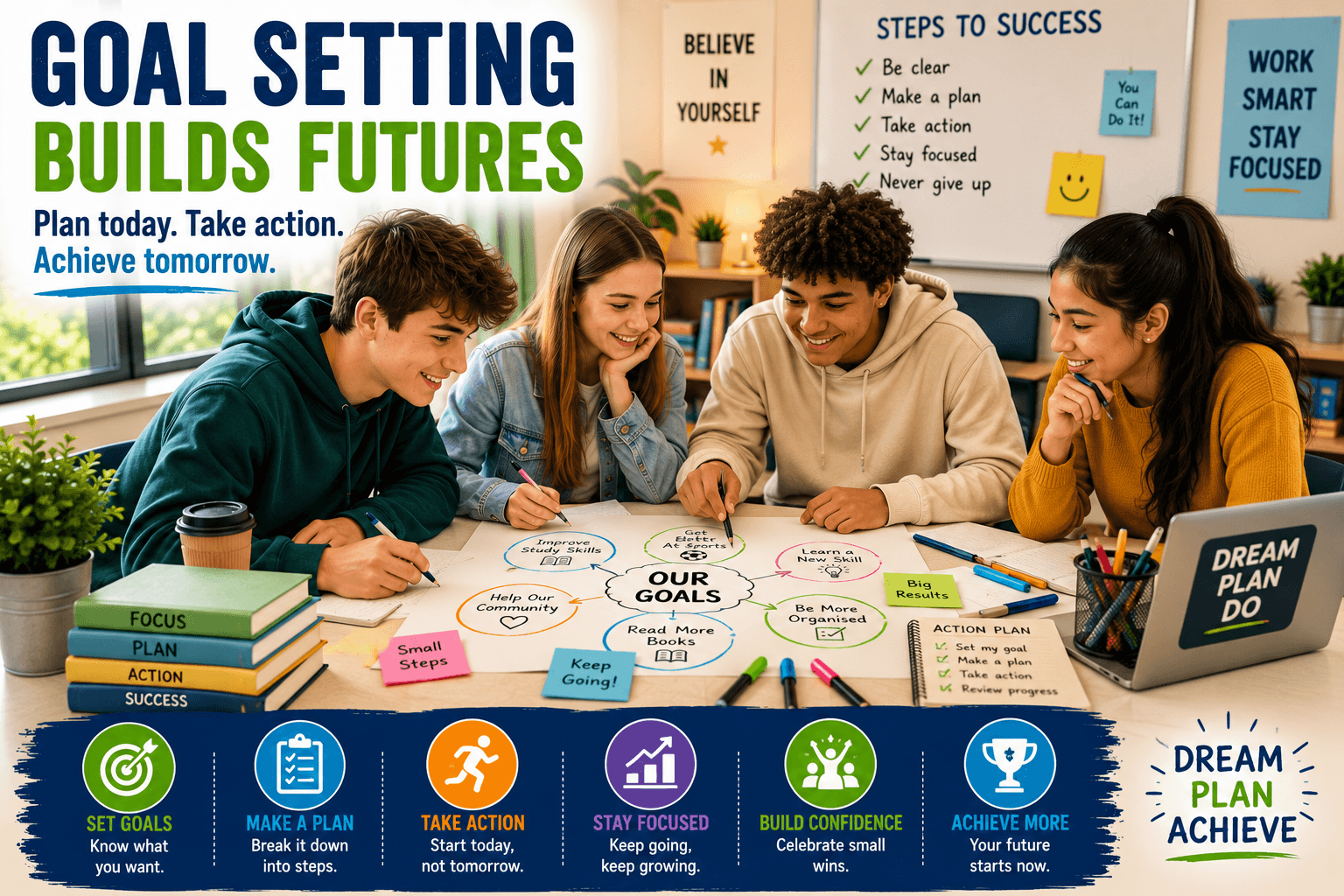
A Practical Goal-Setting Framework for Teenagers
This guide focuses on the practical mechanics of goal setting for teenagers: choosing a clear objective, breaking it into manageable steps, reviewing progress and adjusting the plan. It is designed as a step-by-step framework rather than a general discussion of motivation or ambition.
Teenagers often have exciting ideas about what they would like to accomplish. However, turning those ideas into realistic plans requires guidance, practice and encouragement. Parents, teachers and other trusted adults play an important role by helping young people understand that success is usually built through consistent effort rather than instant results.
Developing goal-setting skills is not about placing pressure on teenagers or expecting perfection. Instead, it is about helping them recognise their strengths, organise their thinking and build confidence by working towards meaningful objectives one step at a time.
When young people experience progress through their own efforts, they develop motivation that can support learning and personal growth throughout life.
Why Goal-Setting Skills in Teenagers Matter
Goal-setting skills in teenagers help young people move from simply wishing for something to taking practical steps towards achieving it.
Goals provide direction. They encourage planning, decision-making and responsibility while helping teenagers understand how today’s actions influence tomorrow’s opportunities.
Young people who practise setting realistic goals often become more organised, motivated and confident because they can see their progress over time.
Goal setting also encourages perseverance. Rather than giving up when something becomes difficult, teenagers learn to adjust their plans, review their progress and continue moving forward.
Different Teenagers Set Goals Differently
Every teenager approaches goals in their own way.
Some prefer detailed plans with clear deadlines, while others enjoy working towards flexible long-term ambitions. Some are motivated by teamwork, whereas others enjoy personal challenges.
Neither approach is automatically better than another.
A strengths-based approach recognises these individual differences and encourages teenagers to discover planning methods that suit their personalities, interests and learning preferences.
Adults should focus less on comparing young people and more on helping each individual develop their own path towards success.
Goal-Setting Skills in Teenagers Begin with Purpose
Meaningful goals usually begin with a simple question:
“Why does this matter to me?”
Teenagers are far more likely to remain motivated when goals connect with their own interests and values.
Parents and teachers can encourage this by asking:
- What would you like to achieve?
- Why is this important to you?
- What interests you most?
- What difference would achieving this goal make?
- What strengths could help you?
These conversations encourage reflection while helping teenagers take ownership of their ambitions.
Breaking Big Goals into Smaller Steps
Large goals can sometimes feel overwhelming.
Fortunately, breaking a goal into smaller, manageable steps often makes it easier to begin.
For example, instead of saying:
“I want better exam results.”
A teenager might create smaller goals such as:
- Study for 30 minutes each evening.
- Complete one practice paper each week.
- Ask for help when needed.
- Review progress every Friday.
Small successes build momentum.
Over time, these individual achievements create confidence and encourage continued effort.
Learning Through Progress
Goal setting is not simply about reaching the finish line.
The journey itself provides valuable learning opportunities.
Teenagers develop important life skills including:
- planning;
- organisation;
- time management;
- communication;
- perseverance;
- flexibility;
- self-reflection.
Even when goals change, these skills remain valuable.
The Importance of Reviewing Goals
Successful goal setting includes regular reflection.
Teenagers benefit from asking themselves:
- What progress have I made?
- What has worked well?
- What challenges have appeared?
- Do I need to adjust my plan?
- What have I learned?
Reviewing goals helps young people understand that adapting a plan is often a sign of good judgement rather than failure.
Goal-Setting Skills in Teenagers at School
Schools provide excellent opportunities for teenagers to practise goal setting.
Teachers can encourage this by helping students:
- set personal learning objectives;
- plan longer projects;
- monitor their own progress;
- reflect after completing assignments;
- celebrate improvement as well as achievement.
These experiences prepare young people for further education, employment and lifelong learning.
The Role of Parents
Parents help teenagers build confidence by supporting goals without taking over.
Helpful approaches include:
- listening carefully;
- encouraging realistic planning;
- recognising progress;
- celebrating effort;
- discussing setbacks positively;
- helping teenagers reflect on lessons learned.
This balanced support allows independence to develop naturally.
When Goals Change
Sometimes goals need to change.
New opportunities arise.
Interests develop.
Circumstances change.
Adjusting a goal does not mean giving up.
Instead, it demonstrates flexibility, self-awareness and good decision-making.
Helping teenagers understand this reduces unnecessary pressure while encouraging resilience.
Looking Towards the Future
Goal setting prepares young people for adult life.
Whether they continue into education, employment, apprenticeships, volunteering or entrepreneurship, the ability to plan, organise and work towards meaningful objectives remains valuable throughout life.
Every goal achieved also increases confidence to tackle future challenges.
Conclusion
Goal-setting skills in teenagers develop through encouragement, experience and regular practice.
Parents, teachers and communities can help young people build these skills by encouraging meaningful goals, recognising progress and celebrating effort alongside achievement.
The objective is not perfection.
Instead, it is helping teenagers develop confidence, independence and motivation that will support them throughout their lives.
Every achievement begins with a single step, and every teenager deserves the opportunity to take that step with confidence.
Suggested Internal Links
- Decision-Making Skills in Teenagers: Supporting Thoughtful and Independent Choice
- Problem-Solving Skills in Children: Building Confidence Through Everyday Challenges
Disclaimer
This article is provided for educational and informational purposes only. It does not provide medical, psychological or diagnostic advice. Every teenager develops differently. Families with specific concerns should seek guidance from an appropriately qualified professional.