
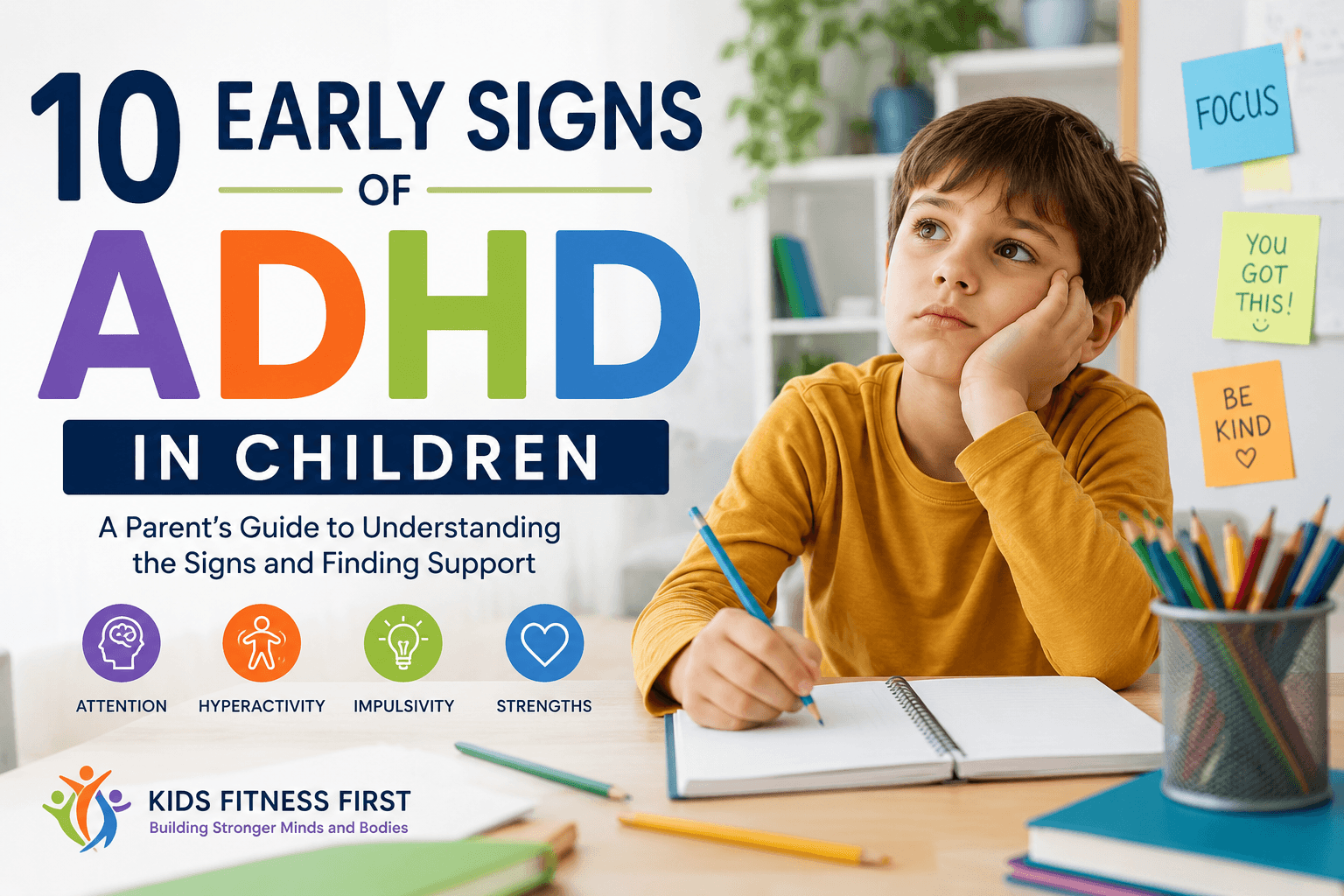
Attention Deficit Hyperactivity Disorder (ADHD) is one of the most commonly discussed neurodevelopmental conditions in children. Yet many parents still find themselves wondering whether their child’s behaviour is simply part of growing up or whether there may be something more going on.
Every child can be energetic, forgetful, distracted, or emotional from time to time. However, when these behaviours become frequent, affect daily life, and persist over time, it may be worth exploring whether ADHD could be playing a role.
It is important to remember that ADHD is not a sign of laziness, poor parenting, or a lack of intelligence. Many children with ADHD are creative, energetic, curious, and capable of achieving great things when they receive the right support.
Here are ten early signs that may indicate a child could have ADHD.
Difficulty Paying Attention
One of the most common signs of ADHD is difficulty maintaining focus.
A child may:
- Frequently daydream.
- Lose track of conversations.
- Struggle to follow instructions.
- Move quickly from one task to another.
- Become distracted by sights, sounds, or thoughts.
This is not because the child does not care. Often, their brain is processing many different things at once.
Constant Fidgeting
Many children enjoy moving around, but children with ADHD often find it especially difficult to stay still.
Parents may notice:
- Tapping fingers or feet.
- Constantly shifting position.
- Playing with objects.
- Getting up frequently when expected to remain seated.
Movement can help some children regulate their attention and energy levels.
Forgetfulness
Children with ADHD often forget things that seem simple to others.
Examples include:
- Forgetting homework.
- Misplacing school items.
- Forgetting instructions.
- Leaving belongings behind.
This can be frustrating for both the child and their parents, but it is often related to differences in working memory rather than carelessness.
Difficulty Following Instructions
A child with ADHD may appear not to listen when spoken to.
Parents might find themselves repeating instructions several times.
This can happen because the child’s attention shifts before the information has been fully processed.
Breaking instructions into smaller steps can often help.
Impulsive Behaviour
Impulsivity is another common characteristic.
A child may:
- Interrupt conversations.
- Answer questions before they are finished.
- Act without thinking about consequences.
- Struggle to wait their turn.
These behaviours are often linked to differences in self-regulation rather than intentional rudeness.
Emotional Intensity
Many children with ADHD experience emotions very strongly.
They may:
- Become upset quickly.
- React intensely to disappointment.
- Feel frustration more deeply.
- Find it difficult to calm down after becoming emotional.
Supporting emotional regulation can be just as important as supporting attention and organisation.
Problems with Organisation
Children with ADHD often struggle with planning and organisation.
Signs may include:
- Messy bedrooms.
- Lost school equipment.
- Difficulty preparing for school.
- Trouble completing tasks in sequence.
Organisation skills can improve significantly with appropriate support and routines.
Difficulty Completing Tasks
Starting a task may be easy, but finishing it can be much harder.
Parents often report that their child:
- Begins projects enthusiastically.
- Loses interest halfway through.
- Becomes distracted.
- Needs frequent reminders.
This does not mean the child lacks ability. Often, they need support with focus, structure, and motivation.
Restlessness During Quiet Activities
Some children with ADHD find quiet activities particularly challenging.
Examples include:
- Reading for long periods.
- Sitting through lessons.
- Watching a film without moving around.
- Completing lengthy homework assignments.
This can be especially noticeable in school environments.
Inconsistent Performance
One of the most confusing aspects of ADHD for many parents is inconsistency.
A child may:
- Focus intensely on activities they enjoy.
- Struggle greatly with tasks they find less interesting.
- Perform brilliantly one day and poorly the next.
This inconsistency can sometimes lead people to misunderstand ADHD.
The reality is that many children with ADHD are highly capable but find it difficult to regulate attention consistently.
Looking Beyond the Challenges
While ADHD can create difficulties, it is important to recognise that it can also bring strengths.
Many people with ADHD are:
- Creative thinkers.
- Problem solvers.
- Energetic and enthusiastic.
- Curious learners.
- Innovative and imaginative.
At Kids Fitness First, we believe it is important to focus not only on challenges but also on potential. Every child has unique abilities and talents that deserve recognition and encouragement.
What Should Parents Do Next?
If several of these signs sound familiar, it does not automatically mean your child has ADHD.
Many children display some of these behaviours from time to time. However, if the behaviours are persistent, occur in multiple settings such as home and school, and affect daily life, it may be worth seeking professional advice.
You can:
- Speak with your child’s teacher.
- Keep notes about behaviours you observe.
- Discuss concerns with a healthcare professional.
- Learn more about neurodiversity and different learning styles.
Early understanding and support can make a significant difference to a child’s confidence, wellbeing, and development.
Final Thoughts
ADHD is not simply about attention difficulties. It involves differences in how the brain processes information, manages attention, regulates emotions, and responds to the world.
Understanding these differences can help parents move from frustration to support and from confusion to confidence.
Most importantly, children with ADHD are far more than a list of symptoms. With understanding, encouragement, and the right environment, they can thrive and achieve remarkable things.
Disclaimer: This article is for educational purposes only and is not intended to replace professional medical advice, diagnosis, or treatment. If you have concerns about your child, please seek advice from a qualified healthcare professional.