
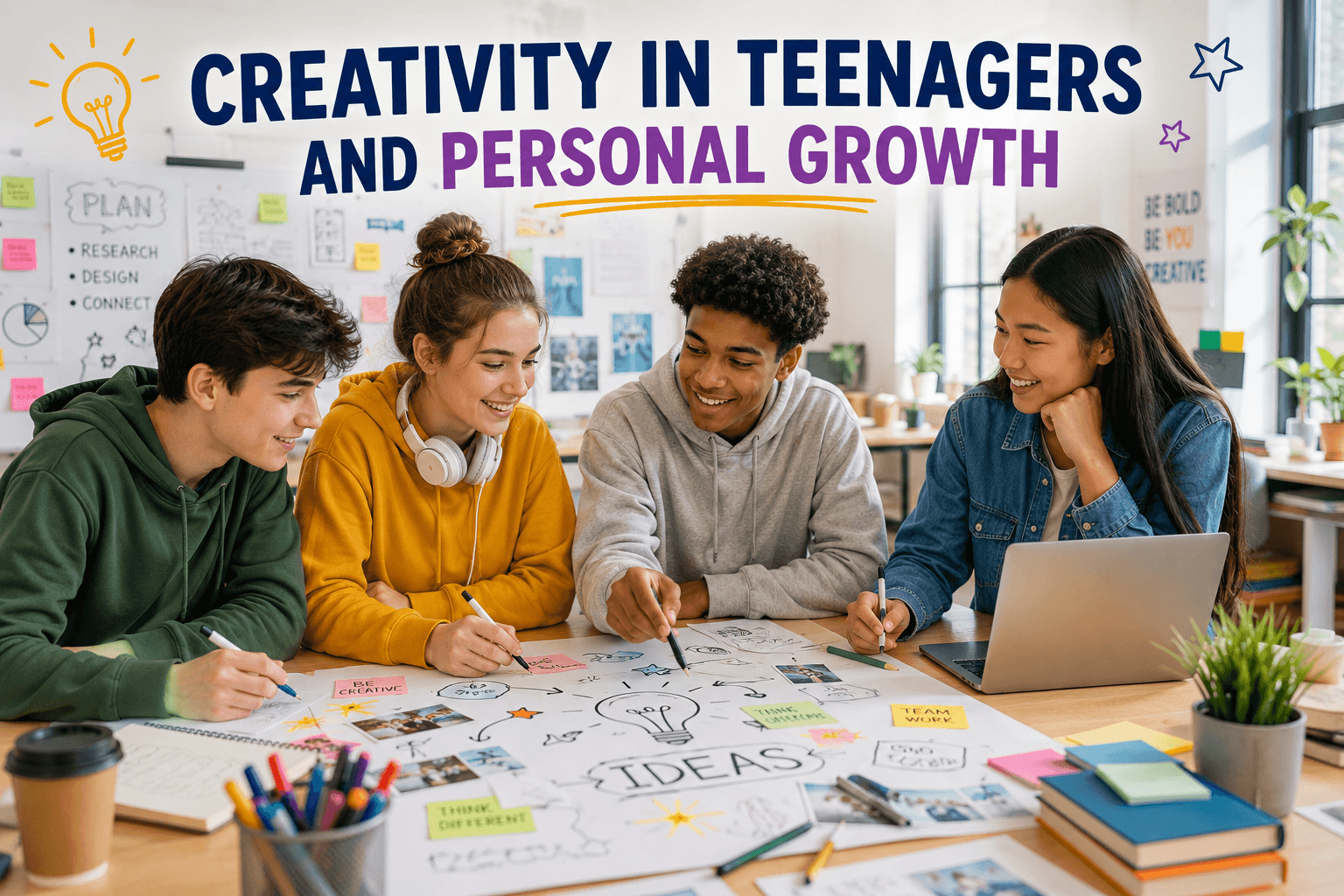
Creativity in teenagers is often associated with art, music or design. However, creativity reaches far beyond painting pictures or playing instruments. In reality, creative thinking influences how young people solve problems, communicate ideas, build confidence and engage with the world around them.
Today’s young people face a rapidly changing environment filled with information, technology and new opportunities. As a result, creativity has become one of the most valuable skills a teenager can develop. While academic achievement remains important, the ability to think differently, generate ideas and approach challenges from multiple perspectives is increasingly recognised as a key part of lifelong development.
Parents, teachers and communities all have an important role to play in encouraging creativity and helping young people discover where their strengths naturally emerge.
Understanding Creativity in Teenagers
Creativity is not limited to artistic talent.
In fact, creativity can appear in many different forms, including:
- Problem-solving
- Storytelling
- Leadership
- Innovation
- Entrepreneurship
- Design
- Communication
- Teamwork
- Scientific exploration
Some teenagers express creativity through writing or drawing. Others demonstrate creativity through practical projects, sport, technology or social activities.
Therefore, recognising creativity requires looking beyond traditional definitions.
When adults broaden their understanding of creativity, they often discover strengths that may otherwise go unnoticed.
How Creativity in Teenagers Supports Confidence
One reason creativity in teenagers is so important is its connection to confidence.
When young people have opportunities to create, experiment and contribute ideas, they begin to see that their thoughts have value.
This process helps build:
- Self-belief
- Independence
- Motivation
- Resilience
- Positive self-image
Furthermore, creative activities often provide opportunities for success that may not exist in more structured environments.
A teenager who struggles to engage with traditional classroom tasks may thrive when designing a project, creating a presentation or solving a practical challenge.
Consequently, confidence grows when strengths are recognised and encouraged.
Creativity in Teenagers and Learning
Learning is not a one-size-fits-all process.
Different young people absorb information in different ways. Some learn best through discussion, others through movement, experimentation or visual exploration.
Creative activities encourage active participation in learning.
For example:
Project-Based Learning
When teenagers investigate real-world problems, they often become more engaged and motivated.
Creative Writing
Writing stories, articles or journals encourages imagination while strengthening communication skills.
Design and Making
Building models, creating prototypes or developing solutions allows teenagers to apply knowledge in meaningful ways.
Group Collaboration
Working with others encourages idea sharing, leadership and teamwork.
Because of this, creativity can become a bridge between knowledge and practical application.
Why Creativity in Teenagers Matters in a Digital World
Technology has transformed how young people learn, communicate and spend their time.
Although technology provides many opportunities, it can also encourage passive consumption when used without balance.
Creativity offers something different.
Rather than simply consuming content, creative activities encourage young people to:
- Produce ideas
- Build projects
- Solve problems
- Collaborate with others
- Explore interests
As a result, creativity helps shift young people from passive participation to active engagement.
This aligns with the wider goal of helping children and young people develop skills, capabilities and confidence for the future.
Practical Ways to Encourage Creativity in Teenagers
Parents and teachers do not need specialist training to support creativity.
Small changes can make a significant difference.
Encourage Curiosity
Questions are often the starting point for creativity.
Instead of always providing answers, encourage teenagers to explore possibilities and develop their own ideas.
Value the Process
Not every project needs a perfect outcome.
Creative growth often comes from experimentation, mistakes and learning along the way.
Create Opportunities
Provide opportunities for:
- Creative projects
- Community activities
- Problem-solving tasks
- Team challenges
- Independent exploration
Listen to Their Ideas
Teenagers are more likely to share ideas when they feel heard and respected.
Celebrate Effort
Recognising effort and participation can be just as important as celebrating results.
Creativity in Teenagers and Future Success
Employers increasingly value creativity alongside technical knowledge.
Creative thinking supports:
- Adaptability
- Innovation
- Communication
- Leadership
- Collaboration
These qualities are useful in almost every area of life.
More importantly, creativity helps young people develop confidence in their own ability to contribute, create and make a difference.
That confidence can have a lasting impact long after formal education has ended.
Conclusion
Creativity in teenagers is not simply about artistic ability. It is about encouraging young people to think, explore, question and contribute.
When parents, teachers and communities recognise creativity in its many forms, they create opportunities for confidence, engagement and personal growth.
Every teenager has strengths worth discovering. By creating environments where ideas are welcomed and participation is encouraged, adults can help young people develop skills that will support them throughout life.
Disclaimer
This article is provided for educational and informational purposes only. It does not provide medical, psychological or diagnostic advice. Every young person is unique, and experiences may vary.