
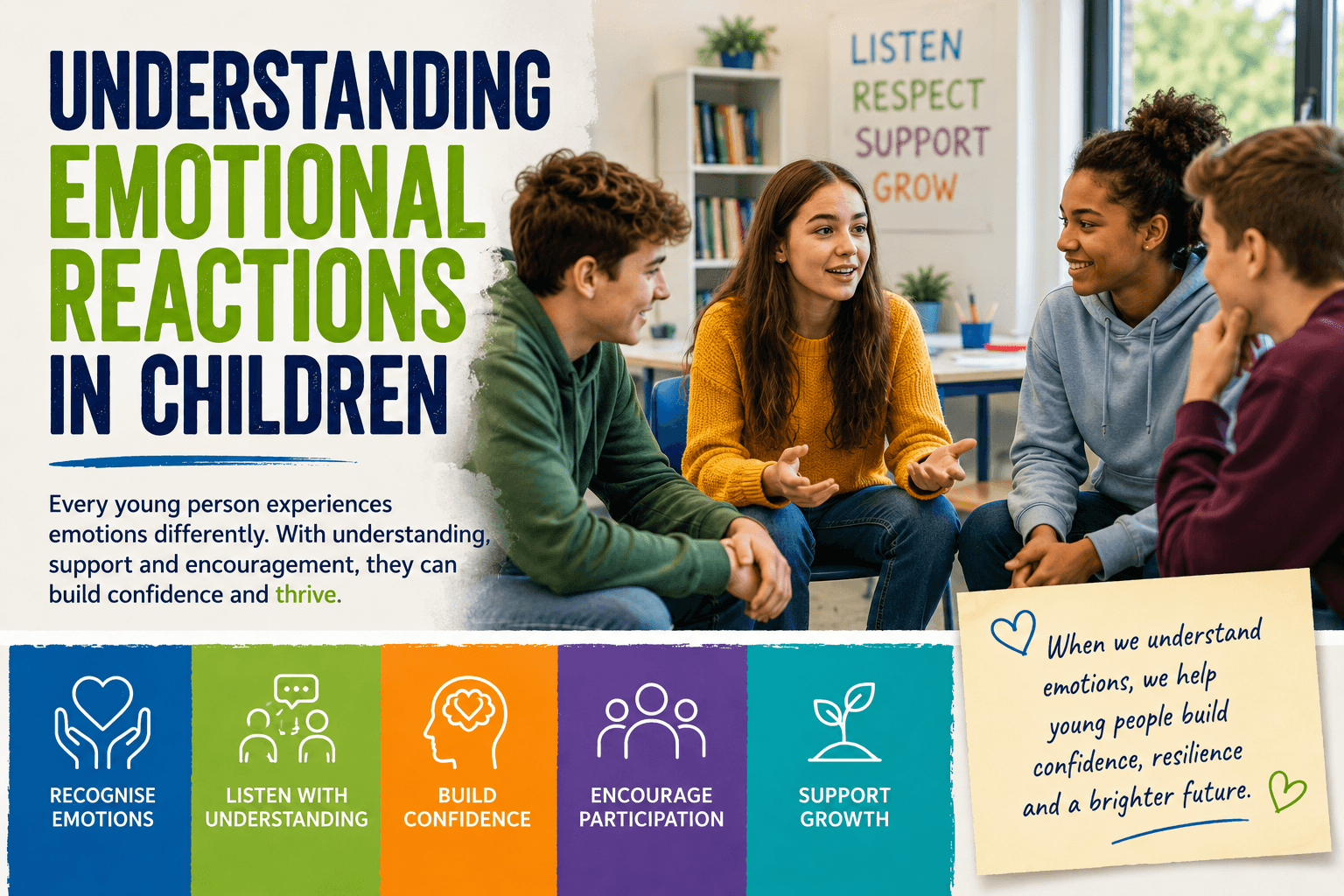
Understanding Emotional Reactions in Children
Every child experiences emotions differently. Understanding emotional reactions in children is an important step towards creating environments where young people feel safe, respected and encouraged to grow.
Children and teenagers respond to everyday situations through their own experiences, personalities and ways of thinking. Some express excitement openly, while others prefer quiet reflection. Likewise, some recover quickly after disappointment, whereas others need more time to process events.
Recognising these natural differences helps parents, teachers and communities provide encouragement rather than judgement. When adults understand that emotional responses vary from person to person, they are better placed to build confidence and create positive learning experiences.
Rather than asking why one child reacts differently from another, it is often more helpful to ask what support, encouragement or environment might help that young person feel secure and ready to participate.
Why Emotional Reactions Are Different
Understanding emotional reactions in children begins with recognising that no two young people experience the world in exactly the same way.
Many factors influence emotional responses, including:
- Individual personality
- Previous experiences
- Confidence levels
- Social environment
- Relationships with family and friends
- Learning preferences
- Physical wellbeing
- Daily routines
These influences interact differently for every child. Consequently, two teenagers can experience the same situation yet respond in completely different ways.
Neither response is necessarily right or wrong. Instead, each reflects an individual’s unique perspective.
Every Emotion Has a Purpose
Emotions provide valuable information.
Excitement encourages exploration.
Curiosity supports learning.
Disappointment can inspire perseverance.
Frustration may highlight the need for a different approach.
Even uncertainty can encourage reflection before making decisions.
By recognising emotions as part of learning and development, adults can help young people understand themselves more effectively without feeling judged or labelled.
Building Emotional Awareness
One of the most valuable life skills is learning to recognise emotions without becoming overwhelmed by them.
Parents and teachers can encourage emotional awareness by:
- asking open questions
- listening without interrupting
- encouraging reflection
- discussing different viewpoints
- helping young people identify positive coping strategies
- celebrating effort alongside achievement
These conversations gradually help children develop confidence in understanding their own emotions.
The Importance of Feeling Heard
Young people are far more likely to engage when they believe adults genuinely listen.
Feeling heard does not always mean agreeing with every opinion.
Instead, it means acknowledging that each person’s feelings are real and worthy of respect.
Simple phrases such as:
“Tell me more.”
“How did that make you feel?”
“What do you think would help?”
often encourage thoughtful conversations that strengthen trust.
Supporting Emotional Growth at Home
Families play an important role in emotional development.
Creating calm routines, encouraging regular conversations and providing opportunities for physical activity all contribute to emotional wellbeing.
Parents can also model positive emotional behaviour by remaining calm during challenges, discussing their own experiences appropriately and demonstrating healthy ways of solving problems.
Children learn as much from what adults do as from what adults say.
Supporting Emotional Growth in School
Schools help young people develop both academically and socially.
Teachers who recognise different emotional responses create classrooms where participation feels safe rather than intimidating.
This can include:
- encouraging teamwork
- allowing different ways to contribute
- recognising individual progress
- promoting respectful discussion
- celebrating diverse strengths
Small changes in classroom culture often have lasting effects on confidence.
Confidence Develops Over Time
Confidence rarely appears overnight.
Instead, it develops gradually through repeated positive experiences.
Each successful conversation, completed project or encouraging interaction builds another layer of self-belief.
Likewise, setbacks can become valuable learning experiences when adults focus on growth rather than perfection.
This strengths-based approach encourages resilience while maintaining realistic expectations.
Encouraging Participation Instead of Perfection
Every young person benefits from opportunities to contribute.
Participation might involve:
- sharing an idea
- helping classmates
- volunteering
- creative projects
- sports
- practical activities
- community involvement
Success should not always be measured by results alone.
Taking part often represents significant personal growth.
Building Strong Relationships
Positive relationships remain one of the strongest foundations for healthy emotional development.
Children benefit when adults provide:
- consistency
- encouragement
- patience
- trust
- clear expectations
- positive role modelling
Over time, these relationships create environments where confidence naturally grows.
Conclusion
Understanding emotional reactions in children helps parents, teachers and communities recognise that every young person develops in their own way.
By listening carefully, encouraging participation and focusing on strengths, adults can help children build confidence while developing valuable emotional awareness.
Small, everyday interactions often make the biggest difference.
When children feel understood, they are more likely to engage, contribute and continue growing into confident young adults.
Disclaimer
This article is intended for general educational purposes only. It does not provide medical, psychological or diagnostic advice. Every child is unique, and families with specific concerns should seek guidance from an appropriately qualified professional.