
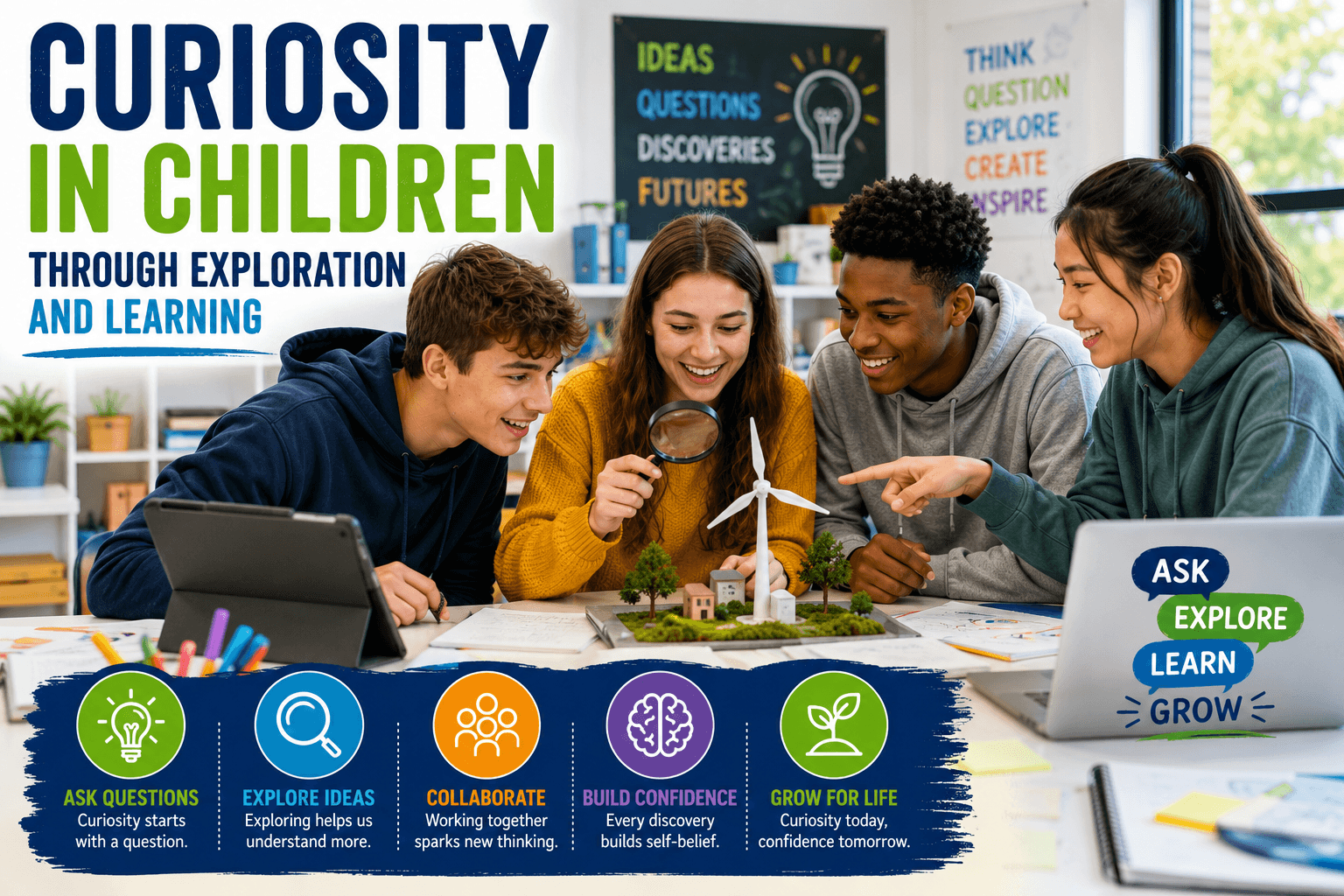
Curiosity in Children: Encouraging Questions That Build Confidence and Learning
Curiosity in children is one of the strongest foundations for lifelong learning. Every question, observation and new discovery helps young people build understanding of the world around them. When parents, teachers and carers encourage curiosity, they create opportunities for children to develop confidence, independence and a genuine enjoyment of learning.
Many children naturally ask hundreds of questions each week. Although adults may not always have the answers, creating an environment where questions are welcomed can make a lasting difference. Curiosity encourages exploration rather than memorisation, helping young people become active learners instead of passive recipients of information.
Why Curiosity Matters
Curiosity motivates children to investigate, experiment and think critically. Instead of simply accepting information, curious learners seek to understand how and why things work.
This approach supports:
- Independent thinking
- Problem-solving skills
- Greater classroom engagement
- Improved confidence
- Creativity and innovation
- Lifelong learning habits
Importantly, curiosity does not look the same in every child. Some ask many questions aloud, while others quietly observe before exploring ideas in their own way.
Curiosity in Children Creates Better Learning Experiences
Schools often focus on finding the correct answer. However, learning also benefits from encouraging thoughtful questions.
Children who feel comfortable asking “Why?”, “What if?” and “How?” are often developing valuable thinking skills that extend far beyond individual lessons.
Adults can encourage curiosity by:
- Welcoming thoughtful questions
- Praising effort rather than perfect answers
- Allowing time for exploration
- Encouraging discussion
- Supporting creative projects
- Celebrating different ideas and perspectives
Creating Curiosity at Home
Parents can help curiosity become part of everyday family life.
Simple activities include:
- Reading together
- Visiting museums or local attractions
- Exploring nature
- Cooking together
- Building projects
- Discussing current events in an age-appropriate way
- Encouraging children to explain their ideas
These experiences show that learning happens everywhere—not only in classrooms.
Curiosity Supports Confidence
Children become more confident when they realise their ideas are valued.
Rather than worrying about being right or wrong, they begin to see learning as an enjoyable process of discovery. This positive mindset encourages resilience, participation and continued growth.
Adults can strengthen this by listening carefully, asking open-ended questions and showing genuine interest in children’s observations.
Supporting Different Ways of Thinking
Every child explores the world differently.
Some enjoy practical activities, while others prefer reading, drawing, discussing or experimenting. Recognising these differences allows curiosity to flourish naturally.
A strengths-based approach encourages children to develop their own interests while respecting the different perspectives of others.
Helping Schools Encourage Curiosity
Teachers can build curiosity by:
- Using project-based learning
- Encouraging discussion
- Allowing pupils to investigate topics
- Including collaborative activities
- Celebrating creative thinking
- Connecting lessons with real-life experiences
These strategies help create classrooms where learning becomes engaging and meaningful.
Practical Ideas for Families
Try asking questions such as:
- What surprised you today?
- What would you like to learn more about?
- How would you solve this problem?
- Why do you think that happened?
- What could we investigate together?
Simple conversations often become powerful learning opportunities.
Conclusion
Curiosity is one of the greatest gifts adults can encourage. By creating environments where questions are welcomed, exploration is valued and different perspectives are respected, parents and teachers help young people develop confidence, resilience and a lifelong love of learning.
Every question opens the door to new understanding. By encouraging curiosity today, we help build learners who remain engaged, thoughtful and confident throughout life.
Disclaimer
This article is intended for educational and informational purposes only. It does not provide medical, psychological or diagnostic advice. Every child develops differently, and families with individual concerns should seek guidance from an appropriate qualified professional.