
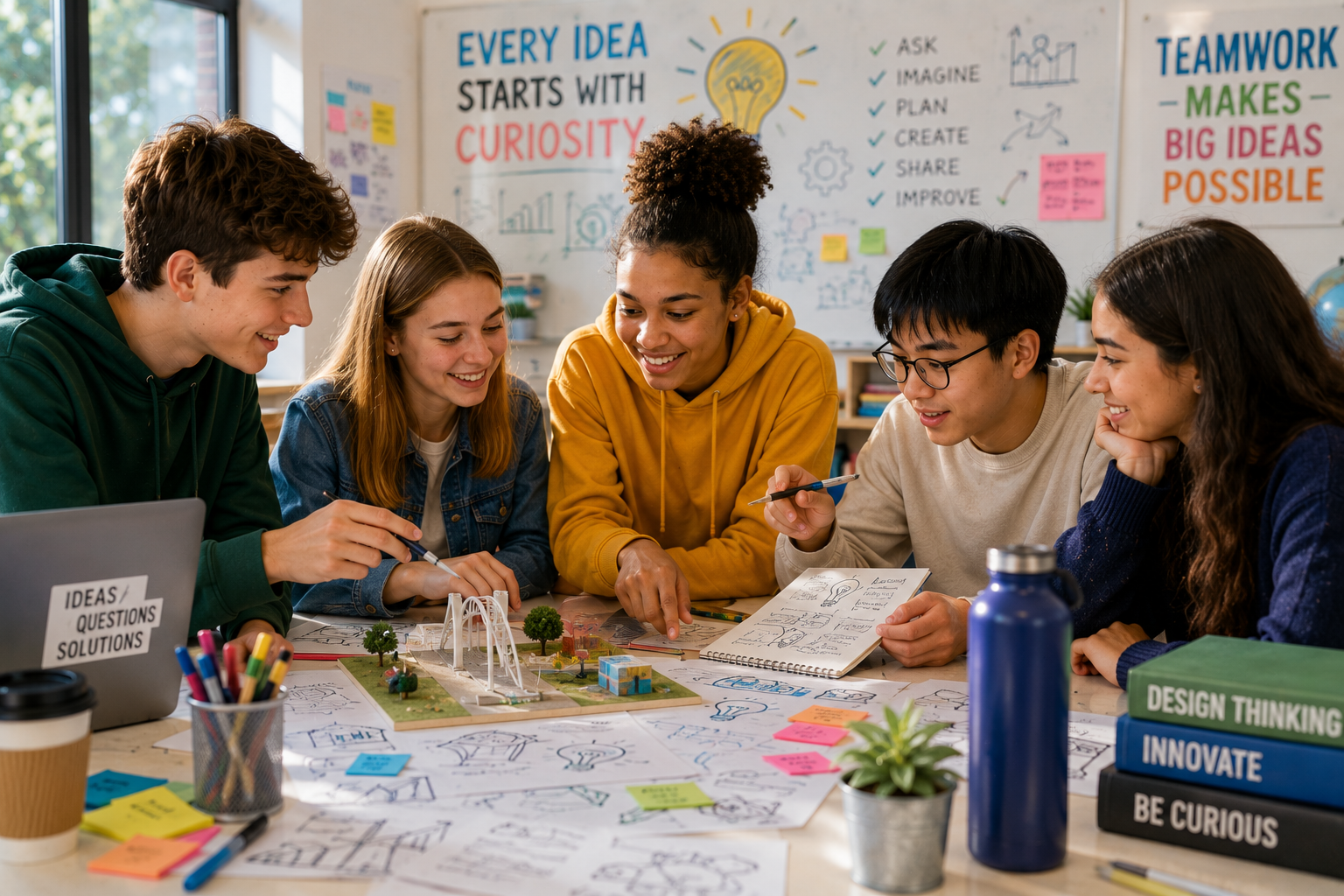
Creative Thinking in Children: Helping Young People Develop Ideas with Confidence
Creative thinking in children plays an important role in learning, confidence and personal development. Every day, young people solve problems, explore new ideas and make connections between experiences. When adults encourage creative thinking, they help children develop skills that support learning in school, relationships with others and future opportunities.
Creative thinking is not limited to art, music or design. It also includes asking thoughtful questions, exploring different solutions, imagining possibilities and approaching challenges with curiosity. Every child has the capacity to think creatively when given encouragement, time and opportunities to explore.
Why Creative Thinking in Children Matters
Creative thinking in children encourages flexible thinking and helps young people see more than one possible solution to a problem.
Rather than searching for only one correct answer, creative learners often enjoy experimenting with different approaches. This process builds confidence because children learn that trying new ideas is a valuable part of learning.
Furthermore, creativity supports communication, collaboration and independent thinking across many areas of life.
Creativity Builds Confidence
Confidence often grows when children feel their ideas are valued.
Whether they are building a model, writing a story, solving a maths challenge or contributing to a group discussion, every opportunity to express an idea strengthens self-belief.
Adults can encourage this by:
- Listening carefully to children’s ideas.
- Asking open-ended questions.
- Praising effort and curiosity.
- Celebrating different approaches.
- Encouraging reflection after activities.
Consequently, children become more willing to participate and share their thinking.
Creative Thinking in Children Through Everyday Activities
Creative thinking in children develops through ordinary experiences as much as through structured lessons.
Families can encourage creativity by:
- Cooking together.
- Building simple projects.
- Exploring nature.
- Reading stories and discussing different endings.
- Playing strategy games.
- Designing simple inventions.
- Planning family activities together.
Likewise, schools can provide project-based learning, collaborative activities and opportunities for pupils to explain their ideas in different ways.
There Is More Than One Way to Learn
Every child approaches learning differently.
Some enjoy practical activities, while others prefer discussion, drawing, reading or experimentation.
Recognising these differences allows creativity to flourish naturally.
A strengths-based environment encourages children to discover how they learn best while appreciating the ideas of others.
Encouraging Curiosity Alongside Creativity
Curiosity and creativity work together.
Children who ask questions often discover new ways of thinking.
Instead of providing immediate answers, adults can ask:
- What do you think?
- How else could this work?
- Can you think of another solution?
- What might happen if…?
- Why do you think that?
These conversations help children develop independent thinking and confidence.
The Role of Schools
Teachers can encourage creativity by:
- Using collaborative learning.
- Encouraging discussion.
- Including real-world projects.
- Allowing different ways to complete tasks.
- Celebrating original ideas.
- Giving time for reflection.
As a result, classrooms become places where curiosity, confidence and creativity grow together.
Looking Towards the Future
Many future careers will value creativity, communication and problem-solving.
Helping children think creatively today prepares them for tomorrow’s opportunities.
More importantly, creative thinking helps young people become adaptable, confident learners who enjoy discovering new ideas throughout life.
Conclusion
Creative thinking in children is about much more than artistic ability. It encourages curiosity, resilience, communication and confidence while helping young people explore the world around them.
Parents, teachers and communities all play an important role by creating environments where ideas are welcomed, questions are encouraged and learning becomes an enjoyable journey of discovery.
Every child has unique strengths. By encouraging creativity, we help those strengths continue to grow.
Disclaimer
This article is provided for educational purposes only and does not offer medical, psychological or diagnostic advice. Every child develops differently, and families with individual concerns should seek guidance from an appropriately qualified professional.