
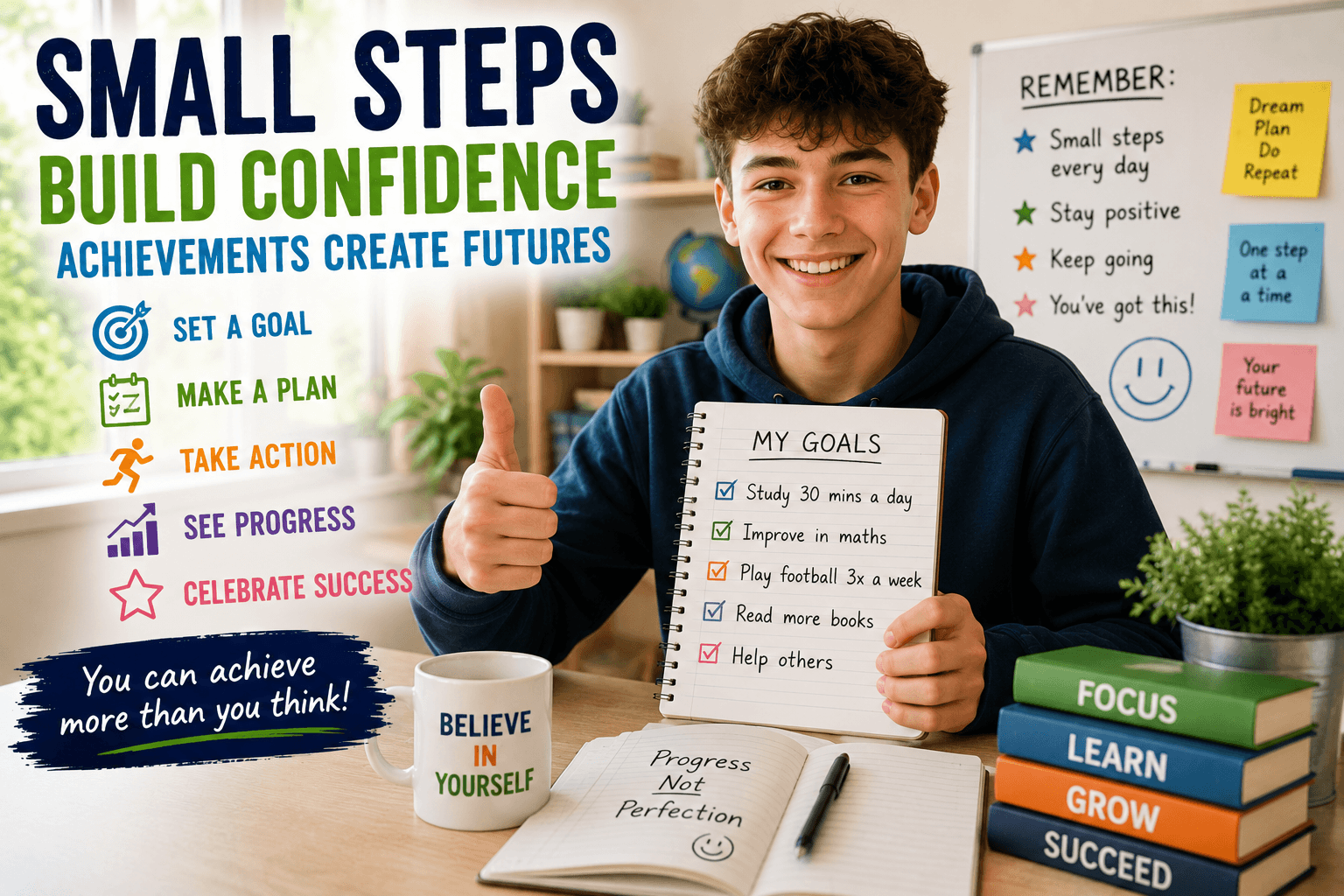
Building self-confidence through achievement is a gradual process rather than a single event. Young people become more confident when they experience progress, overcome challenges and recognise that effort can lead to meaningful results.
Parents, teachers and other trusted adults can support confidence by creating opportunities for success, recognising persistence and encouraging reflection. Confidence develops when teenagers see evidence of their own growth rather than comparing themselves with others.
Achievement does not have to involve examination results or sporting success. It can include completing a project, helping another person, learning a practical skill, improving communication, volunteering, or reaching a personal goal.
Why achievement matters
Meaningful achievements provide evidence that effort makes a difference. Consequently, teenagers often become more willing to try new experiences and accept appropriate challenges.
Adults can encourage this by:
• celebrating effort as well as outcomes;
• recognising progress over perfection;
• setting realistic goals;
• encouraging reflection after completing tasks; and
• helping young people identify the strengths they used.
Different achievements matter to different people
Every teenager has different interests, abilities and ambitions. Therefore, confidence grows most naturally when achievements are personally meaningful. A strengths-based approach recognises these differences and avoids unnecessary comparison.
Building confidence through everyday experiences
Simple daily activities provide valuable opportunities:
• organising a school assignment;
• learning a new recipe;
• completing a fitness challenge;
• helping with community projects;
• developing creative work; and
• supporting younger children.
Each experience strengthens planning, perseverance and responsibility.
The role of parents and teachers
Adults can build confidence by asking reflective questions:
Looking back, what is the most important thing you learned?
Which challenge helped you grow the most?
Which personal strengths helped you achieve your goal?
Looking ahead, what would you like to achieve next?
These conversations encourage teenagers to recognise their own development.
Looking ahead
Confidence continues to grow as young people accumulate positive experiences. Even setbacks become valuable when viewed as opportunities for learning rather than failure.
Conclusion
Building self-confidence through achievement is about recognising progress, encouraging perseverance and celebrating meaningful success. By providing support, realistic challenges and opportunities for reflection, parents and teachers can help teenagers develop lasting confidence that supports learning, relationships and future opportunities.
Suggested Internal Links
- Goal-Setting Skills in Teenagers: Helping Young People Turn Ideas into Action
- Understanding Children’s Behaviour: Looking Beyond What You See
Disclaimer:
This article is for educational purposes only and does not provide medical, psychological or diagnostic advice.