Adaptability Skills in Teenagers: Helping Young People Manage Change
Life is constantly changing. Teenagers experience new schools, changing friendships, increased responsibilities, new technology, exams, family changes, and important decisions about their future. Learning how to respond positively to these changes is an important part of growing up.
Developing adaptability skills in teenagers helps young people become more confident when facing new situations. Instead of fearing change, they can learn to see it as an opportunity to develop new skills, gain experience, and become more resilient.
At Kids Fitness First, we believe every young person has strengths that can help them succeed. Adaptability is not about changing who you are—it is about learning how to adjust, grow, and keep moving forward when life changes around you. This approach supports our charitable objective of helping young people develop the skills, capacities, and capabilities needed to participate confidently in society. Our Teen Life Skills and Development guide connects adaptability with the wider skills library.
Why Adaptability Matters
Change is part of everyday life. Some changes are exciting, while others may feel uncertain or challenging.
For teenagers, change may include:
- Starting a new school
- Meeting new friends
- Learning new subjects
- Joining clubs or sports teams
- Moving house
- Preparing for college or work
- Learning new technology
- Taking on greater responsibility
Although change can sometimes feel uncomfortable, it also creates opportunities to learn, improve, and discover new strengths.
Understanding Adaptability Skills in Teenagers
Adaptability means adjusting positively when situations change.
It involves being willing to:
- Learn something new.
- Try different approaches.
- Stay calm during uncertainty.
- Keep an open mind.
- Find solutions when plans change.
Importantly, adaptable teenagers understand that not everything goes exactly as expected—and that is perfectly normal.
Benefits of Adaptability Skills in Teenagers
Young people who develop adaptability often experience many long-term benefits.
These include:
- Greater confidence
- Better problem-solving
- Improved communication
- Stronger friendships
- Increased resilience
- Better emotional wellbeing
- Greater independence
- Improved decision-making
Furthermore, adaptable teenagers often feel more prepared to handle future opportunities because they have learned that challenges can be managed successfully.
Everyday Ways Teenagers Show Adaptability
Adaptability appears in many everyday situations.
For example, a teenager may:
- Learn a new skill after making mistakes.
- Join a new sports team.
- Make new friends after moving schools.
- Adjust their study routine before exams.
- Find different ways to complete a project.
- Accept constructive feedback.
- Learn from setbacks instead of giving up.
Each experience builds confidence for future challenges.
How Parents Can Encourage Adaptability
Parents play an important role in helping teenagers develop flexibility.
They can encourage adaptability by:
- Praising effort instead of perfection.
- Encouraging independent thinking.
- Allowing teenagers to solve age-appropriate problems.
- Supporting new experiences.
- Talking positively about change.
- Helping children reflect after challenges.
- Celebrating progress.
Additionally, allowing teenagers to make small decisions helps them become more confident when making bigger decisions later in life.
How Schools Can Support Adaptability Skills in Teenagers
Schools provide many opportunities for students to practise adapting.
Teachers can help by:
- Encouraging teamwork.
- Using project-based learning.
- Promoting creative thinking.
- Supporting independent learning.
- Providing constructive feedback.
- Celebrating effort and improvement.
- Creating safe environments where mistakes become learning opportunities.
As a result, students gradually become more confident when facing unfamiliar situations.
Building Adaptability Every Day
Adaptability develops through regular practice.
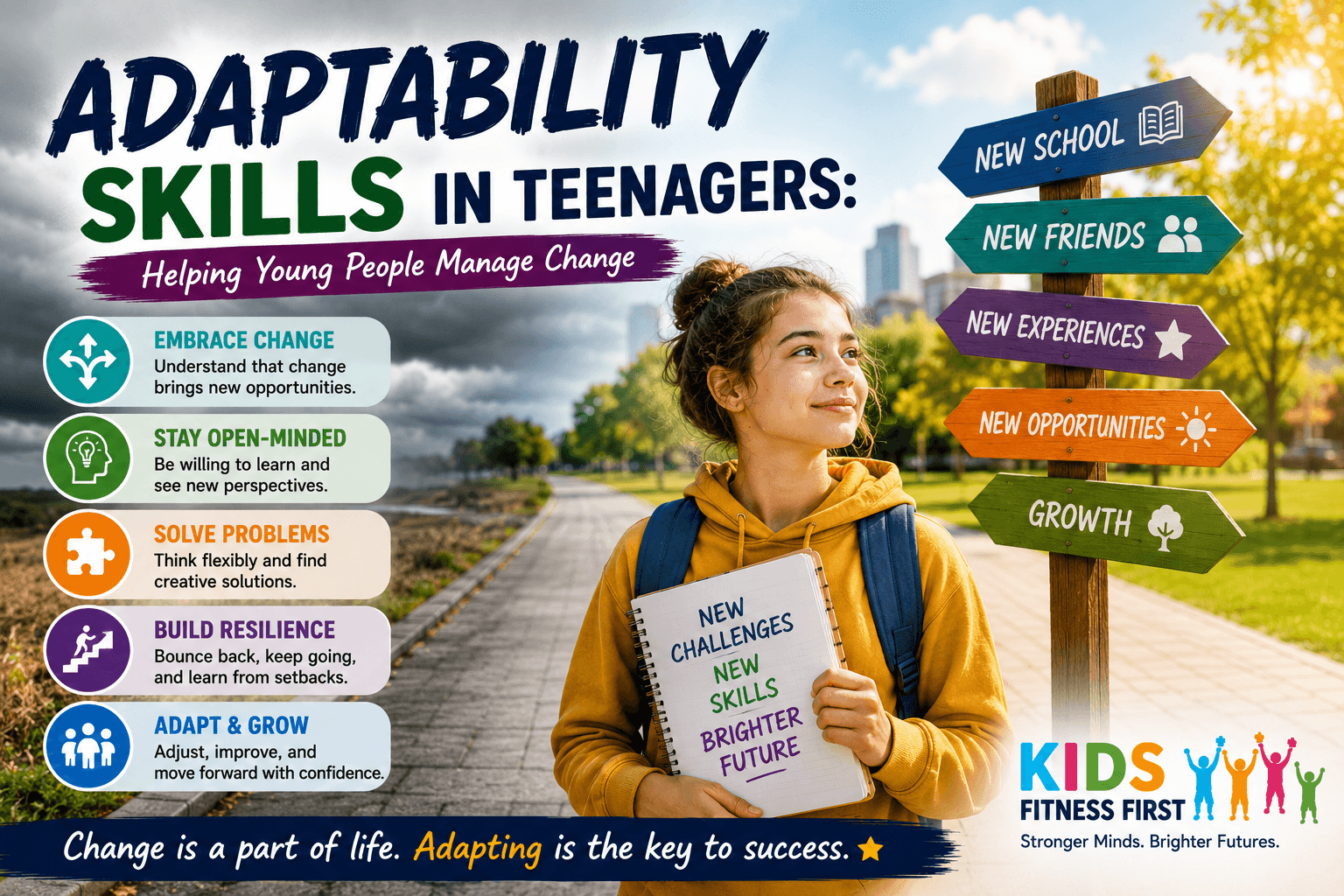
Teenagers can strengthen this skill by following five simple steps:
1. Accept Change
Understand that change happens throughout life.
2. Pause and Think
Take time before reacting.
3. Explore Options
Look for different ways to solve the situation.
4. Adjust the Plan
Be willing to change direction if necessary.
5. Learn and Grow
Reflect on the experience and use it to improve next time.
Over time, these small habits build greater confidence and resilience.
Adaptability and Future Success
Employers, colleges, universities, and communities all value adaptable people.
Young people who can adjust to change often find it easier to:
- Learn new technology.
- Work with different people.
- Solve unexpected problems.
- Communicate effectively.
- Take on leadership opportunities.
- Continue learning throughout life.
Consequently, adaptability becomes an important life skill that supports success well beyond the classroom.
Final Thoughts
Every teenager experiences change.
While change may sometimes feel challenging, it also creates opportunities to grow, learn, and develop confidence.
By encouraging adaptability skills in teenagers, parents, teachers, and communities can help young people build resilience, embrace new opportunities, and prepare for an ever-changing future.
At Kids Fitness First, we believe every young person has unique strengths. With encouragement, positive experiences, and supportive guidance, teenagers can learn to adapt with confidence and continue developing the skills that will benefit them throughout life. Our charity exists to help young people develop their skills, capacities, and capabilities through education and positive activities that prepare them for independent and responsible adulthood.
Reflection Questions
- What recent change helped you learn something new?
- How did you adapt when your plans changed?
- Which personal strengths helped you overcome a challenge?
- What new experience would you like to try next?
Related Teen Life Skills
- Growth mindset in teenagers — learning to see challenge and feedback as part of development.
- Self-discipline in teenagers — building habits that help young people follow through when circumstances change.
- Teamwork and collaboration — adapting to different people, roles and ideas.
- Communication skills for teenagers — expressing ideas clearly and listening when situations are changing.
Disclaimer
This article is provided for educational and informational purposes only. It does not provide medical, psychological, or professional advice. If you have concerns about a young person’s wellbeing, please seek advice from an appropriately qualified professional.