
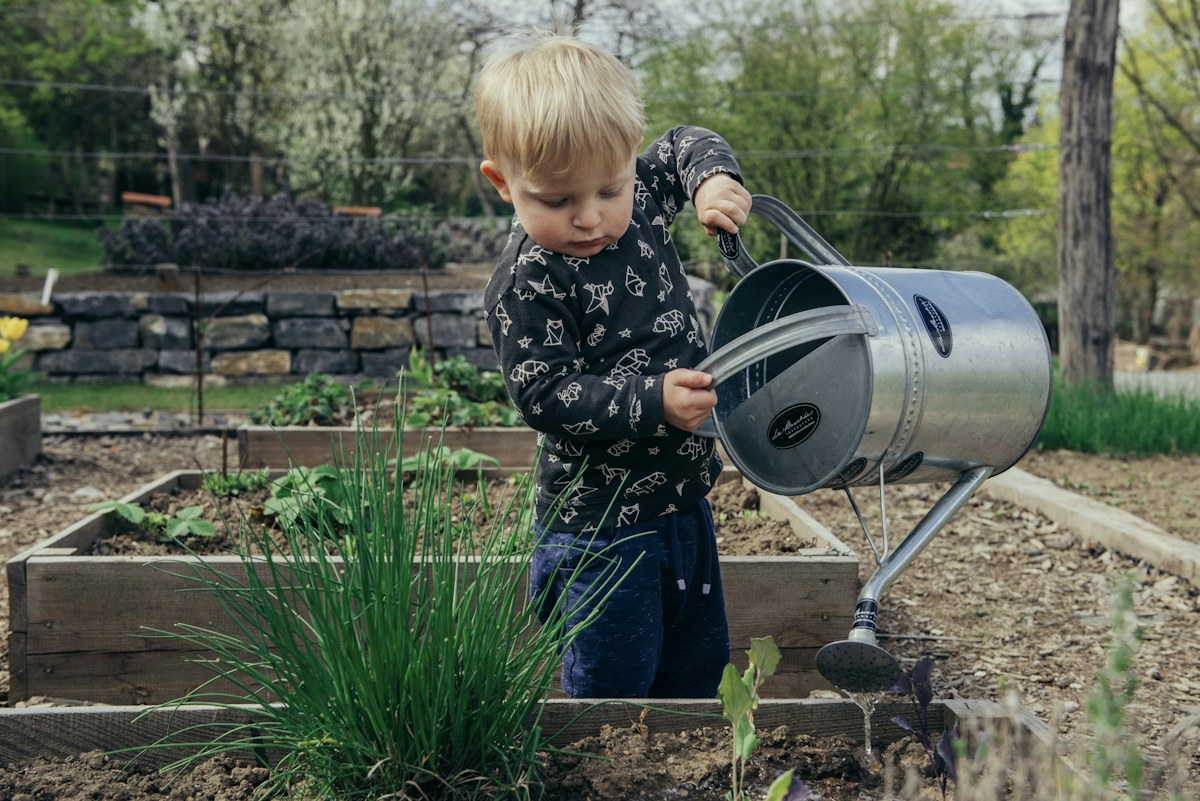
Children do not need a sports session every time they want to be active. A small, useful job can invite walking, reaching, carrying, pushing or stretching while giving a child a sense of contribution. The aim is not to turn household chores into a fitness test: it is to make ordinary moments more playful, manageable and inclusive.
Why everyday movement counts
UK Chief Medical Officers recommend that children aged 5–18 average at least 60 minutes of moderate-to-vigorous physical activity each day across the week. Play, active travel and other enjoyable activities can contribute. A gentle helping task may be lighter than this intensity, but it still offers a chance to interrupt long periods of sitting. Start with what your child can comfortably do rather than treating the guideline as a daily pass-or-fail score.
Seven safe active jobs to try
1. Watering-can helper
Offer a small, partly filled watering can and two or three plants within easy reach. A child can walk between them, pour slowly and choose which plant needs attention. For a seated child, place pots on a stable, accessible table. Avoid heavy containers and slippery surfaces.
2. Laundry delivery
Ask the child to carry one lightweight towel or a few socks from a basket to a drawer. Add a playful instruction such as “walk like a quiet explorer” rather than a race. A wheeled basket or reachable sorting table works well for children who do not carry items.
3. Cushion reset
After family time, invite children to put soft cushions back on the sofa. They can choose to lift, slide or pass them to a partner. Keep the task below shoulder height and do not ask children to climb on furniture.
4. Garden path patrol
Give the child a small brush to sweep dry leaves from a short, level section of path. Make a picture of the cleared space together. Use a seated position or long-handled brush if helpful; adults handle sharp debris, wet surfaces and tools.
5. Toy parking bays
Place two boxes close together and label them “cars” and “animals” with pictures. Children can collect one toy at a time and decide where it belongs. Keep the route clear and allow a seated version with toys arranged on a table.
6. Wipe-and-reach
With a clean damp cloth and no cleaning chemicals, invite the child to wipe a low table in large circles, side-to-side lines or a figure of eight. Let them choose which shape to make. Avoid overreaching and use a comfortable surface height.
7. Outdoor toy wash
Place washable plastic toys in a shallow tray with a little water. A child can reach, sponge, rinse and move items to a drying towel. Supervise water play closely, especially with younger children, and keep electrical items away.
Make the jobs inclusive and enjoyable
Offer two choices rather than a long instruction list. Ask “Would you rather water the plants or sort the socks?” Let the child stop, switch jobs or take a break. Children with mobility differences can participate through wheeling, reaching, sorting, directing or partnering; the job should adapt to the child, not the other way round.
For children who prefer predictability, show a simple now–next activity card. For more ideas about choosing a manageable level of challenge, see our choice-based movement guide.
A simple family check-in
At the end, ask “Which job felt good?” and “Would you change anything next time?” Notice the contribution, not the speed. Stop if a child is tired, in pain, dizzy or distressed. These are everyday activity ideas, not prescribed therapy; seek professional advice for individual health or mobility restrictions.
Five-minute starter checklist
- Choose one child-sized, lightweight job.
- Clear the route and remove sharp, hot or slippery hazards.
- Offer a seated or wheeling option where useful.
- Let the child choose the pace and stop point.
- Ask what they would like to try next time.
Quick questions for families
Do these jobs replace sport or outdoor play?
No. They are additional opportunities for movement and contribution. A slow tidy-up is not automatically moderate-intensity exercise; children benefit from a variety of enjoyable activities.
What if my child does not want to help?
Offer a smaller job or a different time. An invitation to move should not become a punishment or a contest. Even choosing and directing a task can be a meaningful role.
Further reading: UK Chief Medical Officers’ physical activity guidance.
Featured photograph: Filip Urban / Unsplash.