
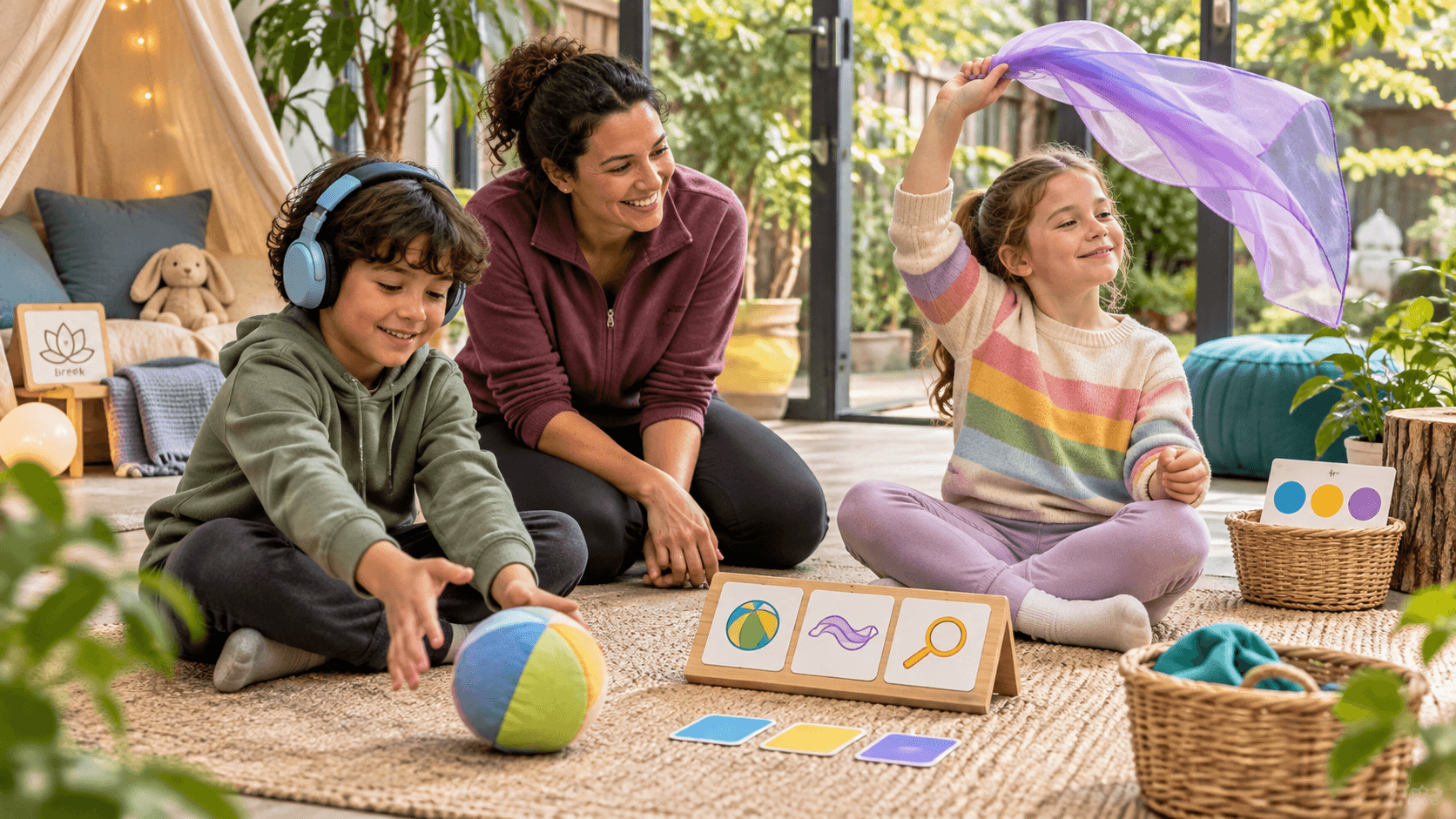
Some children worry about getting a game wrong long before it begins. Others want to know exactly who will be there, how noisy it will be and whether they may leave if the activity feels uncomfortable. If you’re looking for sensory friendly activities for children, start by finding out what your child needs—not by insisting they join in.
This guide explores overthinking in children, sensory preferences and ten gentle play ideas. They are optional activities to make everyday participation more welcoming, not treatments for anxiety, ADHD or autism.
When “overthinking” is telling us something useful
A child who repeatedly asks “What if I make a mistake?” might be worried about judgement. A child who asks “Will the whistle be loud?” may be anticipating genuine sensory discomfort. A child who refuses a team game may have experienced exclusion or bullying. These situations need different responses.
Ask: What part feels difficult? What would make it easier? Would you like to try, change the activity or pause? Listen without dismissing the concern. Older children may answer with words; younger children might point, draw or show you through play.
Ten sensory-friendly activities that give children a choice
1. Two-colour treasure hunt
Invite the child to choose two colours and look for matching objects in a familiar room or garden. They can walk, wheel, point or photograph what they notice. Keep the route predictable and skip timers. Try saying: “You choose the colours and where we start.”
2. Follow-the-scarf shapes
Gently wave a lightweight scarf into circles, waves or a figure eight. The child might copy with their arm, a finger, their eyes or an imaginary shape. Music is optional. Avoid unexpected touching or bringing fabric near a child’s face. Try saying: “Your shape does not need to match mine.”
3. Soft-ball roll and return
Roll a soft ball between two people seated on a mat or chairs. Let the child choose the distance and speed; a tabletop can work well. Keep the ball on the ground rather than throwing unexpectedly. Try saying: “Tell me when you’re ready for the next roll.”
4. Make-your-own floor trail
Arrange a few large paper spots along a safe, clear route. The child can step, wheel, reach towards or point at each spot. Let them redesign the route, and avoid loose materials that cause slipping. Try saying: “There is more than one way through.”
5. Animal mirror game
One person chooses a gentle movement inspired by a cat, owl or butterfly; the other copies. It could be a head turn, a hand movement or a comfortable seated stretch. Never force a body position or treat the movement as a competition. Try saying: “I’ll follow your idea first.”
6. Draw the weather
Offer paper and a small set of colouring tools. Ask the child to draw real weather or weather that matches how they feel. They do not need to label an emotion or share their picture. Try saying: “You can tell me about it if you want.”
7. A familiar mini-walk
Choose a short route with a recognisable start and finish. Spot a tree, a bench or a favourite shop window. Agree beforehand how to turn back if needed. Try saying: “We can decide together when to stop.”
8. Repeatable basket game
Place a soft toy and a basket on the floor. The child chooses whether to move the toy, roll it towards the basket or simply arrange the objects. Repeat the same activity as often as they like; avoid adding surprise rules. Try saying: “You know how this game works. We can keep it that way.”
9. Quiet target choice
Use three large targets at different comfortable distances. Invite the child to roll a ball or point to a target. They can choose one target repeatedly instead of working through all three. Try saying: “Choosing is part of the game; there is no score.”
10. Design a pause space together
Ask what helps the child take a comfortable break. Options might include a familiar chair, a book, a drawing pad or a quieter nearby area with appropriate supervision. Do not assume dim lights or sensory tools suit everyone. Try saying: “You can pause without having to explain.”
How to help a child who worries about trying something new
Show the activity before asking for participation. Use one or two choices instead of a long menu. Explain changes in advance and offer a simple exit plan. If the child prefers to watch first, respect that. A small, self-chosen attempt can be more meaningful than finishing the whole game under pressure.
When the child asks repeated “what if” questions, you might say: “You are wondering what will happen. We know where the game is, who will be there and how you can take a break.” Then help them choose one useful next step. This is not a promise that nothing uncomfortable will happen.
For group activities, our pause-and-return plan explains how to make breaks normal. For sensory differences, see sensory-friendly physical activities for autistic and neurodivergent children.
Confidence is not the same as compliance
Confidence can mean saying “I would rather watch”, asking for a rule to be repeated or choosing a quieter activity. Notice those decisions. Praise specific actions rather than telling children they must feel brave: “You told me what was too loud”, or “You asked to see the game first”.
If exclusion, bullying or unsafe equipment is part of the problem, adults must change the environment. Do not put responsibility for solving it on the child.
When to seek additional support
Occasional worries are common. When fears persist, worsen or interfere with school, sleep, friendships or activities a child wants to enjoy, speak with a GP, school nurse or appropriate school staff. The NHS guide to anxiety in children outlines supportive steps and when to seek help. Sensory preferences vary widely; the National Autistic Society explains why individual adjustments matter.
Frequently asked questions
Are sensory-friendly activities only for autistic children?
No. Flexible games can be useful for many children. Ask each child what they enjoy and what they want to avoid.
Will these games stop overthinking?
No single game can promise that. The purpose is to create a welcoming way to try, imagine, move or rest while adults listen to the child’s concerns.
What if a child always chooses to watch?
Watching is a valid option. Keep opportunities available without repeatedly pressuring the child. If they want to participate but feel unable to do so, explore the specific obstacle and consider appropriate support.
More from Kids Fitness First
- When a Child Says “I’m Bad at Sport”
- Movement Breaks for Children with ADHD
- Seated Movement Games for Children
Kids Fitness First CIO provides general educational information, not medical or diagnostic advice. Adapt activities to individual abilities and circumstances, use appropriate supervision and stop if an activity causes pain or distress.