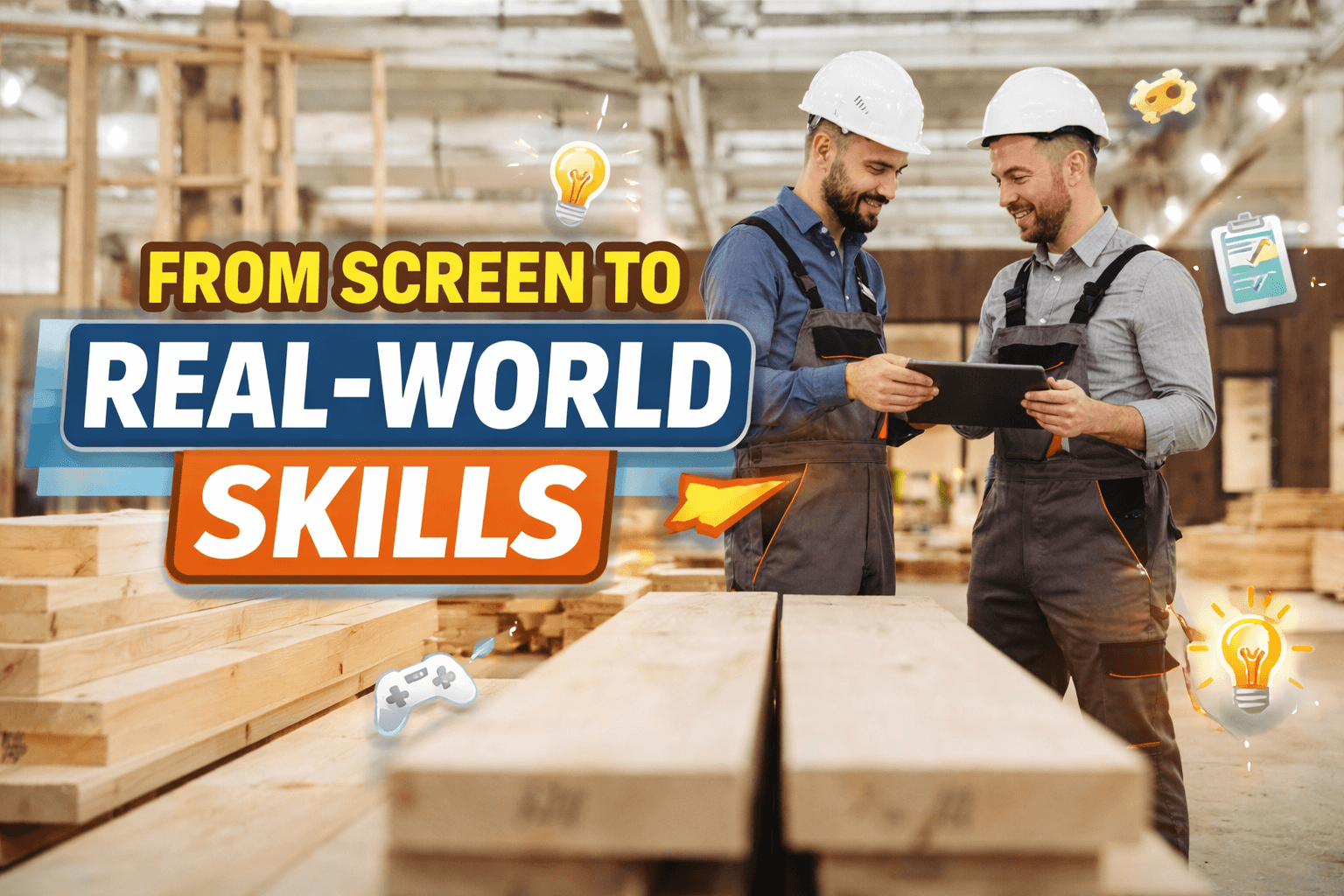
From Screen to Real-World Skills: A Practical Learning Approach
Turning Digital Interests into Real-World Strengths
In today’s world, screens are often seen as barriers—something that separates young people from reality. But what if that assumption is incomplete?
What if the screen is not the problem… but the starting point?
A Different Way to See It
Across homes, schools, and communities, many young people spend hours immersed in digital environments—games, simulations, videos, and online platforms. Traditionally, this has been viewed as passive or even unproductive.
However, a growing body of educational thinking suggests something very different.
Behind every screen-based activity, there are real-world skills being developed:
Strategic thinking
Pattern recognition
Decision-making under pressure
Systems understanding
Creative problem-solving
The challenge is not removing the screen—it is translating what happens on the screen into something tangible.
From Gaming to Engineering
Consider a young person deeply engaged in building within a game environment. On the surface, it may appear as entertainment. In reality, it often involves:
Structural thinking
Resource management
Spatial awareness
Iterative design
These are not trivial skills. They mirror the foundations of engineering, architecture, and construction.
When guided correctly, this interest can transition into:
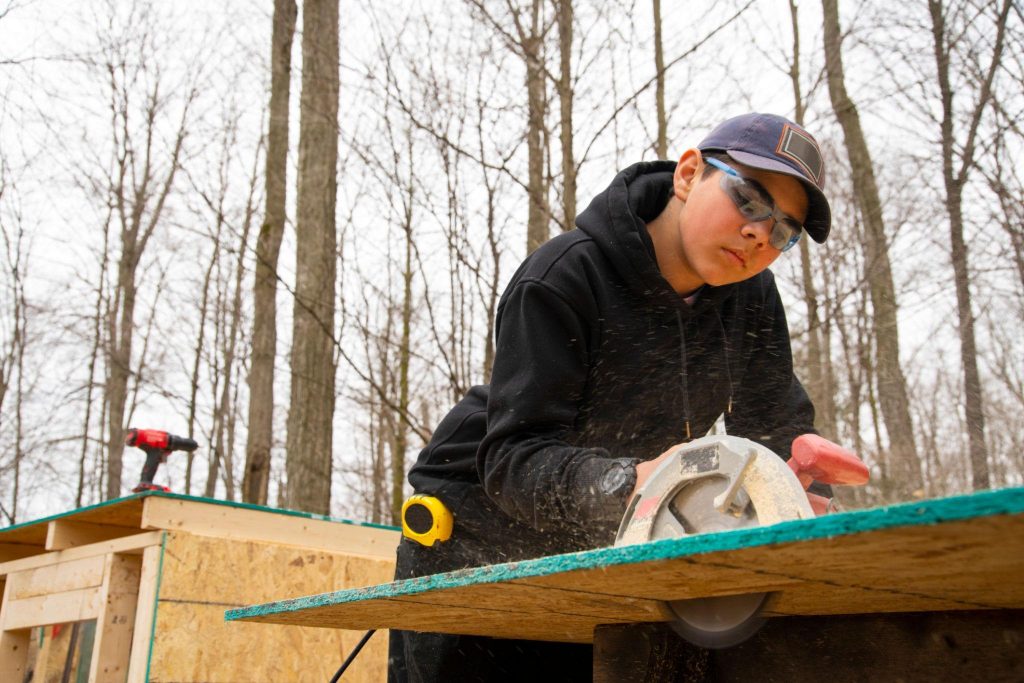
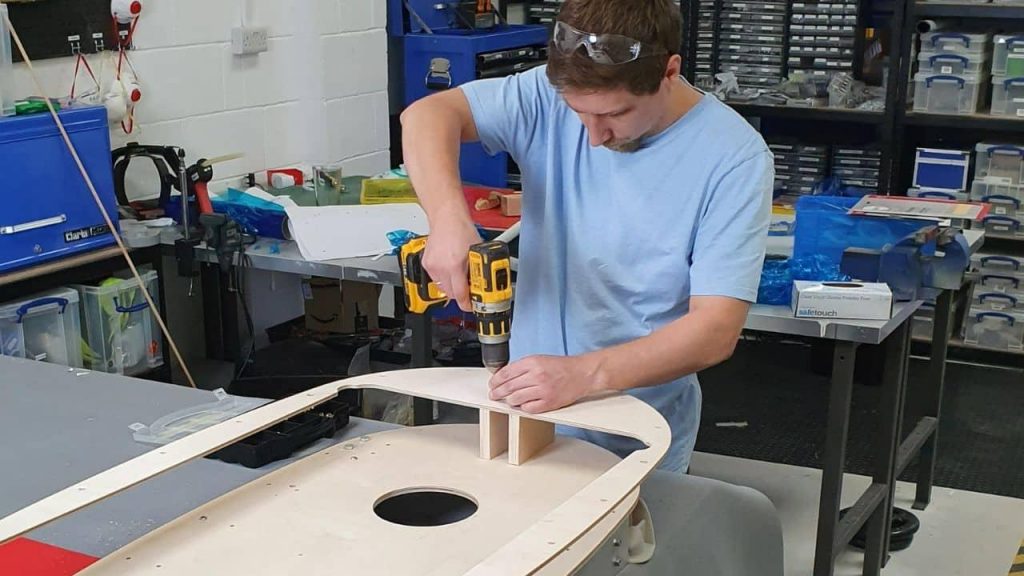
Model building
CAD design
Modular construction concepts
Real-world prototyping
In my opinion, this is where education often misses a major opportunity. Instead of redirecting attention away from games, we should be asking:
“What is this activity already teaching—and how do we bring it into the physical world?”
From Strategy to Planning and Logistics
Strategy-based games, simulations, and even competitive online environments require:
Long-term planning
Risk assessment
Resource allocation
Adaptive thinking
These are directly transferable to fields such as:
Project management
Logistics
Business operations
Urban planning
A young person coordinating complex in-game systems is already thinking like a planner.
The missing link is not ability—it is translation.
From Screen Interaction to Physical Expression
One of the most powerful shifts happens when digital thinking becomes physical action.
Examples include:
Designing a structure digitally → building a scaled version
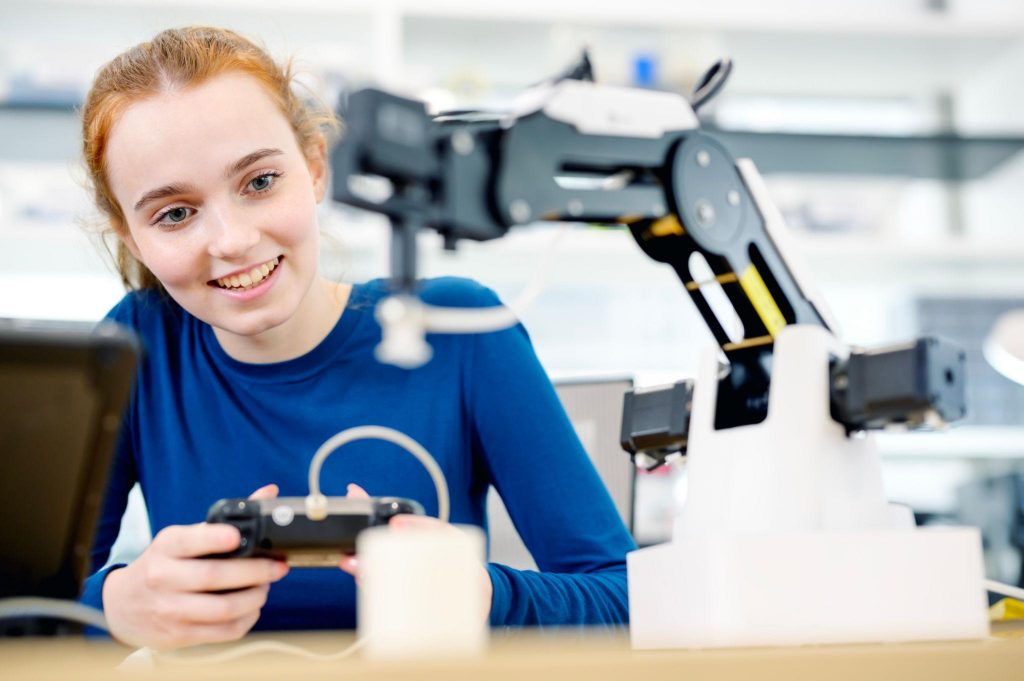
Understanding game mechanics → creating simple real-world systems
Following digital tutorials → applying hands-on skills
This transition does something critical:
It builds confidence.
Not through instruction—but through recognition.
Why This Matters
When interests are dismissed, engagement drops.
When interests are understood, development accelerates.
This is particularly important in environments where traditional academic pathways do not fully capture a young person’s strengths. A screen-based interest can act as:
An entry point
A bridge
A foundation for future skills
In structured environments—such as workshops, community spaces, or training hubs—this approach can be especially effective. It allows learning to feel relevant, immediate, and achievable.
The Role of Adults, Educators, and Mentors
The key is not control—it is observation.
Instead of asking:
“How do we reduce screen time?”
A more effective question may be:
“What is this screen time building?”
From there, the role becomes:
Identifying patterns of interest
Creating opportunities for real-world application
Providing tools, not restrictions
This aligns closely with educational approaches that focus on strengths, development, and participation rather than correction.
A Practical Model for Translation
A simple framework can be applied:
Observe Identify what the individual is consistently drawn to.
Decode Understand the underlying skill (strategy, design, logic, creativity).
Translate Create a real-world equivalent activity.
Build Provide a physical or practical environment to apply it.
Reflect Reinforce the connection between digital and real-world success.
Closing Perspective
The screen is not the destination.
It is the introduction.
When approached correctly, it becomes a powerful gateway into engineering, planning, creativity, and real-world capability.
In my view, the future of effective education—especially for modern learners—will not be about limiting digital interaction.
It will be about understanding it, respecting it, and translating it into something real.
Source & Context
This chapter builds on contemporary educational perspectives around experiential learning, digital-to-physical skill transfer, and strength-based development models. It also aligns with guidance used in structured communication frameworks for education and charity environments, where neutral, supportive, and development-focused language is essential
Get Your FREE
Chapter Today
Download the FREE first chapter of
The X Variable and discover every child’s hidden strengths.