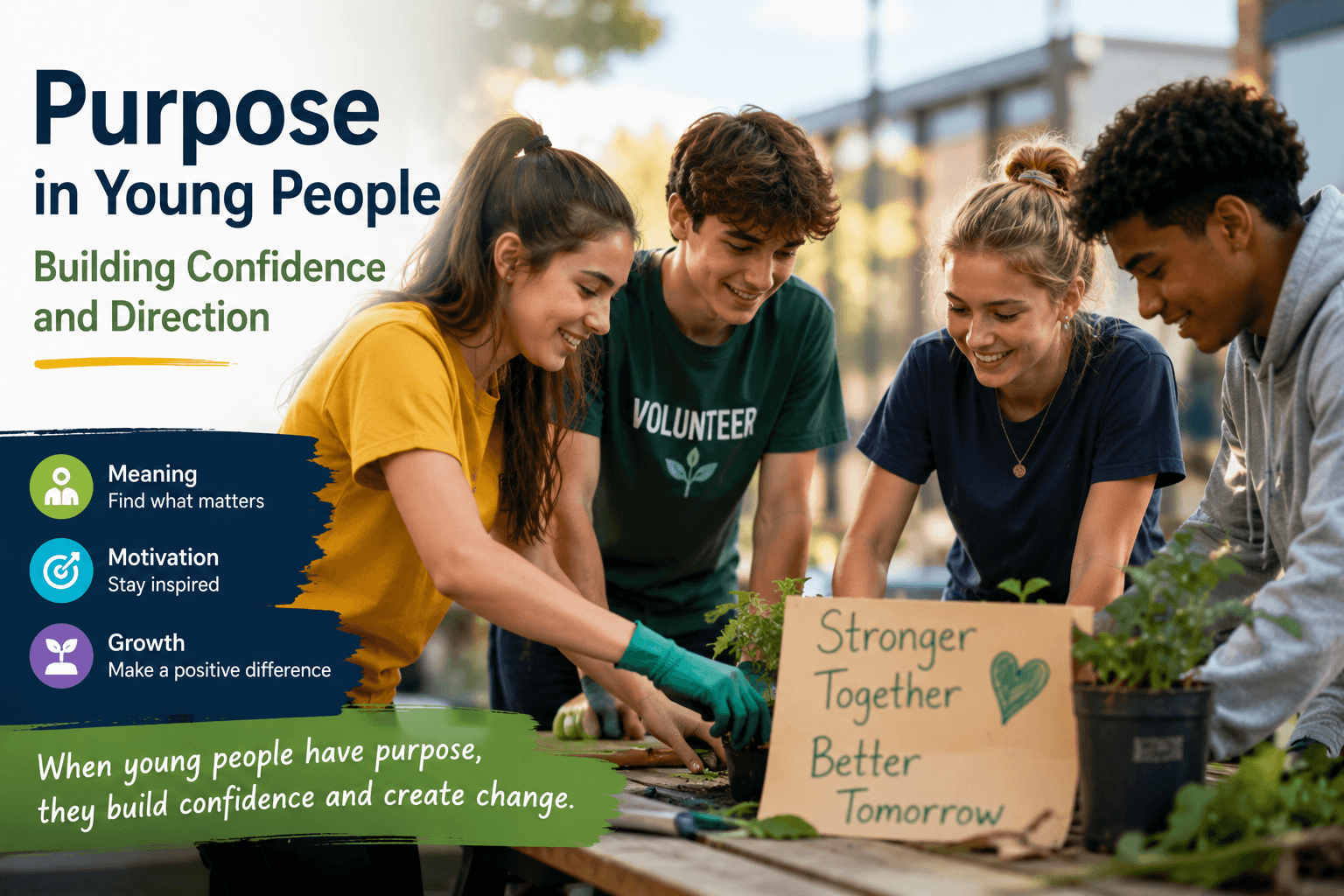
Purpose in young people is becoming increasingly important in a world filled with distractions, competing demands and constant streams of information.
Many parents and teachers focus on achievement, grades and qualifications. While these things can be valuable, they are not always enough to create lasting motivation. Young people often become more engaged when they understand why something matters and how it connects to their interests, values and strengths.
A sense of purpose gives learning greater meaning. Furthermore, it can help young people develop confidence, resilience and a stronger sense of direction.
What Does Purpose Mean?
Purpose does not necessarily mean having a detailed life plan.
In fact, many adults continue discovering new interests and opportunities throughout their lives.
Instead, purpose often begins with something much simpler. It starts with feeling connected to something meaningful.
For one young person, purpose may involve helping others. For another, it may involve creating, building, learning, teaching or solving problems.
Although individual paths differ, purpose often grows from activities that feel important and rewarding.
How Purpose in Young People Builds Confidence
Confidence rarely appears overnight.
Instead, confidence often develops through experiences that demonstrate capability and contribution.
When young people engage in activities that feel meaningful, they often become more willing to persevere through challenges. Consequently, they gain evidence of their abilities and develop greater self-belief.
For example, a teenager helping organise a community event may develop leadership skills. Meanwhile, another young person involved in a creative project may discover talents they had not previously recognised.
These experiences create confidence because they connect effort with meaningful outcomes.
Purpose in Young People and Motivation
Motivation can be difficult to sustain when tasks feel disconnected from real life.
However, purpose provides a powerful source of motivation.
Young people often work harder when they understand how their actions contribute to something larger than themselves.
For example:
- Supporting a community project
- Learning a skill that helps others
- Creating something useful
- Contributing to a team goal
- Sharing knowledge with peers
As a result, learning becomes more engaging and participation often increases.
Why Purpose Supports Wellbeing
A sense of purpose can also contribute to wellbeing.
People generally feel more positive when they believe their actions have value and meaning. Similarly, young people often benefit from opportunities to contribute, participate and make a difference.
Purpose does not remove challenges. Nevertheless, it can help provide direction during difficult periods.
Knowing that efforts matter often encourages persistence and optimism.
Helping Young People Discover Purpose
Parents and teachers cannot choose a young person’s purpose. However, they can create opportunities for exploration.
Encourage Curiosity
Curiosity often points towards areas of genuine interest.
Pay attention to questions, hobbies and topics that repeatedly capture attention.
Provide Diverse Experiences
Young people discover interests through exposure.
Sport, volunteering, creativity, technology, reading, nature and teamwork can all provide valuable opportunities.
Focus on Strengths
Purpose frequently develops where strengths and interests overlap.
Recognising strengths helps young people identify areas where they can contribute meaningfully.
Encourage Contribution
Opportunities to help others often strengthen a sense of purpose.
Even small contributions can help young people recognise the value they bring to their communities.
Purpose in Young People and Future Success
The future is likely to involve change, uncertainty and new opportunities.
While specific careers may evolve, purpose remains valuable because it helps young people adapt and continue growing.
Young people who understand their interests, values and strengths often find it easier to navigate change. Additionally, they may feel more confident when making decisions about education, work and personal development.
Purpose does not provide all the answers.
Instead, it provides a useful compass.
The Role of Schools and Communities
Schools and community organisations play an important role in helping young people explore purpose.
Beyond academic achievement, they provide opportunities for:
- Leadership
- Teamwork
- Service
- Creativity
- Problem-solving
- Personal development
These experiences help young people discover where their interests and strengths can make a positive contribution.
Final Thoughts
Purpose in young people is not about having every detail of life planned out. Rather, it is about helping young people discover meaningful ways to contribute, learn and grow.
By encouraging curiosity, recognising strengths and providing opportunities for participation, parents, teachers and communities can help young people develop confidence and direction.
Most importantly, purpose helps young people understand that their abilities can make a positive difference to the world around them.
Disclaimer
This article is provided for educational and informational purposes only. It does not provide medical, psychological, diagnostic, or professional advice. Every child is unique, and individual experiences may vary. If you have concerns about a child’s development, learning, or wellbeing, please seek guidance from an appropriately qualified professional.