A visual movement board shows a child what will happen during a short activity. Instead of giving several spoken instructions at once, an adult uses pictures, photographs or written words to show what happens now and what happens next. This approach may be helpful for some autistic children, children with ADHD or anyone who prefers a predictable plan.
What is a now–next board?
It is simply a piece of paper with two boxes labelled NOW and NEXT. In each box, put a picture or word the child understands. For example, NOW might show ‘reach up’ and NEXT might show ‘rest’. The child can see the sequence without having to remember a long explanation.
Make a movement board in five minutes
- Draw two large boxes on card or paper.
- Choose two familiar activities: perhaps gentle stretching and a short walk.
- Use your own photos, simple drawings or written words. Avoid copyrighted character pictures unless you have permission.
- Point to the NOW picture, say one short instruction and demonstrate it.
- When the child finishes, move the picture to a ‘finished’ space and show NEXT.
Begin with only two pictures. If the child finds the board useful, gradually offer three or four steps. Some children prefer a photograph of the actual activity; others prefer a word or a simple symbol.
Five movement card ideas
1. Stretch and rest
NOW: stretch arms comfortably. NEXT: sit or pause. Keep the movement gentle and optional.
2. Walk and choose
NOW: take a short walk or wheel along an accessible route. NEXT: choose a favourite activity.
3. Tap and copy
NOW: tap a simple rhythm. NEXT: copy the adult’s rhythm, or invent one.
4. Reach and point
NOW: reach towards a safe target. NEXT: point to the next picture. The child can adapt the reaching movement.
5. Movement and quiet time
NOW: a preferred movement activity. NEXT: a quiet break. Do not use movement as a punishment or require it before a child may access essential rest.
Make the plan flexible, not rigid
A visual board is a communication aid, not a demand to complete every step. Offer a ‘stop’, ‘help’ or ‘change’ card. Ask the child whether the pictures make sense, and adapt them together. Some children do not need visual supports; others may benefit from advice from their speech and language therapist or school team.
NHS services describe visual timetables as a way to make sequences and transitions easier to understand. This does not mean every neurodivergent child needs one or that a visual board treats ADHD or autism.
More ideas and reliable guidance
See our movement breaks for children with ADHD and sensory-friendly activity guide.
Further reading: NHS visual timetable guidance; Oxford Health NHS communication guidance.
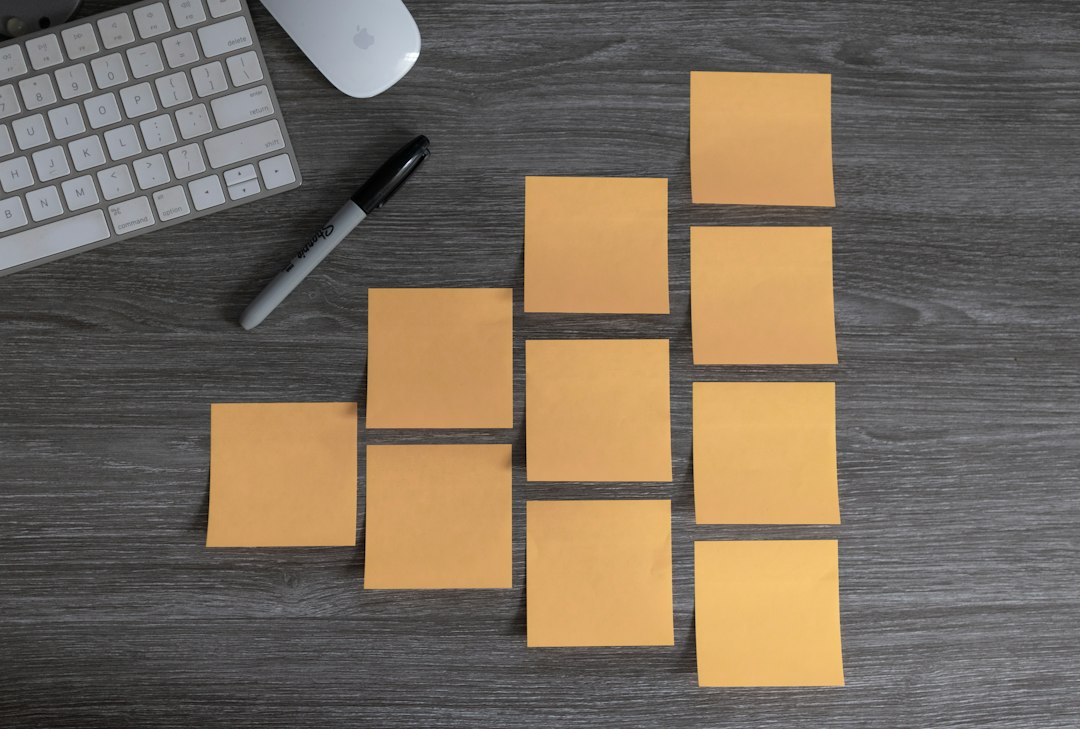
Featured photograph: blank sticky notes, by Kelly Sikkema, via Unsplash. The photograph illustrates materials that could be used to make a board; it is not a ready-made movement timetable.