
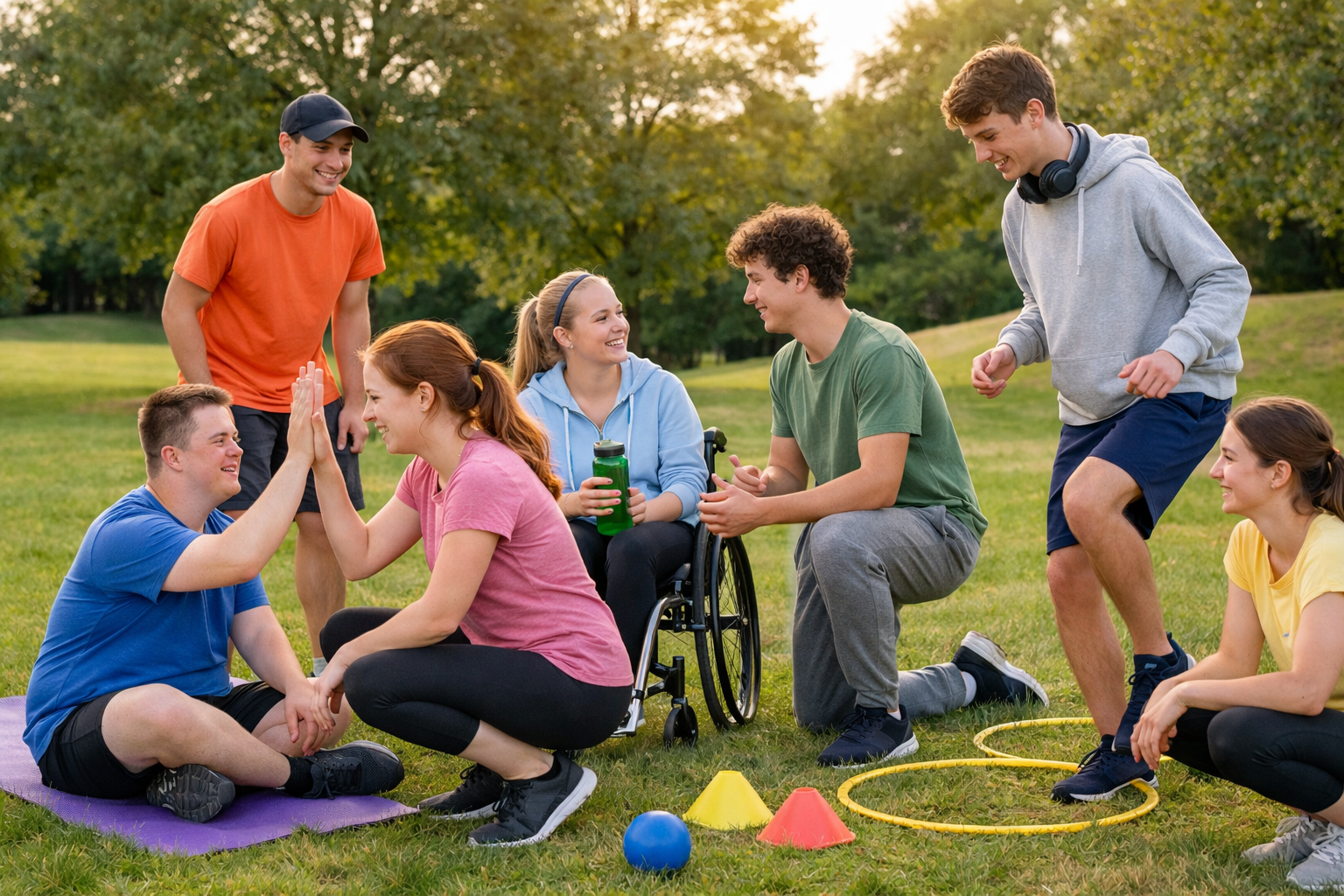
The Short Answer: Change the Game, Not the Child
To make PE games inclusive, adjust three things: equipment, space and rules. That way every child takes part in the same activity in a meaningful way. Don’t sit a student out or hand them a separate task. Change the variables instead, such as a bigger, softer ball, a smaller playing area, an extra bounce or a teammate who acts as a guide. The goal is an equal level of challenge, not identical tasks.
Many teachers plan with the STEP framework: Space, Task, Equipment and People. Change one variable at a time, watch how students respond, then adjust again.
Adapt Equipment for Every Ability
Equipment is often the fastest fix. It raises success rates without changing how the game works.
Bigger, Slower Balls
Lightweight beach balls and foam balls can move more slowly than small hard balls, making them easier to track, catch and strike. They suit children still developing hand-eye coordination.
Sound and Color Cues
Bell balls, beepers and high-contrast colors support students with visual impairments. Bright cones on green grass help everyone see boundaries.
Larger Targets
Wider goals, bigger hoops and lowered baskets give children more chances to score, which keeps motivation high.
Easier Grips
Short, light rackets, scoop catchers and textured balls help children with limited grip strength or reach.
Adapt the Playing Space
Space affects how far children run, how crowded the game feels and how safe it is.
- Shrink the area: Smaller courts reduce running distance for children who tire quickly, have asthma or use mobility aids.
- Create zones: Give some players a protected zone where they cannot be tagged or tackled. This reduces collision risk between wheelchair users and runners.
- Check the surface: Smooth, flat floors work best for wheelchairs and walkers. Avoid wet grass or loose gravel.
- Vary distances: Mark several throwing or shooting lines so each child can work at the right distance.
- Reduce sensory overload: Clear boundaries, less echo and a quiet “reset spot” nearby help many autistic children and those with ADHD stay involved.
Adapt the Rules
Rule changes balance the challenge so that skilled and developing players both stay engaged.
Putting It Together: Three Classic Games
Tag
Use a verbal or visual tag rather than physical contact, offer safe zones and let everyone rejoin immediately. Avoid exercise penalties or elimination rules.
Basketball
Lower one hoop, add a floor target worth points and require three passes before a shot so every player handles the ball.
Relay Races
Let each runner choose a distance line or movement style, such as walking, rolling or skipping. Score teams on completion and teamwork rather than speed alone.
Common Mistakes to Avoid
- Making one child the “helper” or scorekeeper every lesson instead of a player.
- Announcing adaptations by name in front of the class.
- Changing too many things at once, which makes it hard to tell what worked.
- Not asking the student, parents or support staff what helps.
Frequently Asked Questions
Won’t adaptations make games too easy for skilled students?
Not if you scale the challenge both ways. Skilled players can use their non-dominant hand, shoot from a farther line or pass a set number of times.
How do I adapt without singling a child out?
Build options into the game for everyone, such as choice of ball, choice of distance or rotating roles. Then the adaptation simply looks like part of the activity.
Start With One Change This Week
Inclusive PE comes down to small, deliberate adjustments to equipment, space and rules. Pick one game, change one variable, watch who joins in, and build from there. See our sensory-friendly activity ideas and the UK guidance on physical activity for disabled children.