
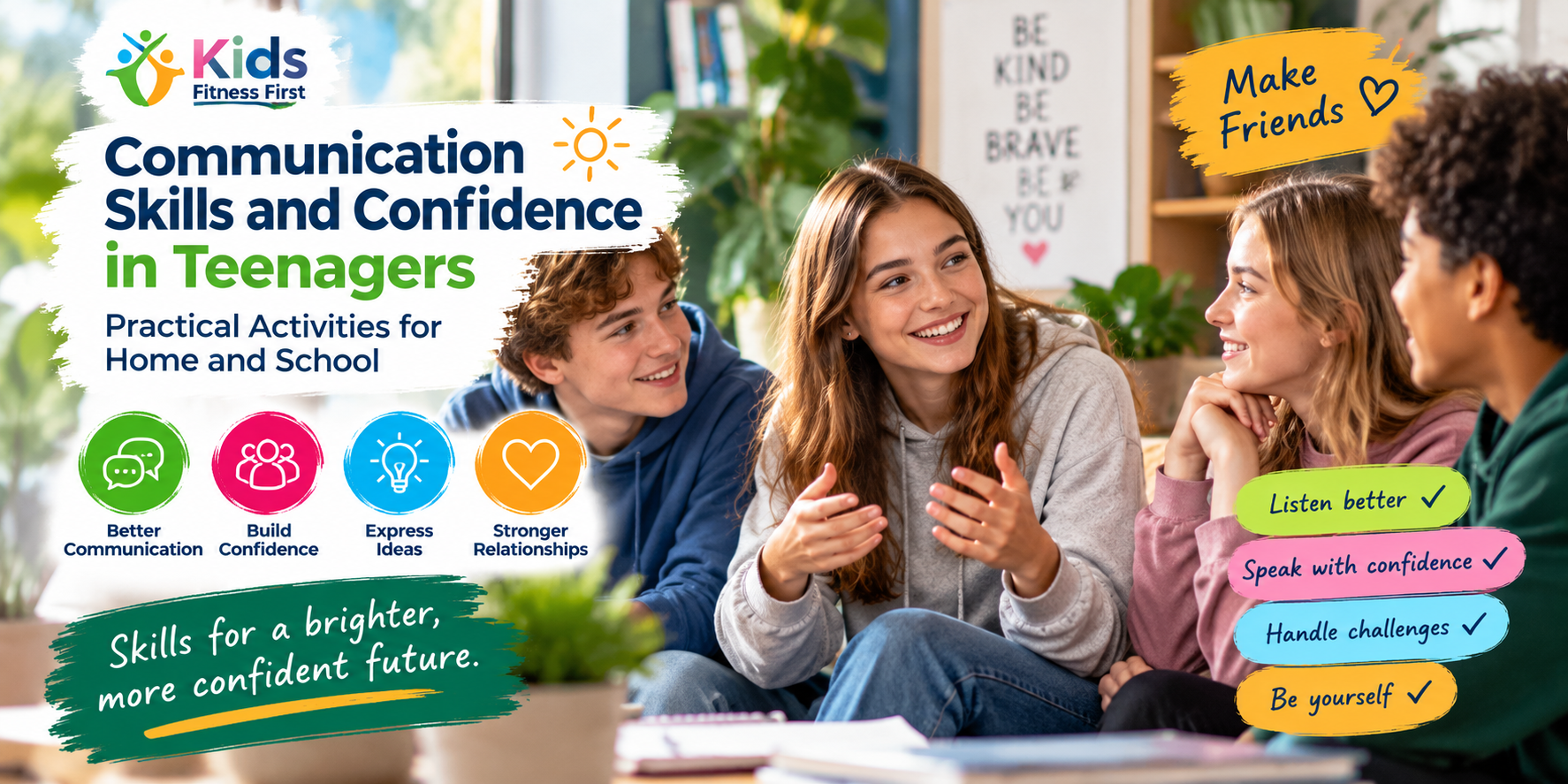
Confidence does not mean being the loudest person in the room. For teenagers, healthy communication can mean asking a question, expressing a preference, listening carefully or saying no respectfully. These skills develop through practice, supportive relationships and opportunities to make mistakes safely.
What good communication looks like
Communication combines speaking, listening, body language, timing and awareness of context. A teenager who is quiet may still communicate effectively. The goal is not to change someone’s personality but to help them express themselves in ways that work for them.
Seven activities that build skills
Start with one activity that feels comfortable. Keep each session short and offer encouragement. As a result, teenagers can build confidence without feeling under pressure.
1. The two-minute listening exchange
In pairs, one person speaks about a familiar topic for two minutes. The listener then summarises what they heard before offering an opinion. Switch roles. This teaches attention without turning the conversation into an interrogation.
2. Practise asking follow-up questions
Give a simple prompt such as “Tell me about a hobby you enjoy.” Practise open questions: “What do you like about it?” and “How did you get started?” This can help conversations feel more natural.
3. Rehearse respectful disagreement
Choose a low-stakes topic, such as whether school days should start later. Model: “I see your point. I think differently because…” The aim is to disagree without insulting or withdrawing.
4. Use an assertive sentence framework
Try: “I feel ___ when ___, and I would prefer ___.” Teenagers can adapt the wording so it sounds authentic. Practise with everyday situations before more difficult conversations.
5. Build a confidence ladder
Ask the teenager to choose a small challenge, such as greeting a classmate, asking a teacher for clarification or contributing one idea to a group. Increase the challenge gradually and celebrate the attempt rather than demanding a perfect outcome.
6. Explore communication beyond speech
Writing, drawing, messaging and visual supports may make expression easier for some young people. Respect communication differences, including those associated with neurodivergence.
7. Reflect after a conversation
Ask three non-judgemental questions: What went well? What felt difficult? What would you try next time? Avoid analysing every social interaction; brief reflection is enough.
How parents and educators can help
Adults can make communication practice easier. First, listen with patience. Next, offer simple choices. Most importantly, recognise effort rather than expecting perfect answers.
- Give teenagers time to finish a thought without interrupting.
- Model calm disagreement and apologise when you get something wrong.
- Offer choices about how to participate in group activities.
- Avoid comparing a teenager’s social confidence with peers.
- Make room for cultural, linguistic and neurodevelopmental differences.
What if a teenager avoids communication?
Reluctance may reflect shyness, fatigue, bullying, anxiety, sensory overload or simply a need for privacy. Start with curiosity rather than pressure. If distress is persistent or substantially affects school, relationships or wellbeing, a trusted school professional or healthcare clinician may be able to help.
A simple four-week practice plan
Use the following checklist as a flexible guide. However, adjust the pace to the teenager’s needs and interests.
Week 1: Practise active listening with a trusted person. Week 2: Try one open-ended question per conversation. Week 3: Rehearse expressing a preference or boundary. Week 4: Choose one manageable real-world confidence challenge and reflect on the experience.
For further educational materials, explore our Digital Resources and Insights & Guidance articles.