
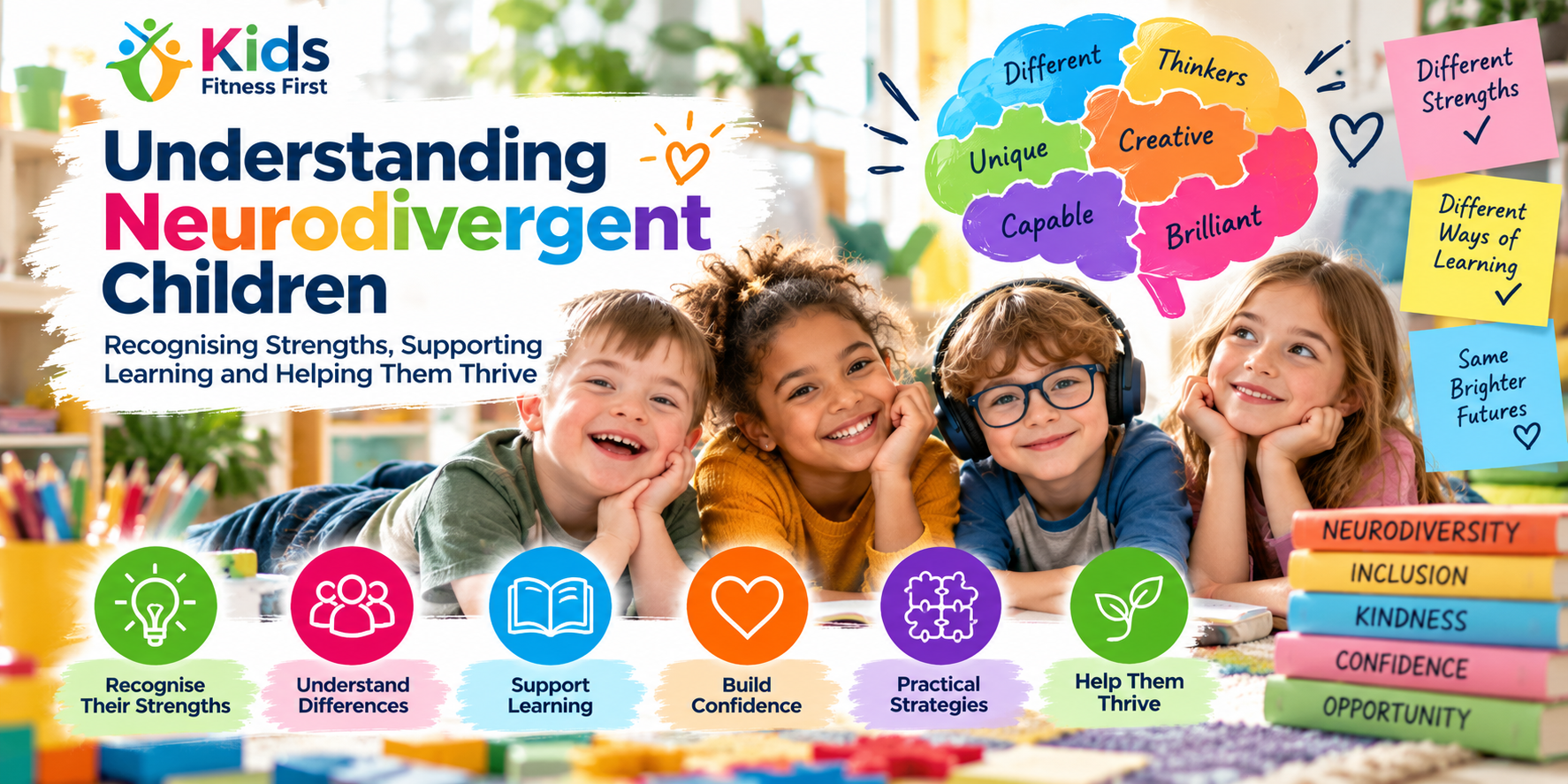
Children do not all process information, communicate or learn in the same way. The term neurodivergent is often used for people whose thinking or development differs from what is commonly expected, including some autistic children and children with ADHD, dyslexia or other developmental differences. Each child’s experience is individual.
Understanding a child’s needs starts with noticing both their strengths and the situations that make learning harder. The aim is meaningful participation, not forcing every child to behave or learn identically.
What does neurodiversity mean?
Neurodiversity describes natural variation in human brains and ways of thinking. Neurodivergent refers to individuals whose cognitive or developmental patterns differ from typical expectations. These terms do not replace clinical assessment where one is needed, and no single list describes every neurodivergent child.
Look for strengths without making assumptions
Some children show strong visual thinking, persistence with favourite subjects, creativity, pattern recognition or detailed knowledge of particular interests. Others may have different strengths entirely. Avoid claiming that every neurodivergent child has a special talent: ask what this particular child enjoys and does well.
Six practical ways to support learning
Every child is different. Therefore, start with one small adjustment and notice what helps. The following ideas can support learning at home and school.
1. Give clear, manageable instructions
Break complicated tasks into short steps. Check understanding without embarrassing the child. A written or illustrated checklist can make expectations easier to follow.
2. Offer more than one way to participate
Children may demonstrate understanding through speaking, drawing, writing, building or using technology. Flexible options can reveal learning that a single format misses.
3. Create predictable routines
Explain what will happen next and give advance notice of changes when possible. Predictability can reduce uncertainty while leaving room for curiosity and play.
4. Notice sensory needs
Noise, lighting, crowded spaces and textures affect children differently. A quiet area, movement break or suitable seating can improve comfort and attention.
5. Use interests as a bridge
If a child enjoys animals, maps, sports or digital creation, connect activities to that interest. Engagement often improves when learning feels meaningful.
6. Support relationships and belonging
Explain differences respectfully, address bullying promptly and make collaborative activities accessible. Inclusion is about participation and dignity, not simply being present in the same room.
Supporting children who enjoy digital activities
Games, videos and creative software can offer opportunities for problem-solving, storytelling and collaboration. The educational value depends on the activity, the child and the context. Adults can ask what the child is creating or discovering rather than assuming all screen use is either harmful or beneficial.
Work with the child and their support network
Ask the child what helps, using communication methods they prefer. Parents, teachers and relevant professionals can compare observations and agree on practical adjustments. If developmental concerns significantly affect daily life, a GP, paediatrician or appropriate specialist can advise on assessment and support.
Try a strengths-and-supports worksheet
Use this simple checklist to begin a supportive conversation:
- Ask the child which activities they enjoy.
- Identify one situation that feels difficult.
- Choose one adjustment to try this week.
- Review what worked and what needs to change.
Divide a page into three columns: What I enjoy, What feels difficult and What helps me. Complete it together, using pictures or examples if preferred. Revisit it as the child grows; needs and interests can change.
Frequently asked questions
Does neurodivergent mean the same thing as autism?
No. Autism is one form of neurodivergence, but the broader term may also include ADHD, dyslexia and other differences.
How can schools support neurodivergent children?
Schools can offer clear instructions, flexible ways to participate, sensory adjustments and respectful communication with families.
Should every neurodivergent child receive the same support?
No. Support should reflect each child’s preferences, strengths and needs.
Explore more
Read our Insights & Guidance articles and explore Digital Resources & Workbooks for further educational material. Kids Fitness First supports a strengths-first approach to learning and inclusion.