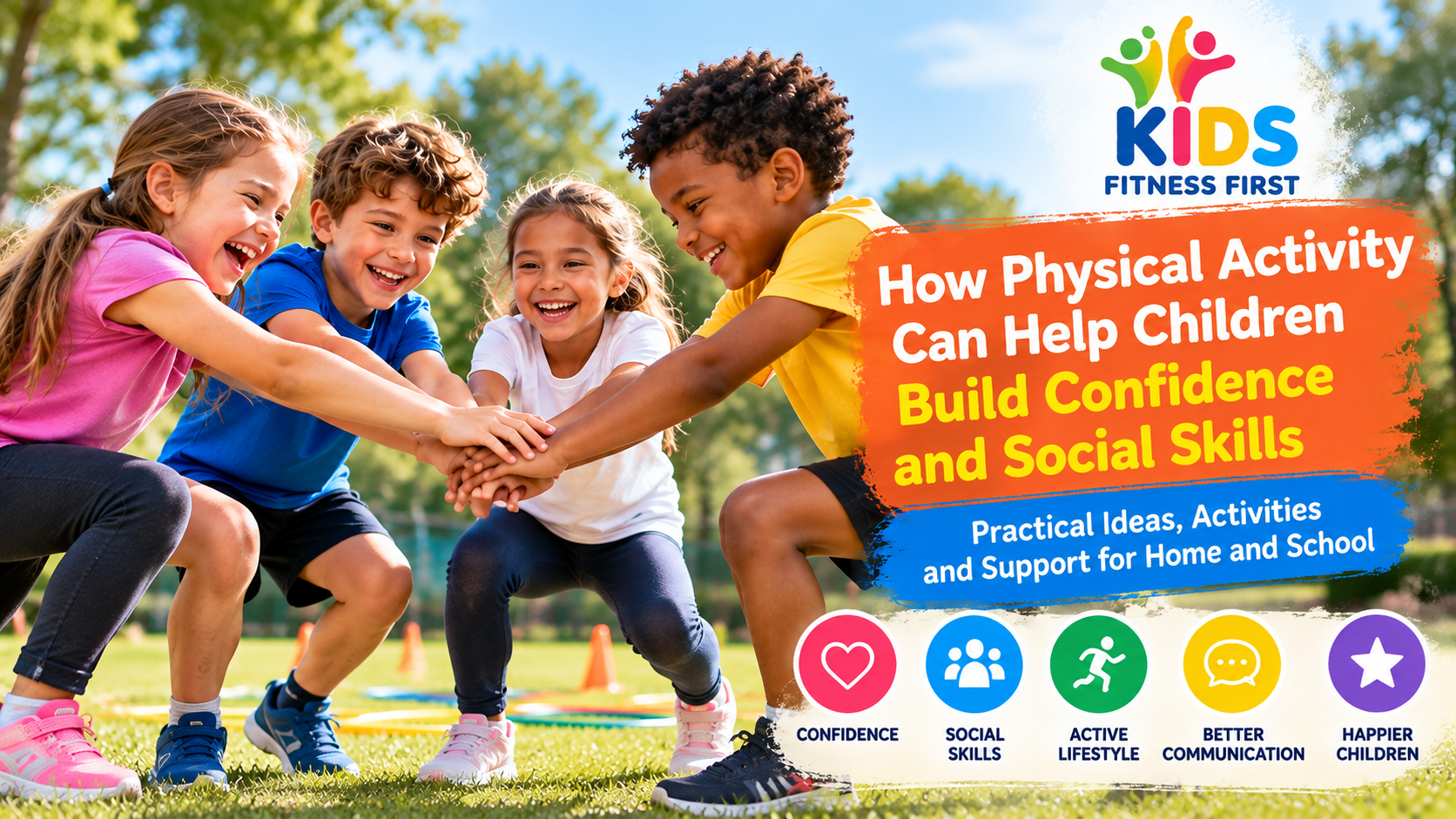
Some children enjoy movement but dislike being timed, ranked or picked last. A non-competitive activity gives them a way to participate without worrying about winning. It can be especially useful when a child is new to a group or uncertain about their physical skills.
Why remove the scoreboard?
Winning is not the only reason to move. A child may feel proud of learning a new movement, helping a friend or choosing a challenge. The purpose is not to ban competition for children who enjoy it, but to offer another way to take part.
Four activities without winners or losers
1. Build a group trail
Each child adds one safe movement to a shared route: a stretch, a step around a cone or a gentle reach. Everyone chooses whether to try each movement or use an alternative. The group completes the trail together.
2. Mirror partners
One person makes a slow movement while a partner copies it. Swap leaders after a minute. Use arm movements or facial expressions if standing is uncomfortable. Ask permission before touching anyone.
3. Pass the pattern
Pass a soft ball around a circle. Each person can roll, carry or hand it on. Instead of counting successful passes, invite the group to invent a new pattern together.
4. Choose-your-own challenge
Set up three stations labelled “gentle”, “medium” and “different”. Children choose a station, and changing stations is always allowed. Avoid describing one option as the clever or brave choice.
What adults can say
Replace “You were the best” with “You found a way that worked for you.” Instead of “Everyone must finish”, say “Choose how you want to take part.” Notice effort, kindness and problem-solving without turning praise into a public ranking.
Include quieter children
Offer a demonstration, picture instructions and the option to watch before joining. Do not demand eye contact or a spoken answer. A child who needs a pause can rejoin without explanation. Ask privately which activities feel comfortable.
A quick facilitator checklist
- Can each child choose a movement or role?
- Is there a seated or low-impact option?
- Are instructions demonstrated as well as spoken?
- Can someone pause and rejoin without embarrassment?
- Are we noticing cooperation instead of counting winners?
Invite feedback after the session: which part was enjoyable, and what should change next time? A child may prefer to answer by pointing or drawing.
How to tell whether it is working
Look for signs such as children asking to return, trying a different movement, or choosing a role more confidently. These are useful observations, not proof that one game has caused a psychological change.
For further ideas, explore our guide to physical activity, confidence and social skills. For general activity recommendations, see the CDC’s children’s activity guidance.
Adapt every activity to the group’s access needs, comfort and preferences.