
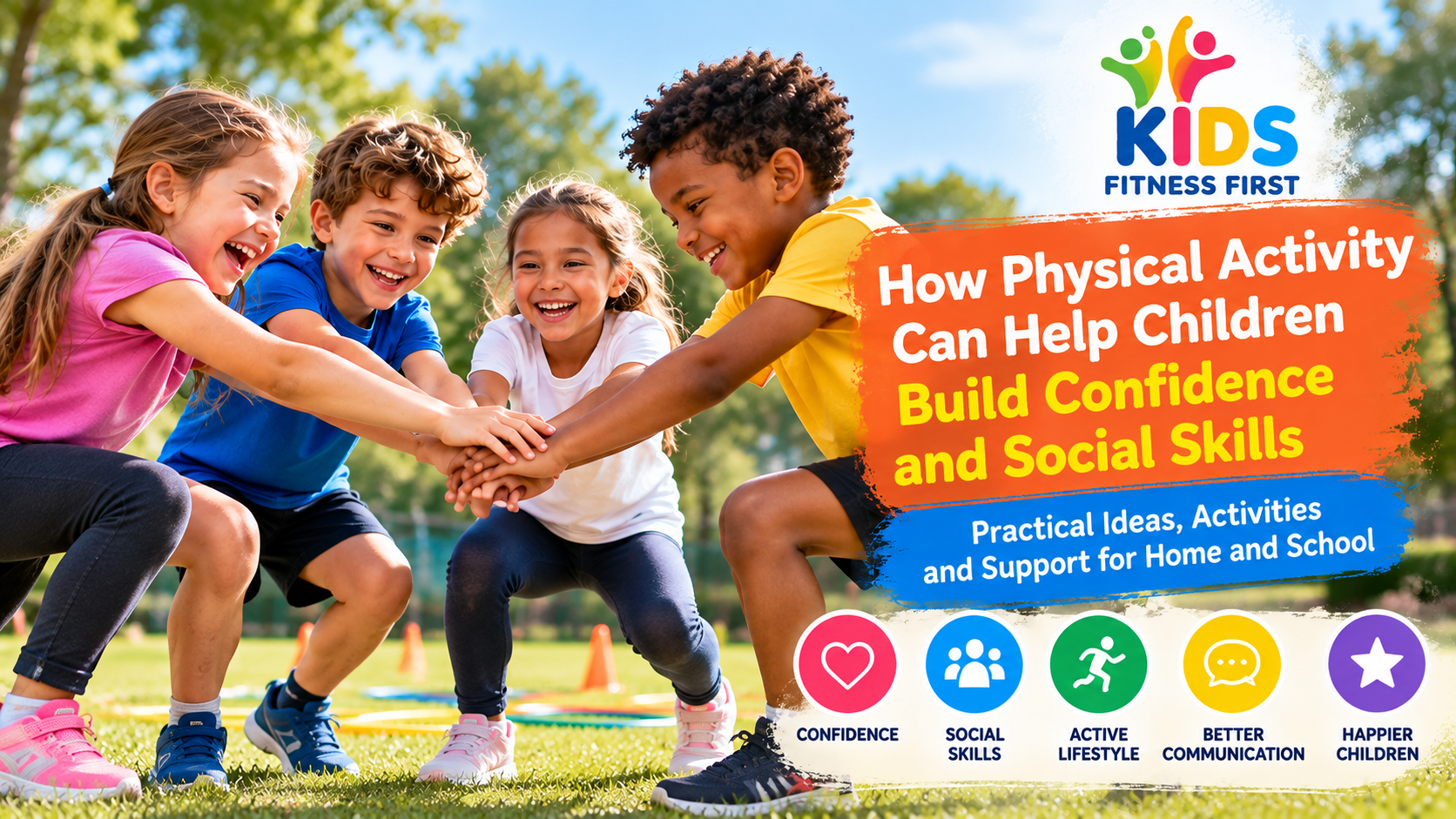
Practical guide for parents, carers and teachers. Discover how inclusive physical activity can create opportunities for children’s confidence, teamwork and social skills without pressure or competition. These ideas are flexible, inclusive and intended for everyday participation rather than diagnosis or treatment.
Confidence develops through experience
Confidence is often built by noticing progress in manageable steps. Learning a new movement, taking a turn or helping a teammate can offer children evidence of what they can do. The emphasis should be on choice and participation, not on winning or meeting an adult’s timetable.
Five ways activity can create social opportunities
- Shared goals: Carry a ball together or complete a simple group challenge.
- Turn-taking: Use short games with clear, fair turns and visual cues.
- Communication: Let children explain a route, demonstrate a move or choose a game.
- Problem-solving: Invite the group to design a safe obstacle course.
- Celebrating progress: Notice kindness, creativity and persistence as well as physical skills.
Activities to try at home or school
Partner mirror
Two children copy each other’s slow movements. Switch who leads and allow a seated version.
Team target challenge
Work together to get soft objects into a basket. Change the target distance so everyone can contribute.
Build-a-course
Children plan an accessible course using floor markers and low obstacles. Give non-moving roles, such as route designer or timekeeper, equal value.
Cooperative nature hunt
Look for shapes, colours and textures together without racing.
When group activities feel difficult
Not every child enjoys team sports, loud games or being watched. Offer a small group, one trusted partner, quiet alternatives or independent participation. Do not require eye contact, touch or verbal performance. Confidence is more likely to grow when children feel safe and respected.
Helpful language for adults
Instead of saying ‘You are the best’, try ‘You kept trying different ways’. Instead of ‘Hurry up’, try ‘Would you like more time or a different option?’ Invite children to identify what they enjoyed and what they would change next time.
A week of low-pressure participation
Choose one small opportunity each day: a partner game, a shared walk, helping set up equipment or teaching someone a favourite movement. Revisit activities children request. There is no need to turn every session into a lesson in social behaviour.
When to seek support
If anxiety, bullying, pain or participation barriers persist, talk with the child and their school, SENCO or appropriate health professional. Physical activity can complement support, not replace it.
Explore related Kids Fitness First guides
- Why Movement Matters: 10 Simple Activities
- Movement Breaks for Children with ADHD: Practical Ideas for Home and School
- 10 Coordination and Balance Activities for Children of Different Abilities
- Sensory-Friendly Physical Activities for Autistic and Neurodivergent Children
Further information
See the NHS physical activity guidelines for children and young people and UK Chief Medical Officers’ physical activity guidelines. For individual concerns, consult a qualified professional.
This article provides general educational information and is not medical or diagnostic advice.