
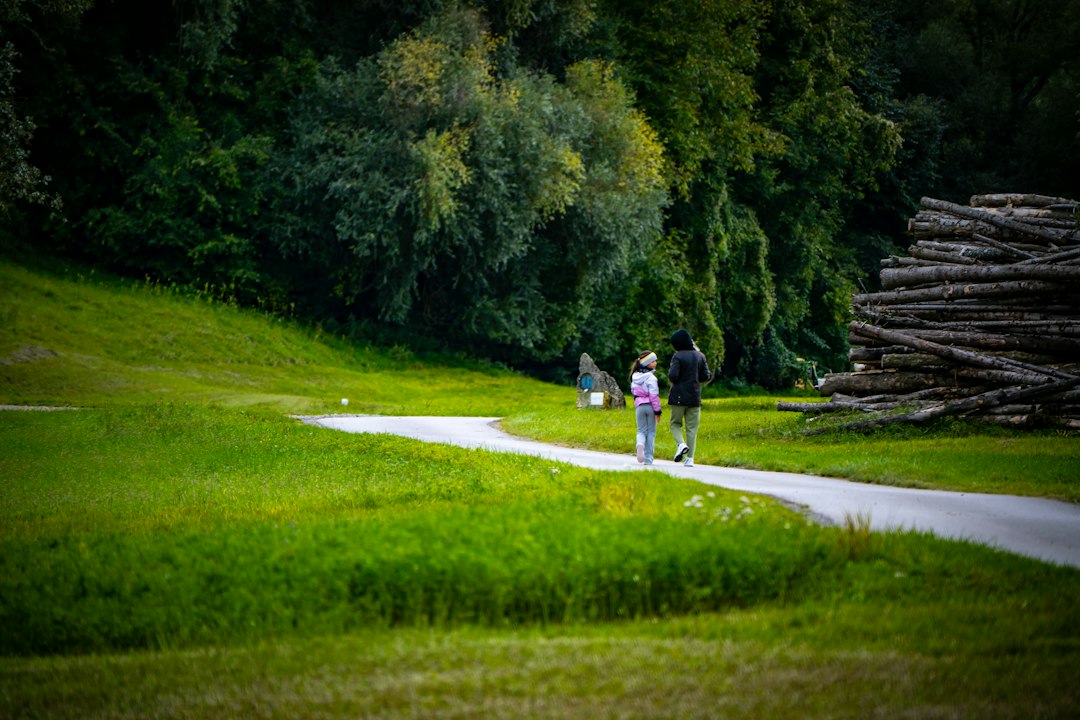
Shorter days, damp paths and chilly weather can make outdoor play seem difficult. But winter movement does not need snow, specialist sports equipment or a lengthy outing. A short visit to a suitable park, garden or accessible open space can create plenty of opportunities for play.
Here are nine low-cost ideas for families in the UK, including gentle options for children who prefer quiet activities or need movement adaptations.
Check the conditions before leaving
Look at the weather, daylight, wind and ground conditions. Choose suitable layers and footwear and bring any equipment or medication your child needs. Check paths for ice, puddles and slippery leaves; choose well-lit routes in darker hours. If the surface or weather is unsafe, opt for an indoor game instead.
Nine winter movement ideas to try
1. Colour detective
Choose three colours to find on an outdoor route. Your child can point to a red door, yellow leaf or grey stone. A wheelchair user can lead the search while the group follows a step-free path. The challenge is to notice, not to rush.
2. Shape spotting
Look for circles in signs, lines in branches and triangles in roofs. At a safe stopping point, trace each shape in the air with your hands or make a gentle arm movement. Keep attention on traffic at crossings.
3. Five-senses trail
What can you hear or see? Perhaps wind in a tree, a bird or the pattern of clouds. Children can choose which senses to focus on. Avoid asking them to touch or taste unfamiliar outdoor objects, and let sensory-sensitive children skip prompts they dislike.
4. Landmark mission
Choose two or three accessible landmarks, such as a bench, tree and gate. Travel between them at a comfortable pace. Children can choose the visiting order while adults ensure the route remains safe.
5. Winter story walk
Invent a short story as you move. The path might be a river, the bench a castle and the tree a giant. Each character suggests a movement, such as reaching, turning or moving carefully to the next spot. Children can contribute through speech, signs or pictures.
6. Weather reporter
Let your child give a weather report: “The clouds are moving,” or “The leaves are wet.” Ask whether it feels comfortable to continue. This gives a child a meaningful role and a natural chance to request a break.
7. Follow the safe line
Use an existing dry pavement marking or path edge for a slow follow-the-line game. Walk or wheel alongside it rather than balancing on raised kerbs. Skip the activity if surfaces are icy, uneven or obstructed.
8. Nature pattern makers
Collect a few already-fallen, safe objects and arrange a simple pattern in a suitable location. Children can step or wheel around to view the pattern from another angle. Leave living plants and wildlife undisturbed, avoid small objects for children who may mouth them, and wash hands afterwards.
9. Glove-and-coat movement challenge
In an open, safe area, try opening and closing hands, gently reaching upwards or turning shoulders. Let children choose standing or seated versions. Avoid forcing stretches and stop if anyone is uncomfortable.
How to make winter play inclusive
- Predictability: show the route beforehand and agree where the outing will finish.
- Mobility: prioritise accessible surfaces, suitable rest points and games that do not require running.
- Sensory comfort: offer quiet routes and allow breaks from crowds, wind or noise.
- Mixed ages: let older children help invent stories while younger children choose colours or landmarks.
- Weather changes: shorten the visit or switch activities without treating that as failure.
How long should children play outside?
There is no need to insist on a fixed winter outdoor session. A manageable few minutes may be appropriate, with more time added if the child is comfortable and the conditions are safe. The NHS Healthier Families activity hub offers additional accessible ways to move. For ages 5–18, NHS guidance recommends an average of at least 60 minutes of moderate or vigorous activity a day across the week, with separate tailored advice for disabled children. Gentle play is only one part of a varied activity pattern.
A five-minute starter activity
- Minute 1: Check that the outdoor space, surface and weather are suitable, then agree where to finish.
- Minute 2: Let your child pick one colour to find.
- Minute 3: Travel to a suitable landmark at a comfortable pace.
- Minute 4: Ask your child to describe one thing they notice, or show it with a gesture.
- Minute 5: Return, check how everyone feels and decide whether to stop or continue.
Adjust or skip any stage. Children who want a quieter activity can watch, point or help choose the route.
Frequently asked questions
Do we need snow?
No. All nine ideas work in ordinary winter conditions when it is safe to go outside.
What if it’s icy or very dark?
Choose a safe indoor activity. Do not take a risk just to complete a movement challenge.
Can siblings play without keeping score?
Yes. These are shared exploration games with no winners, race times or elimination rules.
Explore more: Try our imaginative weather movement games indoors, or our non-competitive movement ideas.
Always use appropriate supervision and adapt play to individual support needs and local conditions.