KIDS FITNESS FIRST

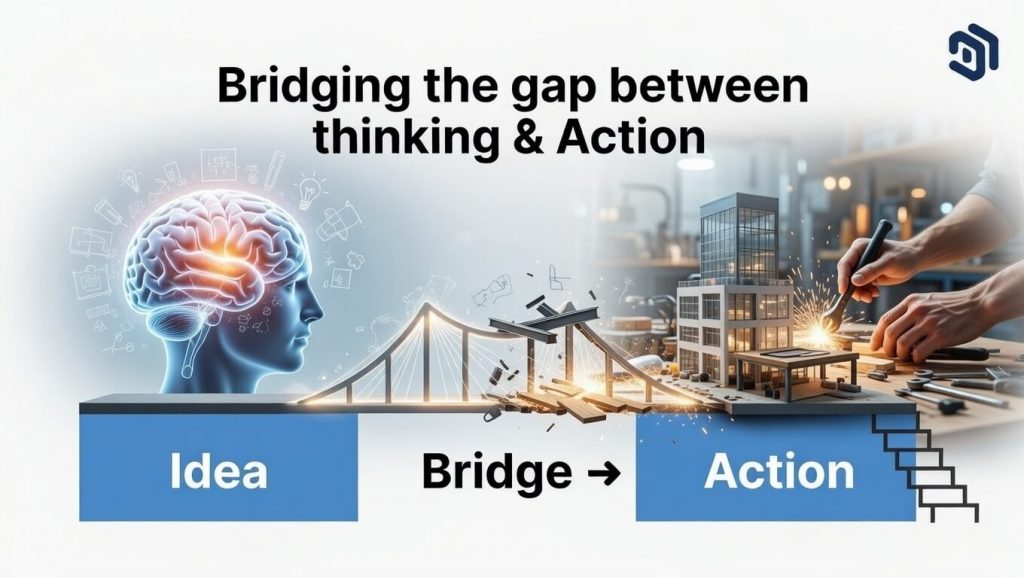
Blog header illustration showing ideas in the mind transforming into real action, with sketches turning into hands building a physical object.

Thinking Is Not Doing: Why Real Learning Happens Through Action

Thinking Is Not Doing: Why Real Learning Requires Action

Many people believe progress happens through thinking alone.

They plan.
They analyse.
They imagine.

But real development rarely happens in the mind alone.

It happens when thinking becomes action.

Understanding the difference between thinking and doing is one of the most important lessons in learning, creativity, and personal development.

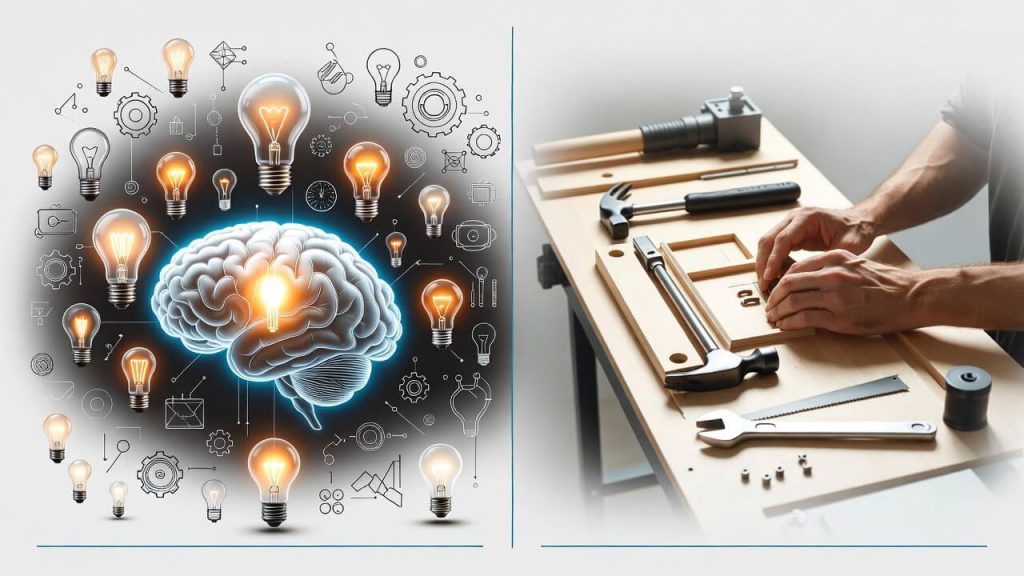
Thinking vs doing concept illustration showing ideas in the mind transforming into real-world action on a workbench.

The Balance Principle

Real ability develops when thinking connects with expression.

There are three main ways ability becomes real:

Physical expression
Building, making, moving, and interacting with the real world.

Creative expression
Designing, writing, drawing, inventing, and shaping ideas.

Social expression
Communicating, collaborating, and learning with others.

Without these forms of expression, thinking remains only potential.

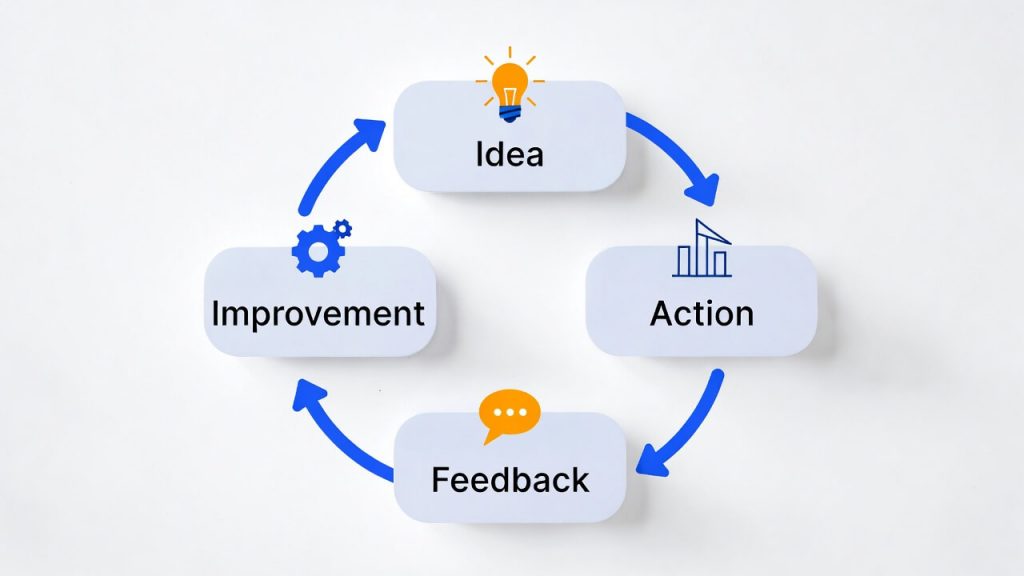
Learning cycle infographic showing idea, action, feedback, and improvement forming a continuous loop for skill development.

Simulation vs Real Experience

The human mind is excellent at simulation.

We can imagine conversations, rehearse outcomes, and plan entire projects.

But simulation is not the same as experience.

Real experience introduces:

unexpected problems
physical limitations
feedback from others
practical learning

These elements reshape our understanding in ways thinking alone cannot.

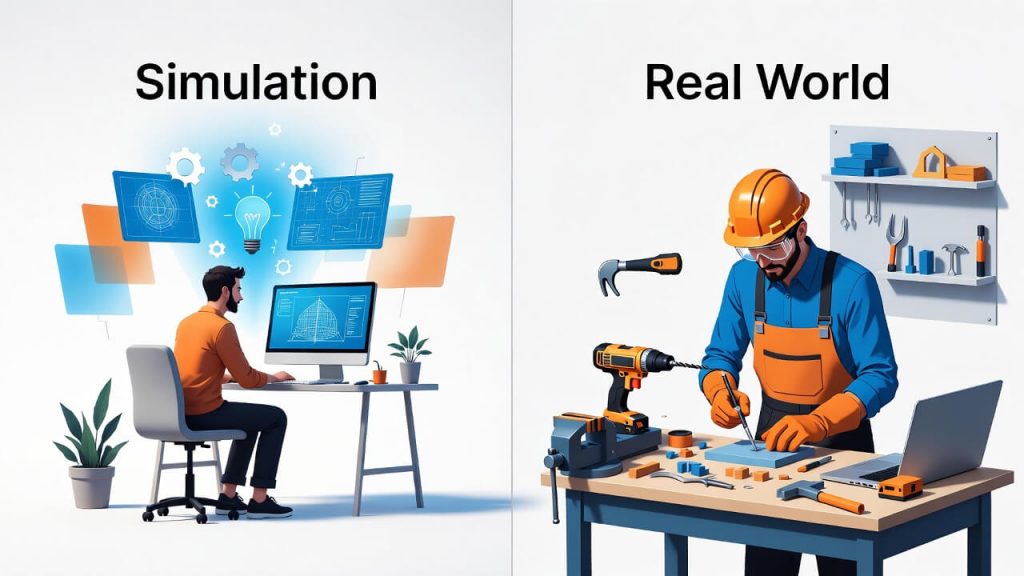
Simulation vs real experience illustration showing a person imagining a project at a desk compared with building it in a workshop.

Learning a Skill

Someone may think about learning guitar for months.

They might watch videos, read guides, and imagine playing music.

But the real learning begins when they pick up the guitar.

The fingers hurt.
The timing is wrong.
The chords sound messy.

This feedback is the beginning of real skill development.

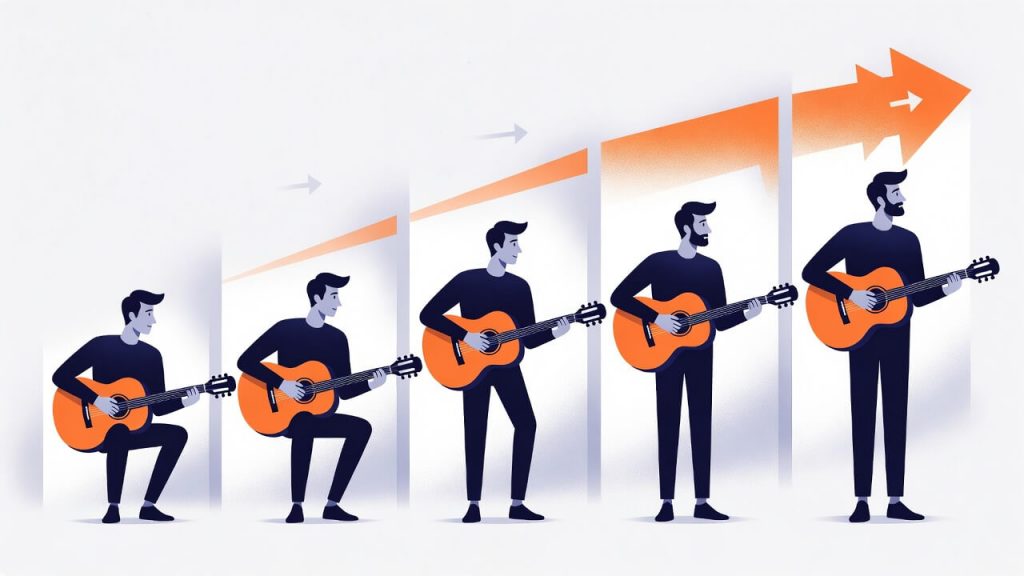
Skill development through practice illustration showing a person learning guitar progressing from beginner to confident player over time.

Why Action Changes Understanding

When an idea moves from the mind into the real world, several important things happen:

Feedback becomes immediate.
Mistakes become visible.
Improvement becomes possible.

This process is how learning truly accelerates.

The brain adjusts rapidly when thought meets reality.

A design improves after it is built.
Communication improves after it is spoken.
Skills improve after they are practiced.

Thinking prepares the ground.

Doing grows the skill.

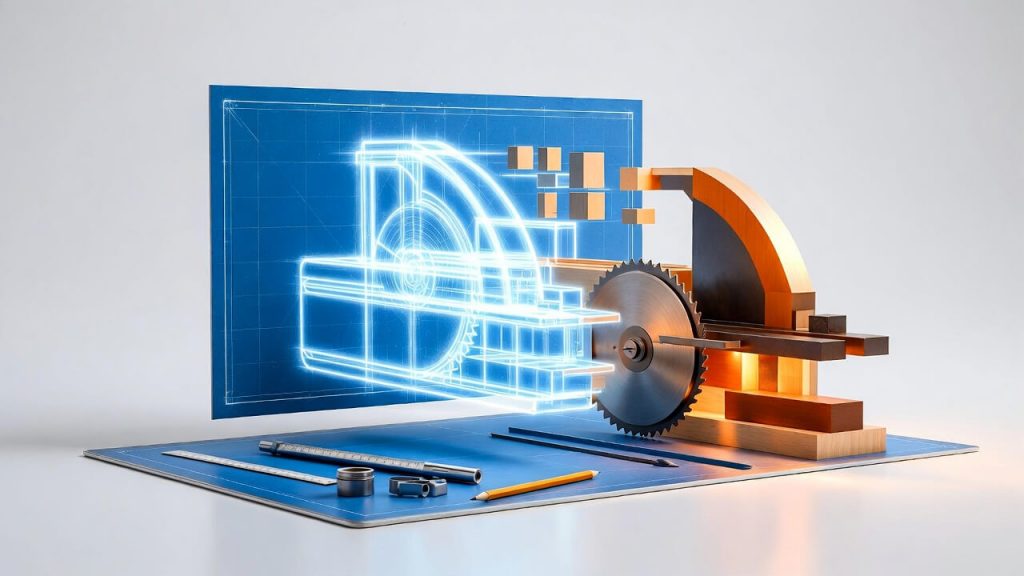
Illustration showing ideas transforming into reality, with a glowing blueprint turning into a real object being built.

Development Requires Expression

For ability to develop fully, thinking must lead to expression.

This does not always mean large achievements or major projects.

Often it means small but consistent steps:

building something simple
sharing an idea
testing a design
trying a new skill
working with others

Each action transforms abstract thinking into practical understanding.

Over time, these actions accumulate into experience.

Experience becomes competence.

The Real Path of Growth

Real growth rarely happens through thinking alone.

It happens through cycles of:

thinking
trying
learning
adjusting
trying again

This cycle transforms ideas into capability.

The most effective learners understand that action is part of thinking, not separate from it.

Thinking guides action.

Action strengthens thinking.

Together they create development.

The Key Insight

Thinking is the beginning of progress.

Doing is the continuation of it.

When the two are balanced, ideas move from imagination into reality — and ability grows in ways that thought alone can never achieve.

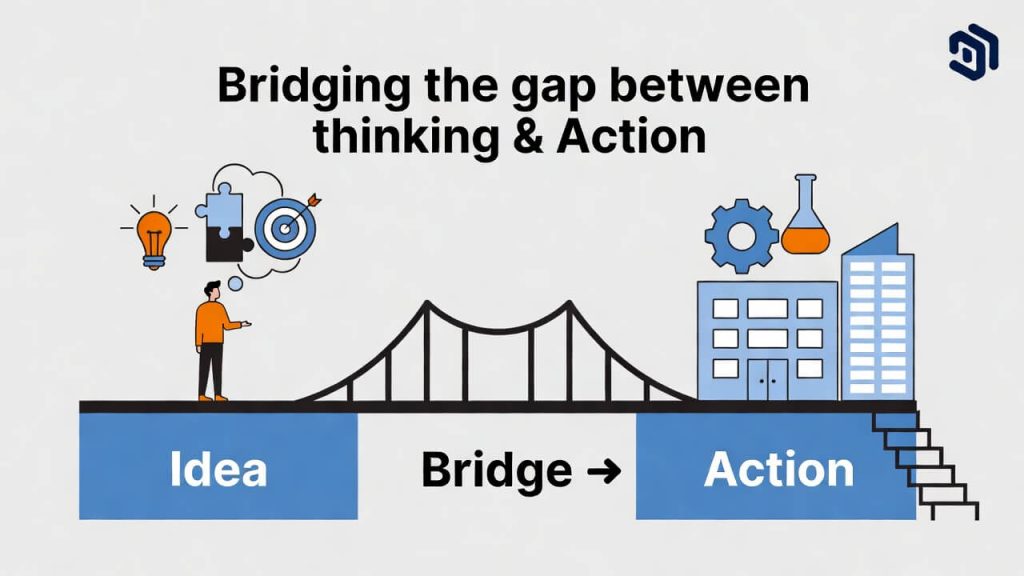
Illustration showing a bridge between thinking and action, where a person moves from ideas toward real building and experimentation.