Exercise and Adult ADHD: How Movement Supports Focus and Wellbeing
For many adults with ADHD, exercise can feel like another task that should already be part of daily life.
You may understand that movement is good for your health. However, knowing this does not always make it easier to begin, stay consistent or return after missing several days.
Perhaps you have joined a gym with genuine enthusiasm, followed a routine for two weeks and then stopped completely. Alternatively, you may find traditional exercise repetitive, uncomfortable or difficult to fit into an already demanding schedule.
These experiences do not mean that you are lazy or incapable of being active.
Instead, they may show that the type of exercise, environment or routine did not suit the way your brain responds to interest, motivation and reward.
Fortunately, movement does not need to involve long gym sessions or intense training programmes. It can be simple, flexible and built around activities you genuinely enjoy.
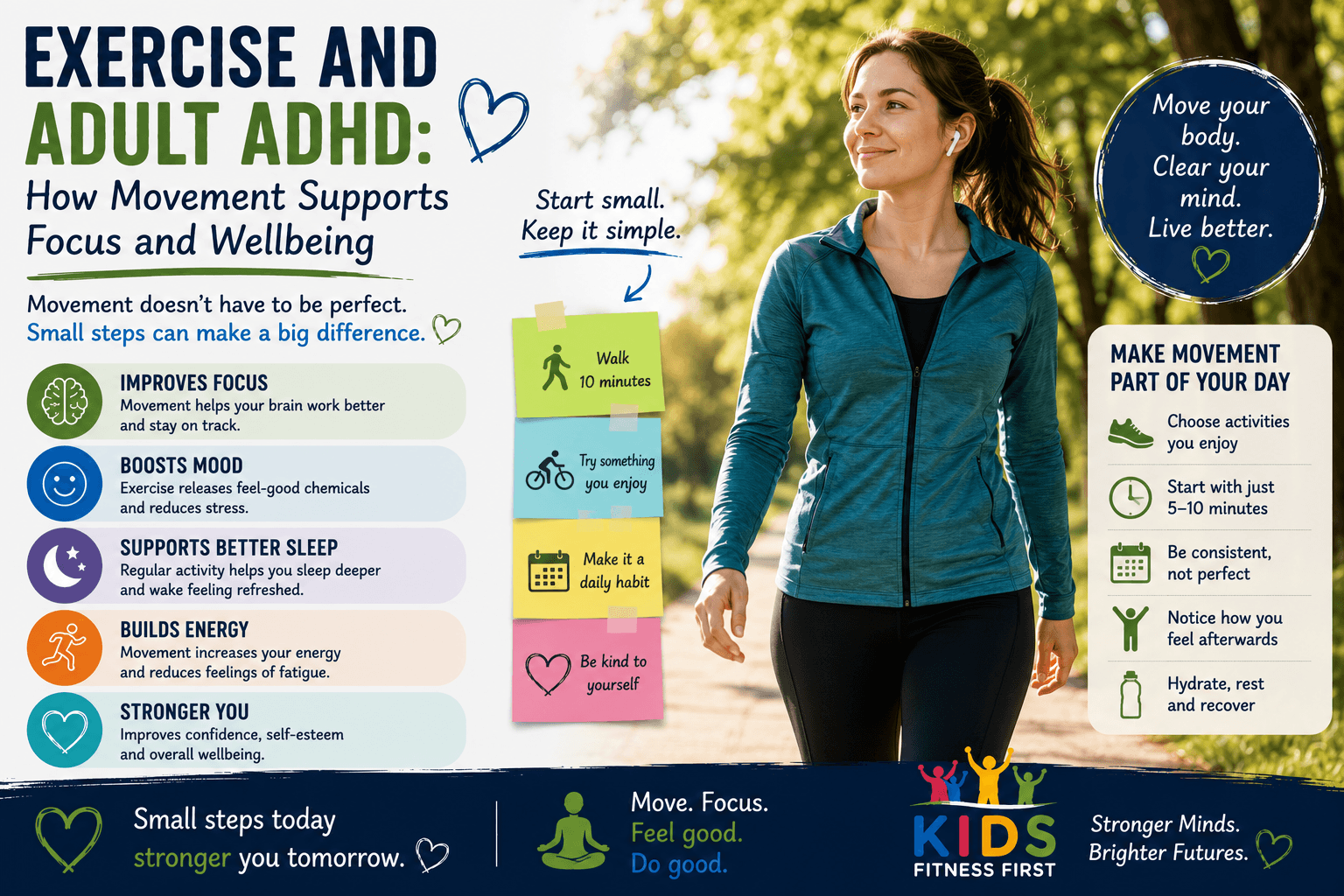
When exercise and adult ADHD are approached realistically, movement can become a valuable part of supporting focus, energy, emotional wellbeing and everyday confidence.
Why Movement Can Be Helpful
Physical activity affects both the body and mind.
After movement, many people notice that they feel clearer, calmer or more able to begin a task. Others find that exercise helps release restlessness or reduces the tension that builds during a stressful day.
Regular movement may support:
- physical health
- energy levels
- sleep quality
- stress management
- emotional wellbeing
- confidence
- daily structure
- concentration after activity
However, exercise should not be presented as a cure for ADHD.
Rather, it can be one useful part of a broader support plan that may also include routines, workplace adjustments, coaching, therapy, medical care or prescribed treatment.
The most effective approach is usually one that supports your individual needs.
Why Starting Can Feel Difficult
Beginning exercise often requires several executive-function skills.
You may need to:
- choose an activity
- find appropriate clothing
- decide when to do it
- prepare equipment
- travel somewhere
- remember the plan
- begin despite low motivation
Although each step appears small, together they can create a significant barrier.
As a result, the activity may feel exhausting before it has even started.
This is why simply telling yourself to “exercise more” is rarely enough.
Instead, the process needs to become easier.
You may benefit from removing unnecessary decisions, preparing in advance and choosing activities with a very low starting point.
Choose Movement You Actually Enjoy
The best form of exercise is not necessarily the one that burns the most calories or looks most impressive.
It is the activity you are willing to repeat.
For example, you might enjoy:
- walking
- swimming
- dancing
- cycling
- gardening
- yoga
- hiking
- boxing-style fitness
- team sports
- short home workouts
- active video games
- playing outdoors with children
- practical physical work
Some adults prefer structured classes. In contrast, others feel more comfortable exercising alone.
You may also prefer variety rather than repeating the same routine every week.
That is perfectly acceptable.
Exercise does not have to look identical every day to be useful.
Begin With a Small Amount
One of the biggest obstacles is believing that exercise only counts when it lasts a long time.
However, a short period of movement is still movement.
Instead of planning a one-hour workout, begin with five or ten minutes.
You could:
- walk around the block
- stretch beside your desk
- complete one short exercise video
- climb the stairs several times
- dance to two songs
- take a brief walk during lunch
- do a few simple bodyweight movements
A smaller starting point reduces pressure.
Moreover, once you begin, you may decide to continue for longer. Even when you stop after five minutes, you have still completed the planned action.
Consistency often grows from making success easier.
Use Exercise to Create a Transition
Adults with ADHD can find it difficult to shift from one task or part of the day to another.
Movement can help create a clear transition.
For example:
- Take a short walk before starting work.
- Stretch after finishing a long task.
- Move for ten minutes when returning home.
- Walk after lunch before resuming work.
- Complete a brief routine before beginning evening activities.
These movement breaks can signal that one part of the day has ended and another is beginning.
Consequently, they may make it easier to reset your attention.
Make Exercise Visible
A routine is easier to remember when the reminder is placed where you will see it.
Helpful visual cues may include:
- leaving walking shoes beside the door
- placing exercise clothes on a chair
- keeping a resistance band near your desk
- adding movement to your calendar
- using a visible checklist
- preparing a gym bag the night before
- placing a water bottle in your workspace
Your environment can reduce the burden on memory.
Therefore, rather than relying on motivation alone, create reminders that make the next step obvious.
Attach Movement to an Existing Habit
Exercise can become easier to remember when it follows something you already do.
For example:
- After drinking your morning coffee, stretch for three minutes.
- After lunch, walk for ten minutes.
- After finishing work, change into walking clothes.
- After brushing your teeth, prepare your exercise clothes for tomorrow.
- After a long phone call, stand up and move around.
Because the existing action already happens regularly, it can act as a reliable trigger.
Over time, the two activities may begin to feel naturally connected.
Use Music, Variety and Novelty
Repetitive exercise can become boring quickly.
Therefore, adding interest may help you stay engaged.
You could:
- create different music playlists
- listen to podcasts while walking
- change your route
- alternate between several activities
- try a new class
- exercise outdoors
- use a step or activity challenge
- invite someone to join you
Variety does not mean you are failing to follow a routine.
Instead, it may be the feature that makes the routine sustainable.
A flexible exercise plan can still provide structure while allowing enough novelty to maintain interest.
Exercise With Other People
Some adults find movement easier when another person is involved.
This may include:
- walking with a friend
- joining a class
- attending a sports group
- exercising with a partner
- arranging regular active meetings
- joining a community activity
- working with a qualified trainer
The social commitment creates accountability.
In addition, conversation and shared enjoyment can make the activity feel less like a chore.
However, support should feel encouraging rather than pressuring.
The aim is to make movement easier and more enjoyable.
Plan for Low-Energy Days
Not every day will feel the same.
On some days, you may feel energetic and motivated. On others, even a short walk can feel difficult.
Rather than abandoning the routine completely, create different versions.
For example:
High-energy option:
A full workout, long walk or exercise class.
Medium-energy option:
A twenty-minute walk or short home routine.
Low-energy option:
Five minutes of stretching or gentle movement.
This flexible approach helps prevent all-or-nothing thinking.
A reduced version still keeps the habit connected to your day.
Avoid Using Exercise as Punishment
Exercise should not become a way to punish yourself for eating, resting or missing previous sessions.
Unfortunately, harsh rules often create guilt and make movement less appealing.
Instead, think of exercise as a form of support.
Movement can help you:
- care for your body
- release tension
- create thinking space
- improve confidence
- spend time outdoors
- connect with other people
- build physical strength
This approach creates a healthier relationship with activity.
You are not exercising because your body has failed.
You are moving because your wellbeing matters.
Notice How You Feel Afterwards
Long-term health goals can feel distant.
Therefore, it may help to notice the immediate effect of movement.
After exercising, ask yourself:
- Do I feel calmer?
- Is my mind clearer?
- Has my energy changed?
- Do I feel less restless?
- Am I more able to begin the next task?
- Did I enjoy any part of the activity?
Writing down these observations can help your brain connect movement with a positive outcome.
As a result, the reward becomes more immediate and easier to remember.
Support Exercise With Simple Preparation
Preparation can remove many barriers.
The night before, you might:
- choose your clothing
- charge headphones
- fill a water bottle
- decide where you will go
- check the weather
- agree on a meeting time
- place equipment somewhere visible
Although these actions take only a few minutes, they reduce the number of decisions required the following day.
Consequently, beginning becomes much easier.
Be Careful With Overenthusiasm
When a new activity feels exciting, it can be tempting to do too much too quickly.
You may begin with an intense schedule, buy expensive equipment and commit to exercising every day.
At first, this feels motivating. However, exhaustion, soreness or boredom may soon follow.
Instead, leave room for the routine to grow.
Begin at a level that feels almost too easy.
Then increase the time or intensity gradually.
Sustainable progress is usually more valuable than a dramatic start followed by complete burnout.
Movement Can Support Better Sleep
Daytime activity can form part of a healthy sleep routine.
For some adults, movement helps reduce restlessness and creates a clearer difference between active time and rest time.
However, the timing and intensity of exercise may affect people differently.
Some find evening exercise calming, while others feel more alert afterwards.
Therefore, pay attention to your own response.
Choose a time that supports rather than disrupts your sleep.
Know When to Seek Advice
Most adults can benefit from some form of appropriate physical activity. Nevertheless, individual health needs vary.
It is sensible to seek professional advice before making major changes when you:
- have an existing medical condition
- experience chest pain or unusual breathlessness
- are recovering from an injury
- have significant mobility concerns
- are pregnant
- take medication that may affect exercise
- have been advised to limit physical activity
A qualified healthcare professional can help you decide what is safe and appropriate.
Progress Does Not Have to Look Perfect
You do not need to follow the same routine forever.
Your interests, health, schedule and energy will change.
Therefore, your approach to exercise may need to change as well.
Progress might mean:
- walking more often
- taking movement breaks at work
- trying a new activity
- returning after several missed weeks
- choosing a gentler routine
- asking someone to join you
- noticing that movement improves your mood
Each of these steps matters.
The goal is not to become a different person.
Rather, it is to build a form of movement that supports the life you already have.
Final Thoughts
Exercise and adult ADHD can be connected in helpful and practical ways.
Movement may support focus, emotional wellbeing, sleep, confidence and daily structure. However, it works best when it is realistic, enjoyable and adapted to your individual needs.
You do not need a perfect programme.
You do not need to exercise for an hour every day.
Instead, choose one activity that feels manageable.
Make the starting point small.
Place a reminder where you can see it.
Then notice how you feel afterwards.
Over time, those small periods of movement can become a supportive part of your everyday life.
Reflection Questions
- Which forms of movement do you genuinely enjoy?
- What usually prevents you from beginning exercise?
- What is the smallest useful amount of movement you could do today?
- Which existing habit could remind you to move?
- Would variety or structure help you stay interested?
- Who could join or encourage you?
- What could you prepare in advance?
- How do you usually feel after physical activity?