
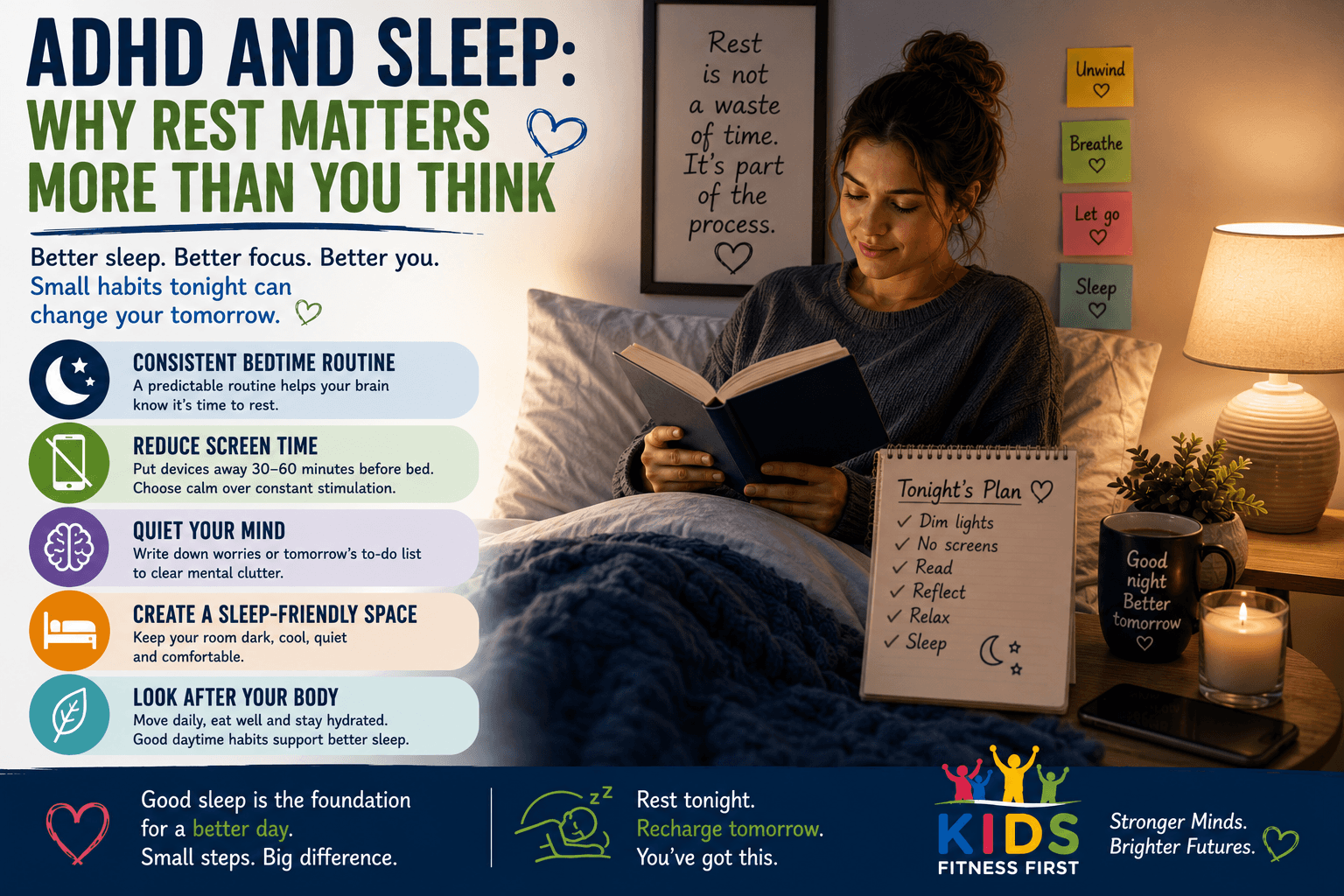
ADHD and Sleep: Why Rest Matters More Than You Think
For many adults with ADHD, bedtime is not always a time for relaxation. Instead, it can become the moment when the brain seems to wake up. Thoughts race from one idea to another, yesterday’s conversations replay in your mind and tomorrow’s responsibilities suddenly feel urgent.
You may be physically tired but mentally wide awake.
As a result, falling asleep can become frustrating, and the following day may begin with exhaustion rather than energy.
Many people blame themselves for poor sleep. However, sleep difficulties are common among adults with ADHD. Understanding this connection can help you build routines that support both your wellbeing and your ability to manage everyday life.
Fortunately, even small improvements to your sleep habits can make a noticeable difference over time.
Why Sleep Can Be Difficult With ADHD
Sleep involves more than simply feeling tired.
Your brain must gradually slow down, allowing both your body and mind to prepare for rest.
For adults with ADHD, this transition is not always straightforward.
Several factors may contribute to sleep difficulties, including:
- Racing thoughts.
- Hyperfocus late into the evening.
- Difficulty switching off.
- Anxiety about the following day.
- Irregular daily routines.
- Excessive screen time before bed.
- Forgetting bedtime altogether.
- Poor sleep habits built over many years.
Although these challenges are common, they do not mean that better sleep is impossible.
The Cycle of Poor Sleep
Poor sleep affects much more than your energy levels.
After a restless night, you may notice:
- Reduced concentration.
- Increased forgetfulness.
- Lower patience.
- Greater emotional sensitivity.
- Difficulty making decisions.
- Reduced motivation.
- Increased impulsivity.
Consequently, ADHD symptoms often feel stronger after poor sleep.
Unfortunately, this can create a cycle.
Poor sleep makes ADHD symptoms worse.
More ADHD challenges create additional stress.
Stress makes sleeping even harder.
Breaking this cycle often begins with improving one small part of your evening routine.
Create a Consistent Bedtime Routine
Your brain benefits from knowing that bedtime is approaching.
Therefore, try to follow a similar routine each evening.
For example, you could:
- Dim the lights.
- Put your phone away.
- Read a book.
- Listen to calming music.
- Stretch gently.
- Take a warm shower.
- Prepare tomorrow’s clothes.
- Write down tomorrow’s priorities.
Repeating the same routine helps your brain recognise that it is time to slow down.
Consistency is usually more important than perfection.
Reduce Evening Screen Time
Phones, tablets and laptops can keep the brain active long after work has finished.
Social media, emails and online videos often provide constant stimulation.
In addition, the light from screens may interfere with your body’s natural sleep signals.
If possible, begin reducing screen use at least 30 to 60 minutes before bed.
Instead, choose activities that help your mind settle naturally.
For example:
- Reading.
- Gentle stretching.
- Journaling.
- Listening to relaxing music.
- Practising breathing exercises.
Even reducing screen time by a small amount may improve your ability to fall asleep.
Manage Racing Thoughts
Many adults describe bedtime as the quietest part of the day.
Ironically, this is often when the mind becomes the busiest.
Instead of trying to stop every thought, give your brain somewhere to place them.
You could:
- Keep a notebook beside your bed.
- Write tomorrow’s to-do list.
- Record worries you can deal with later.
- Write down ideas before they disappear.
Once your thoughts are safely recorded, it often becomes easier to let them go until morning.
Create a Comfortable Sleep Environment
Your surroundings can influence how easily you fall asleep.
A supportive bedroom may include:
- Comfortable bedding.
- A cool room temperature.
- Minimal noise.
- Low lighting.
- Blackout curtains if appropriate.
- A tidy sleeping space.
Some people also find that reducing unnecessary distractions helps the brain relax more quickly.
The aim is to make your bedroom a place associated with rest rather than work or constant stimulation.
Avoid Chasing Perfect Sleep
Many adults become anxious if they cannot fall asleep immediately.
Unfortunately, worrying about sleep often makes sleeping even harder.
Instead of watching the clock, remind yourself that rest is still valuable.
If you cannot sleep after a reasonable period, consider getting up briefly to read quietly or practise relaxation before returning to bed.
The goal is to remain calm rather than becoming frustrated.
Support Your Body During the Day
Good sleep often begins long before bedtime.
Daily habits that may improve sleep include:
- Regular physical activity.
- Spending time outdoors.
- Drinking enough water.
- Eating balanced meals.
- Limiting caffeine later in the day.
- Maintaining a regular wake-up time.
These habits help regulate your body’s natural daily rhythm.
Consequently, falling asleep may gradually become easier.
Know When to Seek Professional Advice
Occasional sleep problems happen to everyone.
However, if poor sleep continues for several weeks or significantly affects your health, work or relationships, it is important to speak with a healthcare professional.
Some adults with ADHD may also experience other sleep-related conditions that require assessment or treatment.
Seeking advice is a positive step towards improving your overall wellbeing.
Better Sleep Supports Every Part of Life
Improving your sleep may not solve every ADHD challenge.
Nevertheless, better rest often improves concentration, emotional regulation, motivation and decision-making.
You may also notice greater patience, clearer thinking and increased resilience during stressful situations.
Small improvements made consistently can have a surprisingly powerful effect over time.
Final Thoughts
ADHD and sleep are closely connected.
Although sleep difficulties can feel frustrating, they do not have to define your future.
By creating realistic evening routines, reducing unnecessary stimulation and looking after your wellbeing throughout the day, you can give yourself the best possible chance of achieving better rest.
Remember, improving sleep is not about perfection.
It is about creating small habits that allow your brain and body to recover, one night at a time.
Reflection Questions
- What usually keeps you awake at night?
- Which evening habit could you improve this week?
- How much screen time do you have before bed?
- What helps you feel relaxed in the evening?
- Which change could make your bedroom more restful?
- How do you usually feel after a poor night’s sleep?
- What small step could you take tonight to improve your sleep?
Internal Links
- Emotional Regulation and Adult ADHD: How to Respond More Calmly
- Why You Are Not Broken: Overcoming Shame After an Adult ADHD Diagnosis
Disclaimer
This article is provided for educational and informational purposes only. It is not a substitute for medical advice, diagnosis or treatment. If you experience persistent sleep problems or believe an underlying sleep disorder may be affecting your health, please consult a qualified healthcare professional.