
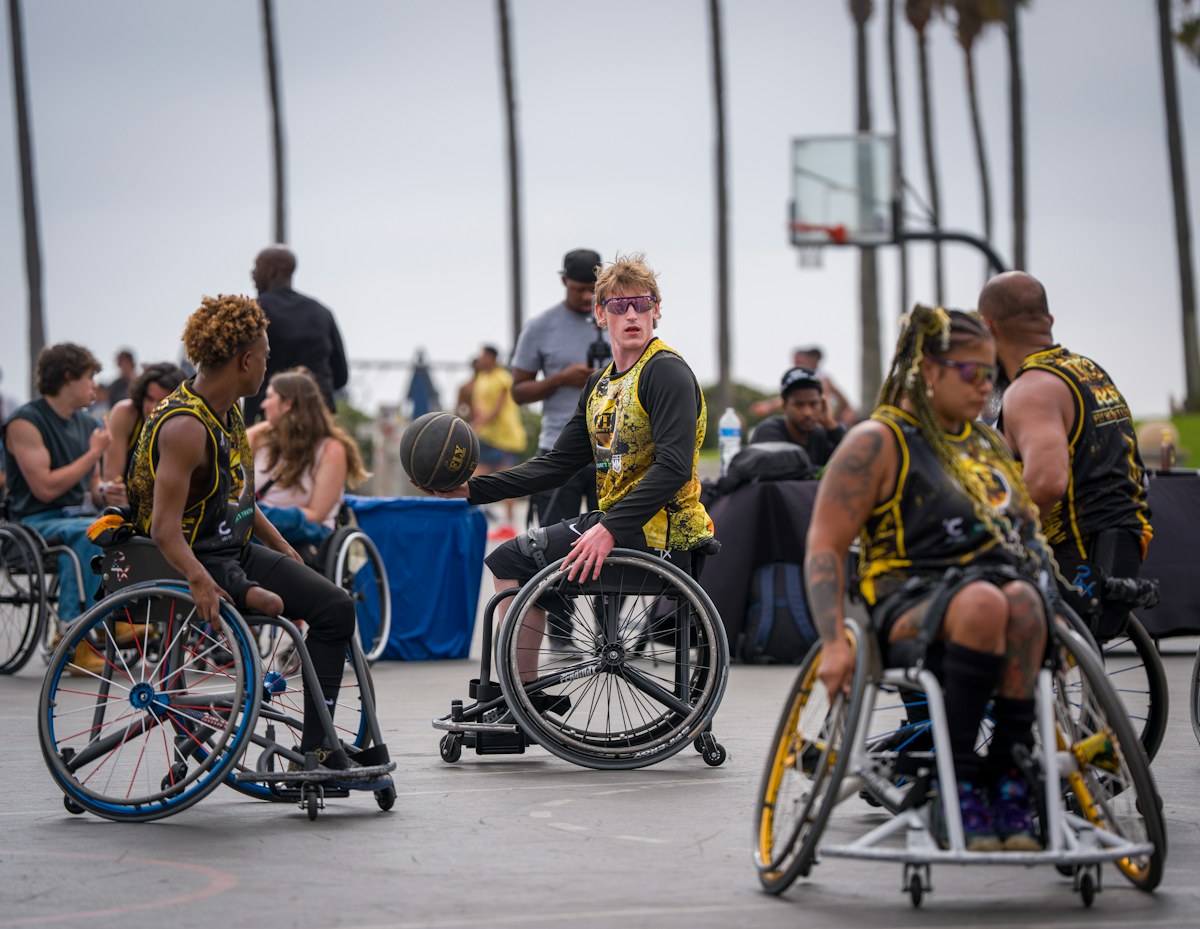
Passing games do not have to mean fast throws, tall targets or elimination rounds. With a soft ball, a little space and flexible rules, children who sit, stand or use mobility equipment can enjoy the same shared activity. The key is to agree how each person wants to participate rather than assuming that one version fits everyone.
Set up for safe, shared play
Choose a large, soft ball or fabric beanbag. Use a flat, uncluttered space and allow enough turning room for wheelchairs and other mobility aids. Ask participants what passing height and distance they prefer. Never move someone’s wheelchair without permission, and avoid throwing towards faces. Adults should supervise and check individual access and safety needs.
Five partner passing games
1. Roll and return
Partners sit or stand facing one another with a clear gap. One gently rolls a soft ball and the other stops or redirects it. Begin close together, then adjust the distance only if both enjoy the challenge. A ramp or shallow gutter can support children who do not release a ball easily.
2. Colour-call passing
Place two coloured mats or targets within comfortable reach. The receiver chooses a colour and the passer aims a gentle roll or underarm pass towards it. A child can indicate a choice by speaking, pointing, looking, signing or using a communication aid. The colour choice matters more than hitting the target.
3. Side-by-side delivery
Two children move alongside each other along a short accessible route, passing a soft object at a comfortable point. Partners may walk, wheel or remain stationary while the other moves. No one has to travel at the same speed, and the route should not include ramps or obstacles that create risk.
4. Bounce, catch or tap
One player gently bounces a large ball once; the partner can catch it, stop it with two hands or tap it back. Offer an alternative of rolling if bouncing is difficult or uncomfortable. Use a soft ball and a low, predictable bounce.
5. Team delivery chain
Arrange three or four players in a semicircle with a clear route between them. They pass an object around until it reaches a basket or marked space. If someone prefers not to catch, they can steady a tray, choose the next receiver or give the start signal. The group completes the task together; there is no last-place team.
Adapt the game, not the child
The Activity Alliance STEP approach suggests considering Space, Task, Equipment and People. Change the space by shortening a gap; change the task from catching to stopping; change the equipment to a larger or softer ball; or change partner roles. Ask the children which adaptation works rather than deciding without them.
Children with visual differences may benefit from an audible ball or consistent spoken cues, while some children find sudden noise difficult. Ask about preferences. If you want a broader set of adaptations, see our seated movement games and visual-signal playground games.
Finish with a choice
Ask each child which pass they enjoyed and what they would change. Keep the successful version for next time, or offer an easier alternative. Stop if a player is in pain, fatigued or distressed. Inclusive play means meaningful participation and autonomy, not identical movements from everyone.
Before the first pass: a quick checklist
- Check the route is level, uncluttered and wide enough for turning.
- Ask each player their preferred distance and passing height.
- Offer rolling, tapping or directing as alternatives to catching.
- Agree on a clear stop signal and allow breaks.
- Check that no one is being singled out or pushed to perform.
Two common questions
What if a child cannot hold or release a ball?
Try a soft object on a tray, a short ramp, or a partner-assisted roll with the child’s consent. The child can also choose the target or direct the next pass. The important part is a genuine role in the game.
Should everyone use the same passing distance?
No. Agree a comfortable distance with each pair. Different distances, equipment and roles can be fair when they allow everyone to participate.
Further reading: Activity Alliance: inclusive activity cards; UK physical activity guidance for disabled children.
Featured photograph: nader saremi / Unsplash. The photograph illustrates wheelchair sport; the games above are adapted educational activities, not basketball coaching.