
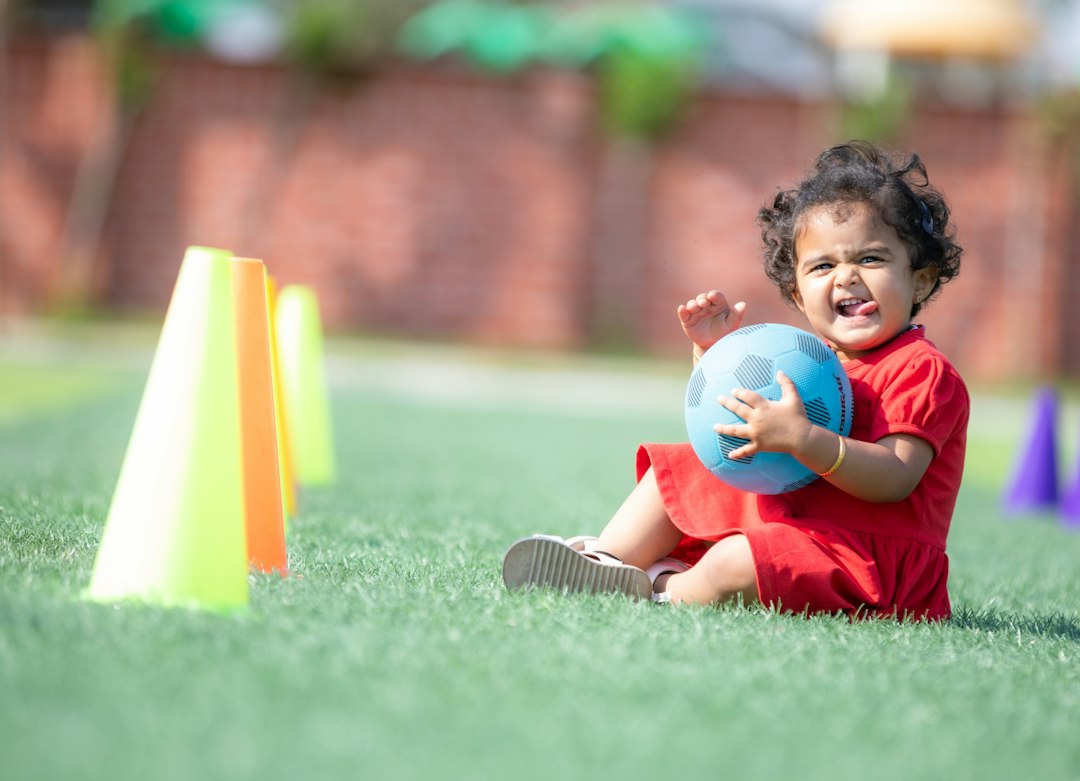
A target game should test a playful idea, not whether every child can grip the same ball or hold the same equipment. Small changes to objects, distance and rules can open up a session to children with different hand strength, coordination and mobility. Start by asking each participant what is comfortable, rather than assuming everyone needs the same adaptation.
Start with a simple target
Place a large, stable basket or cardboard box on the floor. Use a soft, lightweight ball or beanbag. Let children roll, slide, gently push or toss towards the target. Avoid hard projectiles and crowded throwing lanes. Explain a clear stop signal before anyone begins, and retrieve objects only when all movement has stopped.
Five ways to adapt the equipment
1. Choose a larger object
A large foam ball may be easier to hold or push than a small, slippery one. Check the child’s preference; bigger is not always better for every grip or range of movement.
2. Swap throwing for rolling
Rolling along a table or smooth floor can reduce the need to lift an object. A sturdy, low ramp may provide another option. Ensure it cannot tip and does not obstruct mobility equipment.
3. Change the target, not just the child
Use a wide box opening or a large hoop placed flat on the floor. Bring the target closer, lower it or move it to a comfortable angle. Success can mean getting the object into a broad zone rather than hitting a tiny centre.
4. Add a partner role
One child may direct a partner to place a target while another rolls the ball. Others can choose to count cooperative passes, describe the route or design the next challenge. These are genuine roles, not consolation prizes.
5. Make the rules flexible
Offer two starting lines, an optional practice turn and a choice of objects. Rather than ranking children by points, set a shared goal such as “Can we get five balls into the big zone together?” Let children change the goal if it stops being enjoyable.
Accessibility and respectful communication
Leave enough space for wheelchair turning and for a seated participant to approach the target without reaching dangerously. Do not touch a child’s hands, wheelchair or mobility aid without permission. For children with visual impairment, high-contrast equipment and verbal location cues may help. For children with sensory differences, quieter balls and predictable turns can reduce unwanted noise or surprises.
The Activity Alliance inclusive activity cards use the STEP approach—space, task, equipment and people—to help adults adapt sessions. Ask the group which change actually improves participation, then adjust accordingly.
Before you start: inclusion checklist
- Ask each child how they prefer to take part.
- Offer at least two ways to move the object.
- Check access around the target and equipment.
- Explain a shared stop signal and retrieval rule.
A ten-minute sample session
Begin with two minutes of choosing an object and exploring how it moves. Spend four minutes rolling towards a large target. Take two minutes to change one feature together. Finish with two minutes of a cooperative challenge and a choice to continue or stop. Keep the activity pain-free, supervised and suited to the child’s abilities. For other adaptable ideas, see inclusive partner passing and seated movement games.