
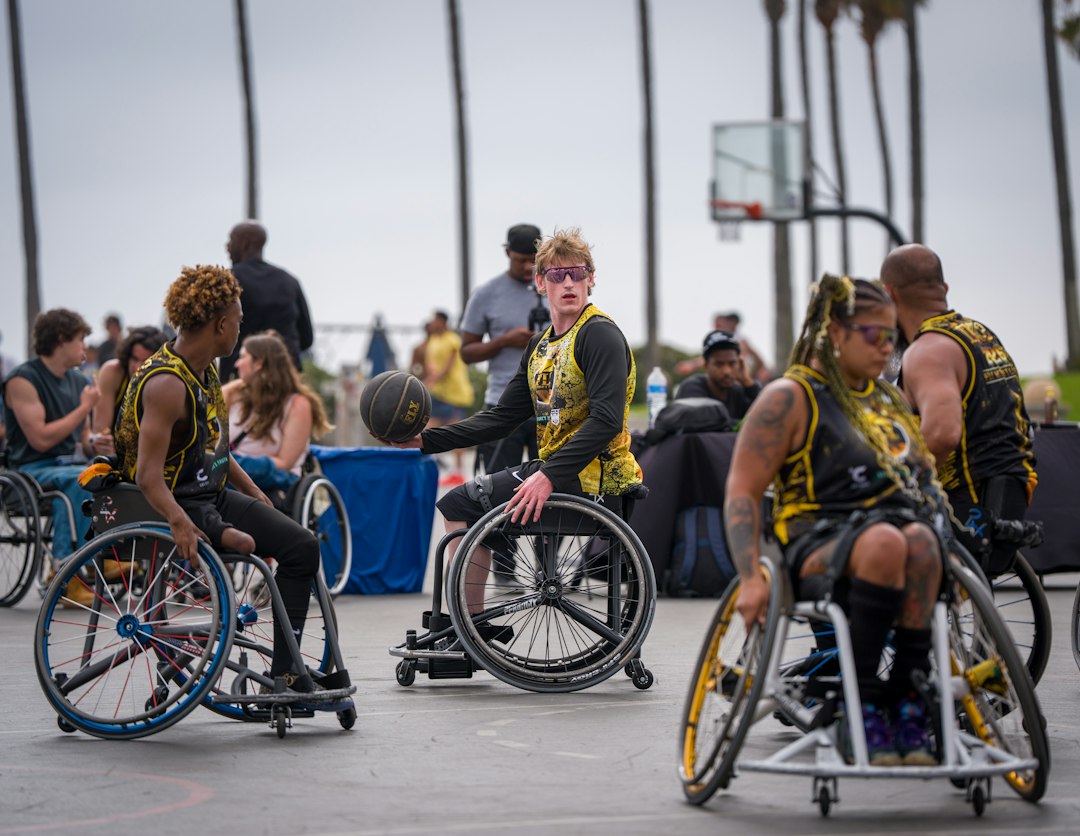
Children do not all move in the same way, and a game should not require everyone to stand, run or jump. Seated movement games can make active play more accessible for children who use wheelchairs, have reduced mobility or simply prefer a seated option. The aim is participation and enjoyment, not identical movements.
Before you begin: make the space comfortable
Choose a stable chair or safely positioned wheelchair, clear obstacles and keep equipment soft and light. Ask each child which movements feel comfortable. Never force a stretch or ask someone to reach beyond their safe range. A child with medical restrictions may need advice from their healthcare professional.
Six seated movement games to try
1. Pass the imaginary parcel
Pretend to pass a light parcel to a partner. It might be tiny, enormous or delicate. The partner copies the movement and invents the next parcel. Children can use one hand, both hands or a gesture that suits them.
2. Air volleyball
Imagine a balloon floating between players. Each person makes a gentle tapping movement to send it back. Start without equipment so nobody needs to chase an object. A soft fabric ball is an optional next step if suitable for the group.
3. Follow-the-leader arms
One child chooses a slow movement: reach forwards, lift one arm, turn the wrists or tap the knees. Others copy in their own way. Change leaders every few turns. A child can also lead by pointing to a picture of a movement.
4. Rhythm echo
An adult taps a simple pattern on their knees or a table. Children echo it with claps, finger taps, a drum or another comfortable action. Begin with two beats and add more only when the group wants a challenge.
5. Sky drawing
Ask children to draw a circle, zigzag or letter in the air with a hand or arm. A partner guesses the shape. Children can make the movement as large or small as they choose, staying within a comfortable range.
6. Choice-card movement
Offer four cards: reach, tap, turn and rest. A child picks one, and everyone does their own version for a few seconds. Choosing and pausing are valid parts of the game.
How to make the activity genuinely inclusive
Offer different ways to join in: moving, choosing cards, keeping rhythm or being the caller. Avoid eliminating players, timing the slowest person or comparing range of motion. Ask, ‘Would you like the same game with a different movement?’ rather than assuming somebody needs help.
UK guidance for disabled children emphasises enjoyable activity, gradual progress and manageable strength and balance work. Short sessions can be a useful starting point; they are not a substitute for a child’s individual clinical advice.
More ideas for families and schools
For other adaptations, see our sensory-friendly physical activities and our guide to coordination and balance activities for children.
Evidence and further reading: NHS physical activity guidance; UK guidance for disabled children.
Featured photograph: wheelchair basketball players, by nader saremi, via Unsplash. The image illustrates inclusive sport; the games above are suitable for a range of seated participants.