
When a child tries a new movement, adults naturally want to say ‘Well done!’ Encouragement can be helpful, but useful feedback often tells the child what you noticed. Celebrate effort, choice and enjoyment without comparing children or promising that praise will instantly create confidence.
Why the words we choose matter
Children have different abilities, energy levels and experiences. One child may be proud of joining a game for the first time; another may be proud of choosing a rest. Comparing their speed, strength or coordination can distract from individual achievements. Try noticing what the child did rather than ranking performance.
Seven useful phrases for active play
1. You chose a movement that suited you
This acknowledges independence when a child adapts an activity or asks for another option.
2. I noticed you tried a different way
Use this when a child experiments with a new route, balance or action. Avoid suggesting the new way is always better.
3. You kept going until you wanted a break
Respect the child’s decision to pause. Rest is part of safe activity, not something to criticise.
4. You helped your partner join in
Notice kindness and cooperation when a child changes the rules so somebody else can participate.
5. That looked enjoyable. What did you like?
Ask an open question rather than assuming how the child felt. They might prefer a different activity next time.
6. You found your own rhythm
Useful for dancing, clapping or a movement game in which children participate at different speeds.
7. Would you like to try again or choose something else?
Give a genuine choice. A child who says no does not need persuading or shaming.
What to avoid saying
Avoid comments such as ‘Your sister can do it faster’, ‘You must win this time’ or ‘That was easy’. A task may feel challenging even when it looks simple to an adult. Instead, ask what support would help or whether the child wants to change the activity.
Make encouragement accessible
Not every child enjoys loud cheering, public praise or physical contact. Some prefer a quiet comment, a smile, a thumbs-up or no comment at all. Ask what feels comfortable. For a neurodivergent child, predictable feedback and a clear choice to pause may be more welcome than an unexpected celebration.
If a child becomes frustrated, acknowledge the feeling without making the activity a test. You might say, ‘That did not feel good today. Shall we try something different?’ Adults can model curiosity by trying a new movement themselves.
Confidence grows through participation
UK physical activity guidance recognises benefits from enjoyable movement, including opportunities to build skills and wellbeing. No single phrase guarantees confidence; the aim is to make play welcoming and worth repeating.
Read our guide to physical activity and confidence and simple movement activities for children for more ideas.
Further reading: NHS guidance for children’s physical activity.
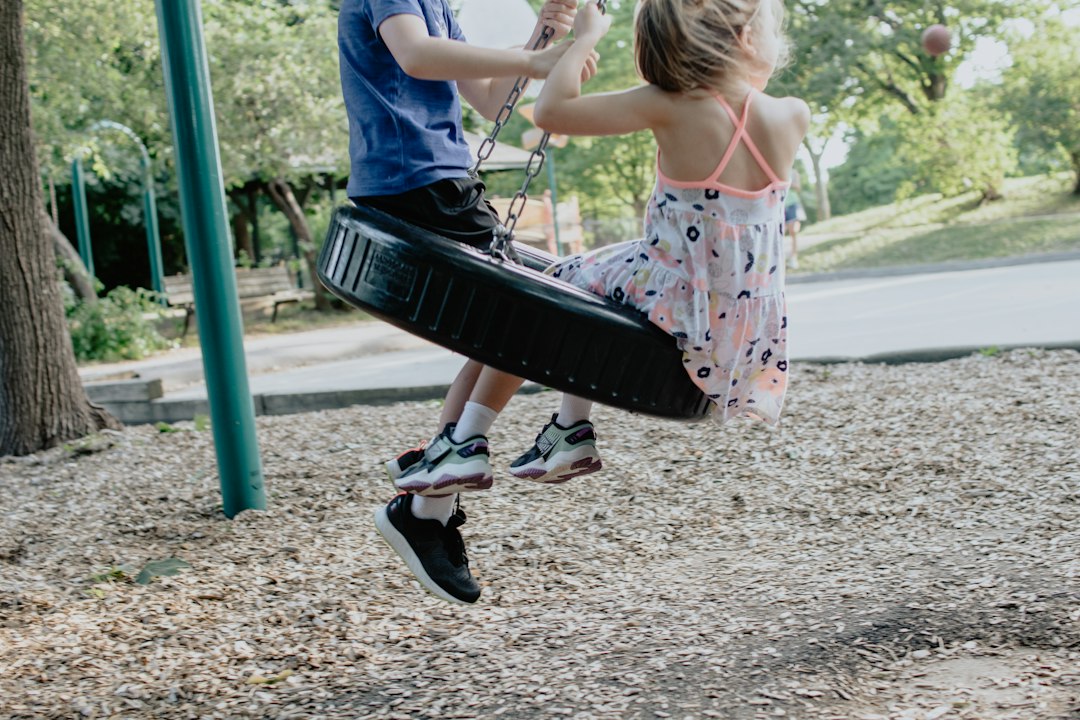
Featured photograph: children playing on a tyre swing, by Kelly Sikkema, via Unsplash.