Goal-Setting Skills in Teenagers: Turning Ambition Into Positive Action
This article focuses on the motivation and ownership behind teenage goals: how young people can turn personal ambition into action they genuinely want to sustain. For a step-by-step planning framework, see our separate guide to practical goal setting for teenagers.
Developing goal-setting skills in teenagers helps young people turn ambition into positive action. It teaches them how to choose a meaningful goal, divide it into manageable steps and continue when progress feels slow.
Goal setting is not about placing teenagers under more pressure. Instead, it gives them direction and helps them recognise what they can achieve through patience, effort and reflection.
At Kids Fitness First, we believe every teenager has strengths that can be developed. When young people learn how to set realistic goals, they become more confident, organised and prepared for future opportunities.
Why Goal-Setting Skills in Teenagers Matter
Teenagers are beginning to make choices that may influence their education, friendships, health and future work. Therefore, learning how to create and follow a plan can make a meaningful difference.
Strong goal-setting skills can help teenagers:
- understand what they want to achieve;
- organise their time;
- remain focused;
- measure progress;
- build confidence;
- recover from setbacks;
- make thoughtful decisions;
- take greater responsibility.
Without a clear goal, even a motivated teenager may feel uncertain about where to begin. On the other hand, a simple plan can make a large challenge feel possible.
For example, “I want to improve at mathematics” is a useful ambition. However, it becomes more effective when the teenager decides to complete two extra practice sessions each week and ask for help with difficult topics.
The goal is no longer only an idea. It has become an action plan.
What Is Goal Setting?
Goal setting means deciding what you want to achieve and identifying the actions needed to reach it.
A goal may be short term, such as finishing a school project by Friday. Alternatively, it may be long term, such as gaining a qualification, learning a language or preparing for a particular career.
Useful goals are usually:
- clear;
- realistic;
- meaningful;
- measurable;
- connected to specific actions.
Importantly, goals should reflect the teenager’s own interests and values. Adults can provide guidance, but young people are more likely to stay motivated when they feel ownership of the goal.
Helping Teenagers Choose Meaningful Goals
A teenager may lose interest quickly when a goal has been chosen entirely by someone else.
Therefore, parents and teachers should begin by asking thoughtful questions:
- What would you like to improve?
- Which activity makes you feel excited?
- What would make you feel proud?
- Which challenge would you like to overcome?
- What skill could help you in the future?
- Why does this goal matter to you?
These questions help young people connect goals with personal meaning.
For example, a teenager may want better grades because they hope to study engineering. Another may want to improve communication skills because they would like to become a team leader.
A meaningful reason provides motivation when the work becomes difficult.
Goal-Setting Skills in Teenagers Begin With Clear Targets
Vague goals are difficult to follow.
“I want to do better” does not explain what success looks like. In contrast, “I will revise science for 30 minutes every Tuesday and Thursday” gives the teenager a clear action.
A practical goal should answer several questions:
- What do I want to achieve?
- Why is it important?
- What action will I take?
- When will I begin?
- How will I measure progress?
- When will I review the goal?
Clear goals reduce uncertainty. As a result, teenagers know exactly what they need to do next.
Using the SMART Goal Method
The SMART method provides a useful structure for teenagers.
Specific
The goal should clearly explain what the teenager wants to achieve.
Instead of saying, “I want to get fit,” they might say, “I want to complete a 20-minute walk three times each week.”
Measurable
Progress should be easy to track.
A teenager may record completed practice sessions, pages read, exercises finished or money saved.
Achievable
The goal should provide a challenge without becoming unrealistic.
An achievable goal builds confidence. However, a goal that feels impossible may quickly reduce motivation.
Relevant
The goal should connect with the teenager’s interests, needs or future plans.
A relevant goal feels worthwhile rather than forced.
Time-bound
A review date creates focus.
For instance, the teenager might review progress after two weeks, one month or at the end of a school term.
The SMART method is helpful, but it should remain flexible. Teenagers should not feel that every goal must be perfect before they begin.
Breaking Large Goals Into Smaller Steps
Large goals can feel overwhelming.
A teenager who wants to write a book, improve exam results or learn computer coding may not know where to start. Therefore, breaking the goal into smaller steps makes progress easier.
A simple process might include:
- Define the main goal.
- List the smaller tasks.
- Choose the first action.
- Set a realistic time for each step.
- Review progress regularly.
For example, a teenager who wants to improve a school presentation could:
- research the topic;
- organise key points;
- create the slides;
- practise speaking;
- ask for feedback;
- make final improvements.
Each completed step creates a sense of progress.
Creating an Action Plan
An action plan turns a goal into a practical routine.
Teenagers can use a notebook, calendar, wall chart or digital planner. The method matters less than making the plan easy to understand.
A useful action plan may include:
- the main goal;
- the reason for the goal;
- the first three steps;
- possible challenges;
- people who can help;
- a review date;
- a way to celebrate progress.
It is often helpful to focus on the next step rather than the whole journey.
As a result, teenagers can avoid feeling overwhelmed and begin taking action immediately.
Building Motivation Through Small Successes
Motivation does not always appear before action.
Sometimes, motivation grows after a teenager completes the first small step. Therefore, waiting until they “feel ready” may delay progress.
Small successes are powerful because they show young people that their actions make a difference.
For example, completing one homework task, attending one training session or saving a small amount of money may seem minor. Nevertheless, each action builds momentum.
Adults can support this process by noticing effort and progress.
Helpful comments include:
- “You stayed focused even when that was difficult.”
- “Your planning helped you finish on time.”
- “You adjusted your approach and kept going.”
- “You have made real progress since you began.”
This type of encouragement develops confidence without creating pressure to be perfect.
Managing Setbacks and Changing the Plan
Not every goal will progress smoothly.
Teenagers may become busy, lose motivation, experience disappointment or discover that their original plan does not work. However, a setback does not mean the goal has failed.
Instead, it provides information.
Useful reflection questions include:
- What made this difficult?
- Was the goal too large?
- Did I need more support?
- Which part of the plan worked?
- What could I change?
- What is the next realistic step?
Adjusting a plan is not the same as giving up.
In fact, flexibility is an important part of successful goal setting. Teenagers learn that progress may require a different route.
Goal-Setting Skills in Teenagers at School
Schools provide many opportunities to practise goal setting.
Students can create goals related to:
- attendance;
- homework;
- reading;
- revision;
- classroom participation;
- creative projects;
- teamwork;
- sports;
- future qualifications.
Teachers can help by encouraging students to choose one or two realistic priorities instead of creating a long list.
Regular reviews are also valuable. A short discussion every few weeks allows the student to recognise progress, identify difficulties and adjust the plan.
Most importantly, goals should support learning rather than create fear.
Goal Setting at Home
Families can help teenagers develop goal-setting habits through supportive conversations.
Parents and carers may ask:
- What would you like to achieve this month?
- What is your first step?
- What could make the goal difficult?
- Who could support you?
- When should we review your progress?
Adults should avoid taking complete control of the plan.
Although guidance is useful, teenagers need opportunities to make choices, solve problems and learn from experience.
A family goal board or weekly planning conversation may also help. However, the process should remain positive and realistic.
Balancing Ambition With Wellbeing
Goals can provide direction, but they should not take over every part of life.
Teenagers also need rest, friendships, exercise, creativity and time without pressure. Therefore, healthy goal setting includes balance.
Warning signs that a goal may be creating too much pressure include:
- constant worry;
- loss of sleep;
- fear of making mistakes;
- giving up enjoyable activities;
- believing personal worth depends on success.
Adults should remind teenagers that a goal is something they are working towards. It does not define who they are.
Progress matters, but wellbeing matters too.
Avoiding Comparisons With Other People
Social media can make young people believe that everyone else is achieving more.
However, online posts rarely show the full journey. They may not show mistakes, delays, uncertainty or support received from others.
Healthy goal setting focuses on personal progress.
A useful question is:
“Am I moving forward compared with where I started?”
This approach encourages teenagers to recognise their own development rather than measuring themselves against someone else’s achievements.
How Goal Setting Builds Confidence
Confidence grows when teenagers see evidence that they can influence their future.
Every completed action teaches them something valuable:
- effort creates progress;
- planning reduces confusion;
- mistakes provide lessons;
- support is available;
- difficult tasks can become manageable;
- improvement takes time.
As a result, teenagers begin to trust their ability to handle larger challenges.
Confidence is not always the starting point. Often, it is the result of taking repeated small actions.
Preparing Teenagers for Adult Life
Goal-setting skills remain valuable long after school.
Adults use these skills when they:
- apply for jobs;
- complete training;
- manage money;
- improve health;
- develop careers;
- start businesses;
- organise family responsibilities;
- pursue personal interests.
Teenagers who practise setting and reviewing goals become better prepared for these responsibilities.
They also learn that success is rarely based on one large decision. Instead, it usually develops through many small actions taken consistently.
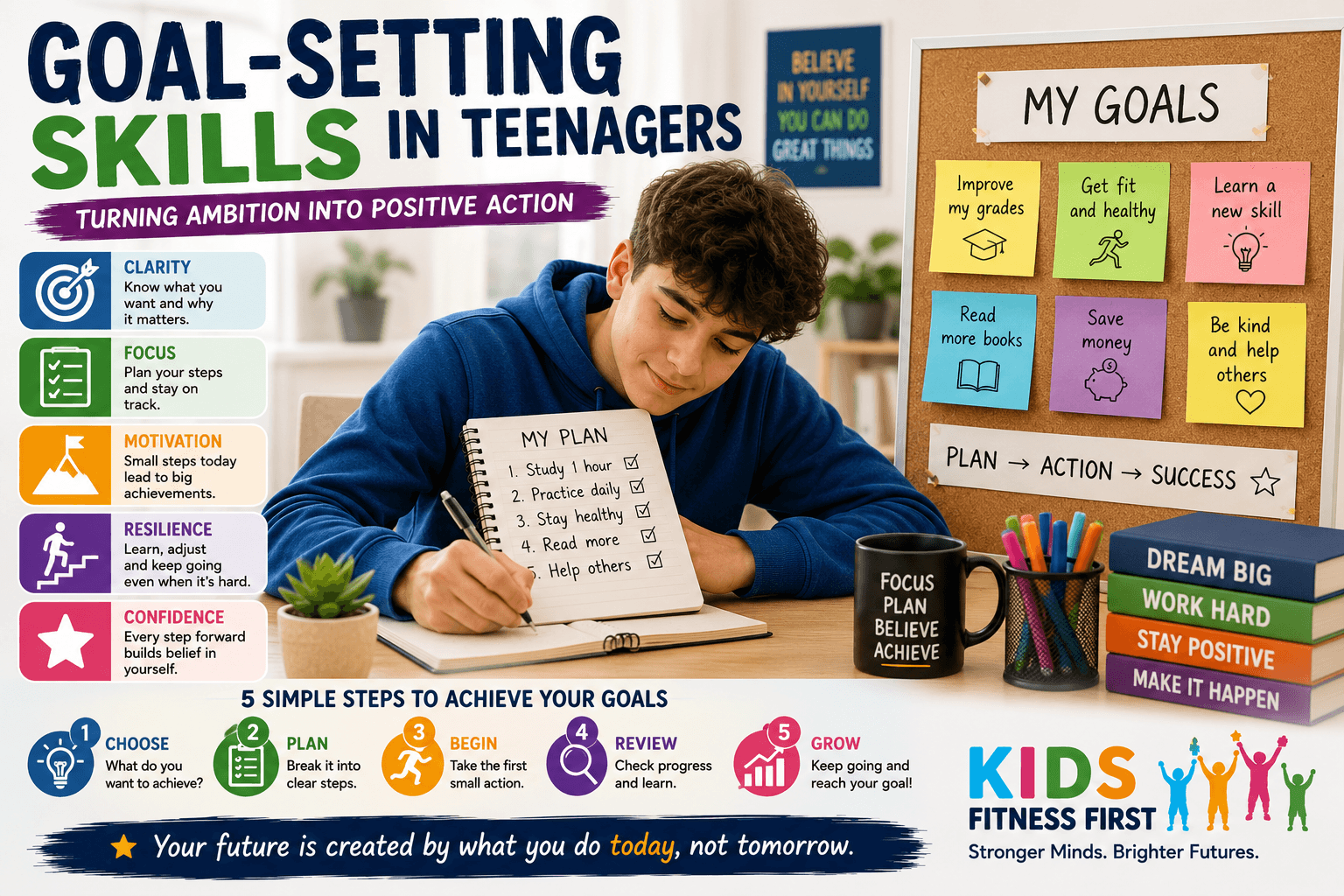
A Simple Five-Step Goal-Setting Model
Teenagers can remember the following process:
1. Choose
Decide what you want to achieve and why it matters.
2. Plan
Break the goal into clear, manageable steps.
3. Begin
Take the first small action instead of waiting for the perfect moment.
4. Review
Check what is working and what needs to change.
5. Grow
Recognise progress, learn from setbacks and choose the next goal.
This model can be used for education, health, hobbies, relationships and future plans.
Reflection Questions
- What is one goal that would make you feel proud?
- Why is this goal important to you?
- What is the smallest action you could take today?
- Which challenge might slow your progress?
- Who could provide useful support?
- How will you recognise and celebrate improvement?
Conclusion
Developing goal-setting skills in teenagers helps young people turn hopes into clear and practical action.
By choosing meaningful targets, dividing them into smaller steps and reviewing progress, teenagers become more confident and independent. They also learn that setbacks are not the end of the journey. Instead, they are opportunities to reflect, adapt and continue.
Parents, teachers and mentors can support this development by providing encouragement without taking control. Teenagers need guidance, but they also need space to make decisions and learn from experience.
At Kids Fitness First, we believe every young person has valuable strengths and future potential. When teenagers learn how to set balanced, realistic goals, they become better prepared to create opportunities, overcome challenges and build a positive future.
The most important step does not need to be large. It simply needs to move them forward.
Suggested Internal Links
- Emotional Intelligence in Teenagers: Helping Young People Understand Emotions and Build Strong Relationships
- Learning From Mistakes in Teenagers: Turning Experience Into Growth
Disclaimer
This article is provided for educational and informational purposes only. It is not intended as medical, psychological or professional advice. Every teenager develops at a different pace. Parents or carers who are concerned about a young person’s wellbeing should seek support from an appropriately qualified professional.