Years of ADHD Masking: How Hiding Your Struggles Can Affect Mental Health
Many adults receive an ADHD diagnosis and suddenly realise they have been hiding their struggles for years.
They worked harder than everyone else.
They covered up mistakes.
They tried to appear organised, calm and confident, even when they felt overwhelmed inside.
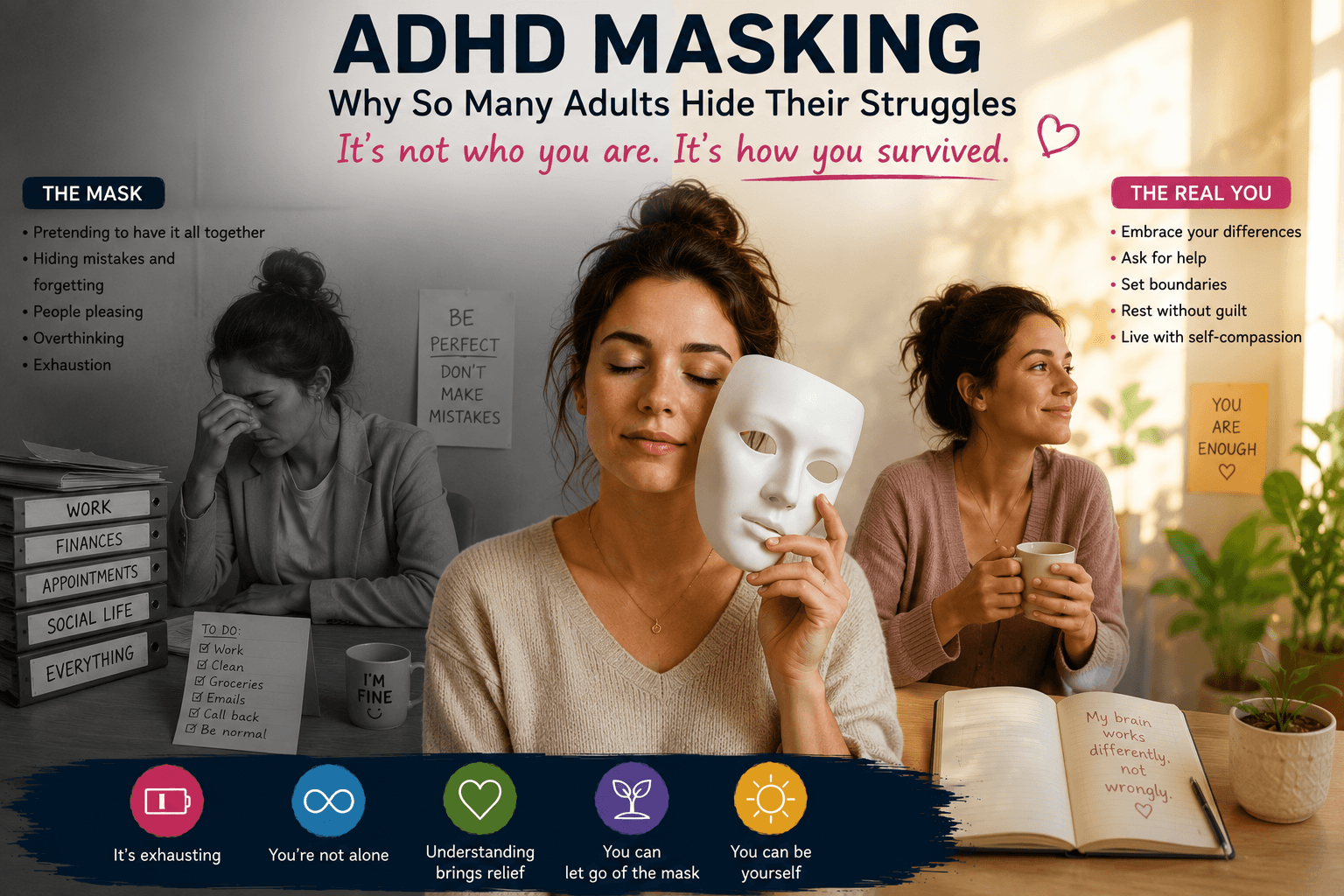
This is often called Years of ADHD Masking.
At first, these coping habits may seem helpful. However, keeping them up every day can slowly damage confidence and mental wellbeing. As Book 2 explains, many adults only recognise the emotional cost after finally receiving a diagnosis.
What Are Years of ADHD Masking?
Years of ADHD Masking happen when someone hides ADHD traits to avoid criticism or embarrassment.
For example, they may:
- pretend they understand instructions
- arrive very early because they fear being late
- spend hours checking their work
- copy how other people stay organised
- smile even when they feel exhausted
Although these habits may help in the short term, they often create stress over many years.
Why Do People Hide Their Struggles?
Most children do not decide to hide who they are.
Instead, they slowly learn that showing their difficulties often leads to criticism.
They may hear comments like:
- “Try harder.”
- “Pay attention.”
- “You are too careless.”
Over time, these words become part of their own thinking.
As adults, they often continue hiding their struggles without even realising they are doing it.
The Emotional Cost of Years of ADHD Masking
Living with Years of ADHD Masking is tiring.
Many adults describe feeling as though they have two different lives.
One version is seen by everyone else.
The other is hidden behind constant effort.
As a result, many people feel:
- emotionally drained
- anxious
- lonely
- frustrated
- misunderstood
Keeping up appearances every day uses a huge amount of energy.
Burnout Is More Common Than People Think
After Years of ADHD Masking, burnout is common.
For instance, burnout may include:
- feeling tired all the time
- losing motivation
- forgetting more things
- finding simple jobs difficult
- avoiding people
- feeling emotionally empty
Some people think they simply need to try harder.
In reality, they may need understanding, rest and better support.
Book 2 explains that many adults seek help only after reaching this point because the effort of masking can no longer be maintained.
Relationships Can Also Suffer
In addition, masking often affects relationships.
Some people never tell family members how difficult everyday life feels.
Others avoid asking for help because they fear looking weak.
Consequently, loved ones may never realise how much effort goes into appearing organised or calm.
This can leave people feeling alone, even when surrounded by family and friends.
Perfectionism Often Develops
Many adults become perfectionists.
Instead of enjoying perfection, they fear making mistakes.
They may:
- read emails several times
- double-check appointments
- work late to avoid criticism
- worry about letting people down
Although these habits reduce mistakes, they also increase stress.
Anxiety Can Become Part of Everyday Life
Furthermore, living behind a mask often creates constant worry.
Many adults ask themselves:
- Did I forget something?
- Did I upset someone?
- Have I made a mistake?
Over time, these worries may become part of daily life.
Understanding ADHD helps explain why these feelings develop.
It also helps people look for healthier ways to cope.
Healing Can Begin Today
The good news is that Years of ADHD Masking do not have to continue forever.
Getting a diagnosis often changes one important question.
Instead of asking,
“What’s wrong with me?”
people begin asking,
“What support does my brain need?”
That small change often brings enormous relief.
Book 2 encourages readers to replace years of self-blame with kindness and understanding.
Simple Steps Towards Recovery
Accept That You Are Human
Nobody gets everything right.
Making mistakes does not mean you have failed.
Use Helpful Tools
Calendars, reminders and lists make life easier.
They are practical tools, not signs of weakness.
Talk to Someone You Trust
Sharing your experiences often reduces feelings of loneliness.
Notice Your Successes
Instead of only seeing mistakes, celebrate what you achieve every day.
Even small successes matter.
Be Patient
Healing takes time.
However, every small step builds confidence.
Reflection Questions
- When did you first begin hiding your struggles?
- How much energy does masking use every day?
- Which situations make masking harder?
- What support would make life easier?
- What is one small change you could make this week?
Conclusion
Years of ADHD Masking affect much more than getting things done.
They also affect confidence.
In addition, they influence relationships and emotional wellbeing.
Finally, it is important to remember that recovery does not happen overnight.
Understanding yourself is the first step.
Book 2 reminds us that you do not need to keep pretending forever.
Instead, you can slowly replace years of hiding with honesty, confidence and self-acceptance.
You have never needed to become someone different.
You simply needed the chance to understand yourself properly.
Internal Links
- ADHD Masking: Why So Many Adults Hide Their Struggles
- Why You Are Not Broken: Overcoming Shame After an Adult ADHD Diagnosis
Disclaimer
This article is for educational purposes only and is based on the themes explored in The Late Discovery – Rewriting Your Life After an Adult ADHD Diagnosis. It is not intended to diagnose, treat or replace professional medical advice. If you believe you may have ADHD or are concerned about your mental wellbeing, please seek advice from a qualified healthcare professional.