
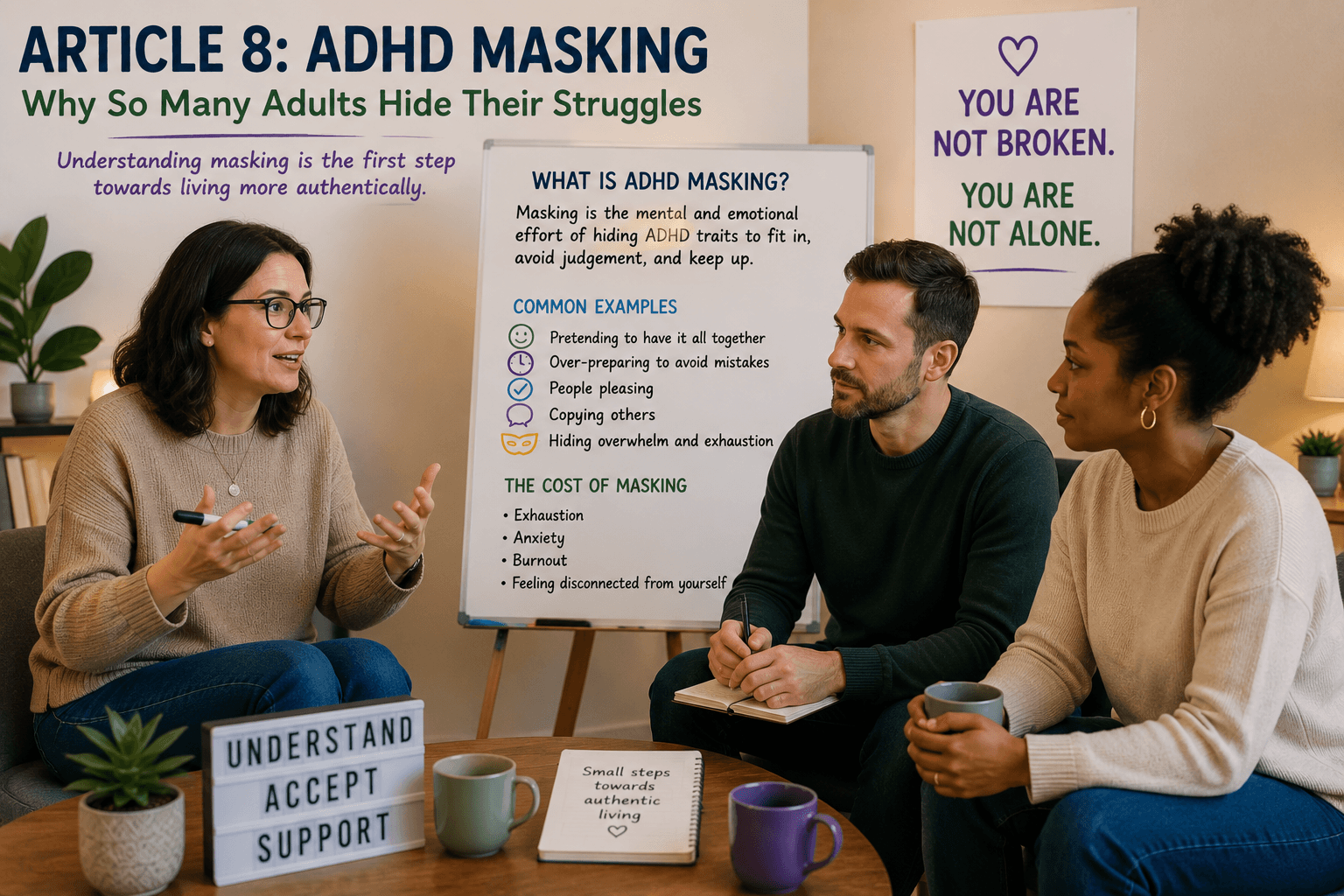
ADHD Masking: Why So Many Adults Hide Their Struggles
Many adults receive an ADHD diagnosis and suddenly realise they have been acting for most of their lives.
Not acting in a dishonest way.
But constantly adjusting, copying, hiding and compensating simply to appear like everyone else.
This is known as ADHD masking.
For many people, ADHD masking begins during childhood and continues into adulthood without them even recognising it.
Book 2 explains that masking is often a survival strategy rather than a conscious choice. Many people learn to hide their differences to avoid criticism, embarrassment or rejection.
What Is ADHD Masking?
ADHD masking refers to the behaviours people develop to hide or compensate for ADHD traits.
Examples include:
- Pretending to understand instructions.
- Copying how other people organise themselves.
- Rehearsing conversations before speaking.
- Arriving extremely early to avoid being late.
- Working much longer than colleagues to produce the same result.
- Smiling even when feeling completely overwhelmed.
To others, everything may appear under control.
Inside, however, the effort can be exhausting.
Why Does ADHD Masking Develop?
Most people do not decide to start masking.
Instead, they learn over time that showing their natural struggles often leads to criticism.
A child who is repeatedly told to:
- “Try harder.”
- “Pay attention.”
- “Stop forgetting things.”
may eventually conclude that their real self is unacceptable.
Instead of receiving understanding, they begin hiding the parts of themselves that attract negative attention.
Over time, masking becomes automatic.
The Hidden Cost of ADHD Masking
Although ADHD masking can help someone cope in the short term, it often comes at a significant emotional cost.
Many adults describe feeling:
- exhausted
- anxious
- isolated
- misunderstood
- emotionally drained
Some people become so skilled at masking that even close family members never realise how much effort everyday life requires.
Book 2 highlights that many adults reach diagnosis only after years of burnout because maintaining the mask becomes impossible.
Signs You May Be Masking ADHD
Everyone’s experience is different.
However, common signs include:
Constantly Comparing Yourself to Others
Feeling as though everyone else has received a handbook for life except you.
Perfectionism
Working excessively hard because mistakes feel unacceptable.
Hiding Mistakes
Covering forgotten appointments or unfinished work rather than asking for help.
People Pleasing
Saying “yes” to avoid disappointing others, even when overwhelmed.
Feeling Different Everywhere You Go
Appearing confident on the outside while privately believing you never quite fit in.
Masking Can Affect Mental Health
Living behind a mask for years can increase stress.
Many adults report experiencing:
- chronic anxiety
- low self-esteem
- emotional exhaustion
- feelings of failure
- burnout
These difficulties do not necessarily come from ADHD itself.
Often, they result from the constant effort of pretending everything is fine.
Receiving a Diagnosis Can Change Everything
After diagnosis, many people feel an enormous sense of relief.
They finally understand why life has always felt harder than it appeared for other people.
More importantly, they begin questioning whether they still need the mask.
Book 2 encourages readers to see diagnosis not as a label but as permission to understand themselves honestly for the first time.
Learning to Live More Authentically
Letting go of ADHD masking does not happen overnight.
It usually happens gradually.
You might begin by:
- asking for written instructions
- using reminders openly
- explaining your needs to trusted people
- taking breaks without guilt
- accepting that different does not mean broken
These small changes often reduce stress while improving confidence.
You Do Not Have to Hide Forever
Many adults fear that removing the mask means becoming less successful.
In reality, understanding your needs often improves performance.
When you stop spending so much energy pretending, you have more energy available for creativity, relationships and meaningful work.
Practical Ways to Reduce ADHD Masking
Be Honest With Yourself
Notice when you are pretending everything is easy.
Recognising the mask is the first step.
Choose Safe People
You do not need to explain ADHD to everyone.
However, trusted family members, friends or colleagues may provide valuable support.
Accept Helpful Tools
Calendars, reminders, timers and written lists are not signs of weakness.
They are practical tools.
Celebrate Authenticity
Each time you allow yourself to work in a way that suits your brain, you strengthen confidence and reduce unnecessary pressure.
Reflection Questions
- When did you first begin hiding your struggles?
- Which situations require the most masking?
- How does masking affect your energy?
- Who makes you feel safe enough to be yourself?
- What is one small step you could take towards living more authentically?
Conclusion
ADHD masking helps many people survive difficult situations.
However, surviving is not the same as thriving.
Understanding ADHD masking allows you to recognise that the version of yourself you have been protecting is not flawed.
It is simply someone who spent years adapting to fit into a world that often misunderstood them.
Book 2 reminds readers that true confidence does not come from wearing a better mask.
It comes from slowly discovering that you never needed one in the first place.
Internal Links
- Your Brain on ADHD: Understanding How the ADHD Brain Really Works
- Why So Many Adults Discover They Have ADHD Later in Life
Disclaimer
This article is for educational purposes only and is based on the themes explored in The Late Discovery – Rewriting Your Life After an Adult ADHD Diagnosis. It is not intended to diagnose or treat any medical condition. If you believe you may have ADHD or are experiencing difficulties with your mental wellbeing, please seek advice from a qualified healthcare professional.