
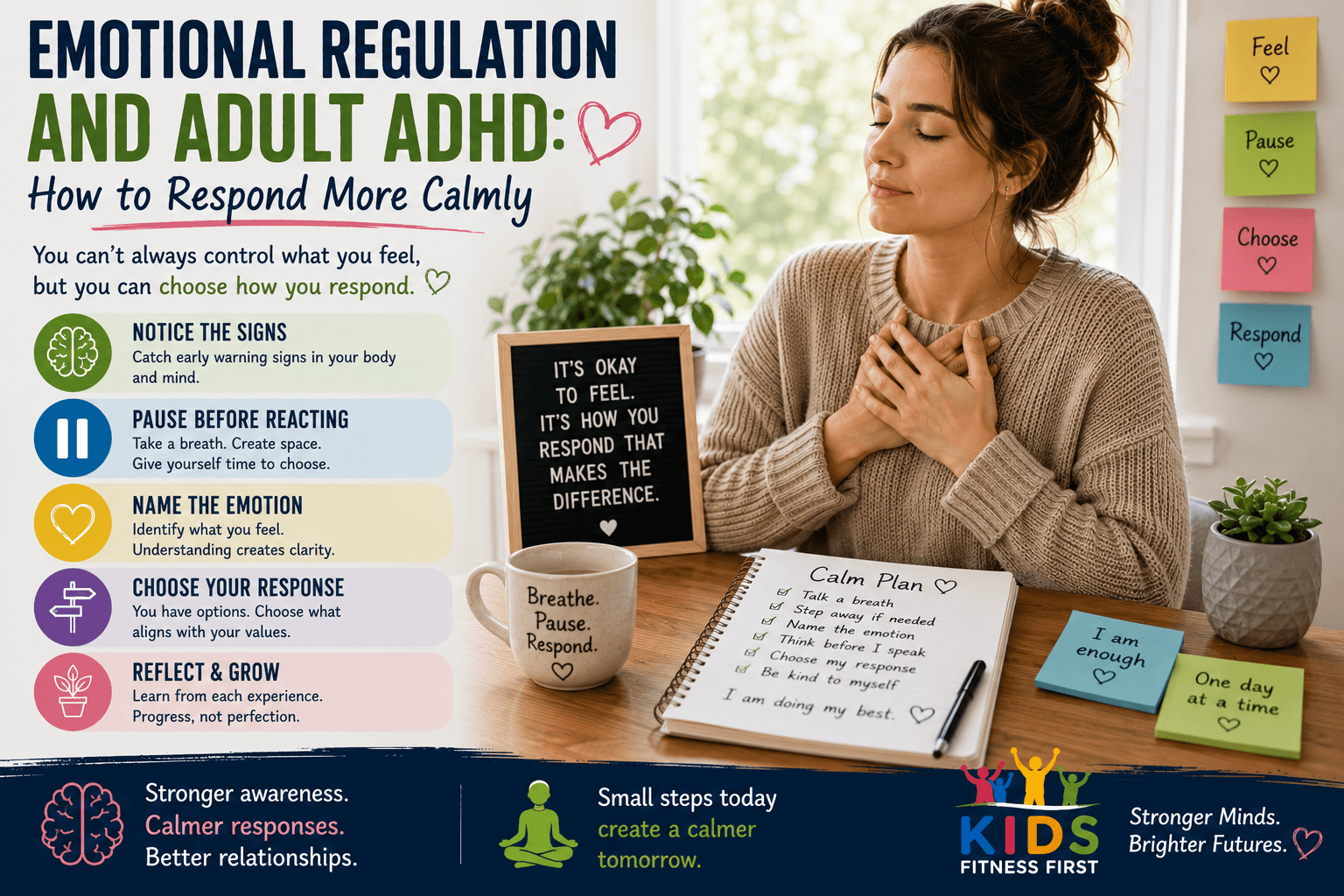
Emotional Regulation and Adult ADHD: How to Respond More Calmly
Receiving an adult ADHD diagnosis can help explain much more than difficulties with attention or organisation. For many people, it also sheds light on years of intense emotions, sudden frustration and reactions that seemed difficult to control.
You may have been told that you were too sensitive, impatient or easily upset. Perhaps small setbacks sometimes felt enormous, while criticism stayed with you long after a conversation ended. At other times, excitement may have arrived so strongly that it became difficult to slow down or think clearly.
These experiences can be confusing. However, they do not necessarily mean that you are dramatic, weak or incapable of managing yourself.
Instead, they may reflect difficulties with emotional regulation.
Emotional regulation is the ability to notice, understand and manage emotions without being completely controlled by them. Although everyone struggles with this occasionally, adults with ADHD may find strong feelings arrive quickly, intensify rapidly and take longer to settle.
This article focuses on understanding emotional reactions in the context of an adult ADHD diagnosis: recognising patterns, noticing early warning signs and creating space before responding. A separate guide looks more specifically at how cumulative stress, overload and competing demands can affect emotional regulation during everyday life.
What Is Emotional Regulation?
Emotional regulation does not mean suppressing feelings or pretending everything is fine.
Rather, it means recognising an emotion, understanding what may have triggered it and deciding how to respond in a way that supports your wellbeing.
For example, anger itself is not wrong. It may show that a boundary has been crossed or that something feels unfair.
Similarly, anxiety may signal uncertainty, while sadness may reflect disappointment or loss.
The challenge appears when the emotion becomes so intense that it takes over your behaviour.
At that point, you may say something you later regret, abandon an important task or withdraw from someone who was trying to help.
Therefore, the aim is not to eliminate emotion. Instead, it is to develop enough awareness and control to choose your response.
Why Emotions Can Feel So Intense
Adults with ADHD often describe emotions as arriving without warning.
One moment, everything may feel manageable. The next, a minor problem can trigger anger, panic, disappointment or shame.
Several factors may contribute to this pattern.
These can include:
- difficulty shifting attention away from upsetting thoughts
- impulsive reactions
- sensitivity to criticism
- frustration when tasks feel harder than expected
- tiredness or sensory overload
- repeated experiences of being misunderstood
- stress caused by disorganisation or missed deadlines
- difficulty recognising emotional warning signs early
In addition, emotions can become stronger when several pressures build at the same time.
For instance, a difficult morning, poor sleep and an unexpected request may combine to create a reaction that seems out of proportion to the final event.
However, the final event is often only the last part of a much longer build-up.
Recognising this can help you respond with greater understanding.
Notice the Early Warning Signs
Strong emotions usually give some warning before they reach their highest point.
Unfortunately, those signals can be easy to miss when life is moving quickly.
Your early signs may include:
- a racing heartbeat
- tightness in your chest or shoulders
- talking more quickly
- feeling unusually restless
- becoming defensive
- repeating the same thought
- wanting to interrupt
- feeling hot or physically tense
- struggling to concentrate
- imagining the worst possible outcome
Once you identify these signs, you can act earlier.
For example, you may notice that frustration first appears as jaw tension. Alternatively, anxiety might begin with repeated checking or difficulty sitting still.
Keeping a brief record can help you recognise patterns.
You might write down:
- what happened
- what you felt
- what your body did
- how you responded
- what helped afterwards
Over time, these notes can make your emotional patterns easier to understand.
Create a Pause Before Responding
When emotions rise quickly, your first reaction may feel urgent.
Nevertheless, urgency does not always mean immediate action is necessary.
Creating a pause can prevent a temporary feeling from turning into a lasting problem.
You could try:
- taking three slow breaths
- drinking a glass of water
- stepping outside briefly
- saying, “I need a moment to think”
- delaying an email or message
- walking around the room
- counting slowly before speaking
- writing your thoughts before discussing them
Even a short pause gives your nervous system time to settle.
As a result, you may be able to choose words more carefully and understand what you actually need.
The pause does not need to be perfect. It simply needs to interrupt the automatic reaction.
Name the Emotion Clearly
Saying “I feel bad” does not provide much information.
By contrast, identifying the emotion more precisely can reduce confusion.
You may be feeling:
- disappointed
- embarrassed
- ignored
- criticised
- overwhelmed
- worried
- frustrated
- rejected
- exhausted
- powerless
Naming the emotion helps separate the feeling from the situation.
For example, “I feel rejected because they have not replied” is more specific than “Nobody cares about me.”
The first statement describes an emotion. The second turns that emotion into a conclusion.
This distinction matters because feelings are real, but the first explanation your mind creates is not always accurate.
Therefore, ask yourself:
“What am I actually feeling right now?”
Then consider:
“What else might be happening?”
Check the Story Behind the Feeling
Strong emotions often come with strong interpretations.
Someone replies briefly, and your mind decides they are angry.
A colleague gives feedback, and you assume you have failed.
A friend changes plans, and you believe they no longer value you.
Although these thoughts may feel convincing, they are not always facts.
Before reacting, ask:
- What do I know for certain?
- What am I assuming?
- Is there another possible explanation?
- Am I reacting only to this situation, or to past experiences as well?
- What would I say to someone else in the same position?
This process does not dismiss your emotions.
Instead, it gives you a wider view of the situation.
Reduce Emotional Overload
Emotional regulation becomes harder when your body and mind are already exhausted.
For that reason, prevention is just as important as responding in the moment.
Helpful habits may include:
- maintaining a regular sleep routine
- eating before you become extremely hungry
- taking breaks from demanding tasks
- reducing unnecessary noise or distractions
- spending time outdoors
- moving your body regularly
- limiting overcommitment
- building quiet recovery time into your day
- preparing for stressful situations in advance
For example, a crowded social event may feel easier if you plan how long you will stay. Similarly, an important conversation may go better if you write down your main points beforehand.
These adjustments are not signs of weakness.
Instead, they help prevent your emotional resources from becoming completely depleted.
Use Movement to Release Intensity
Strong emotions are not only mental experiences.
They also affect the body.
Consequently, gentle physical movement can help release some of the tension.
You might try:
- walking
- stretching
- shaking out your arms
- climbing stairs
- tidying a small area
- cycling
- gardening
- doing a short exercise routine
The aim is not to avoid the emotion.
Rather, movement can reduce the physical intensity enough for you to think more clearly.
Afterwards, you may find it easier to return to the situation with a calmer perspective.
Avoid Important Conversations at the Wrong Time
Timing can make a significant difference.
Trying to solve a difficult issue while exhausted, hungry or emotionally overwhelmed often makes the conversation harder.
Therefore, it may be wiser to delay the discussion briefly.
You could say:
“I want to talk about this properly, but I need some time to settle first.”
This is not avoidance when you genuinely return to the subject later.
Instead, it is a responsible way to prevent escalation.
Agreeing on a time to continue the conversation can also reassure the other person that the issue is not being ignored.
Repair After an Emotional Reaction
Even with good strategies, there may still be times when you react more strongly than you intended.
When that happens, self-criticism rarely helps.
Instead, focus on repair.
A useful apology may include:
- acknowledging what happened
- taking responsibility for your behaviour
- explaining without making excuses
- recognising the impact on the other person
- saying what you will try to do differently
For example:
“I became overwhelmed and spoke too sharply. That was not fair to you. I should have taken a break before continuing the conversation.”
Repair does not erase the event. However, it can rebuild trust and help you learn from the experience.
Challenge Shame and Self-Criticism
Many adults with ADHD have spent years feeling ashamed of their emotional responses.
After an argument or mistake, they may think:
“Why am I like this?”
“I ruin everything.”
“I should be able to control myself.”
Although accountability is important, shame usually makes emotional regulation harder.
When you attack yourself, stress increases. As a result, you may become more sensitive and less able to respond calmly next time.
A more helpful response might be:
“I did not handle that well, but I can understand what triggered me and choose a better strategy next time.”
Self-compassion does not mean avoiding responsibility.
Rather, it creates the emotional safety needed for genuine change.
Ask for Support When You Need It
You do not have to manage emotional challenges alone.
Support may come from:
- a trusted friend
- a partner
- a family member
- an ADHD coach
- a therapist or counsellor
- a support group
- a qualified healthcare professional
Talking through repeated patterns can help you identify triggers and develop more effective responses.
In addition, professional support may be particularly helpful when emotions are causing serious difficulties in relationships, work or daily life.
Seeking help is not a sign that you have failed.
It is a practical step towards greater stability and understanding.
Emotional Regulation Can Improve
You may not be able to prevent every strong emotion.
However, you can become better at recognising what is happening and deciding what to do next.
Progress might look like:
- noticing anger before shouting
- delaying a message until you feel calmer
- asking for clarification instead of assuming rejection
- leaving a stressful environment before becoming overwhelmed
- apologising more quickly
- recovering from disappointment more gently
- speaking to yourself with greater kindness
These changes may seem small.
Nevertheless, they can transform relationships, confidence and everyday wellbeing over time.
Final Thoughts
Emotional regulation and adult ADHD can be closely connected.
For many people, receiving a diagnosis finally explains why feelings have sometimes seemed so intense or difficult to manage.
That understanding can be deeply freeing.
Instead of believing that you are simply too sensitive or difficult, you can begin recognising patterns, identifying triggers and building practical ways to respond.
You will not handle every situation perfectly.
Nobody does.
However, every pause, every calmer conversation and every act of self-understanding represents progress.
The goal is not to stop feeling deeply.
Instead, it is to ensure that your emotions inform your decisions without controlling your entire life.
Reflection Questions
- Which emotions are most difficult for you to manage?
- What physical warning signs appear before you become overwhelmed?
- Which situations most often trigger a strong reaction?
- What could help you create a pause before responding?
- Which thoughts do you tend to assume are facts?
- How could you repair a situation after reacting impulsively?
- What daily habit might reduce your emotional overload?
- Who could support you in understanding these patterns?
Internal Links
- Understanding ADHD Burnout: Why It Happens and How to Recover
- How to Build New Habits When You Have Adult ADHD
Disclaimer
This article is provided for educational and informational purposes only. It is not a substitute for medical, psychological or therapeutic advice. If strong emotions, anxiety, impulsive behaviour or ADHD symptoms are significantly affecting your life, please seek support from a qualified healthcare professional.