
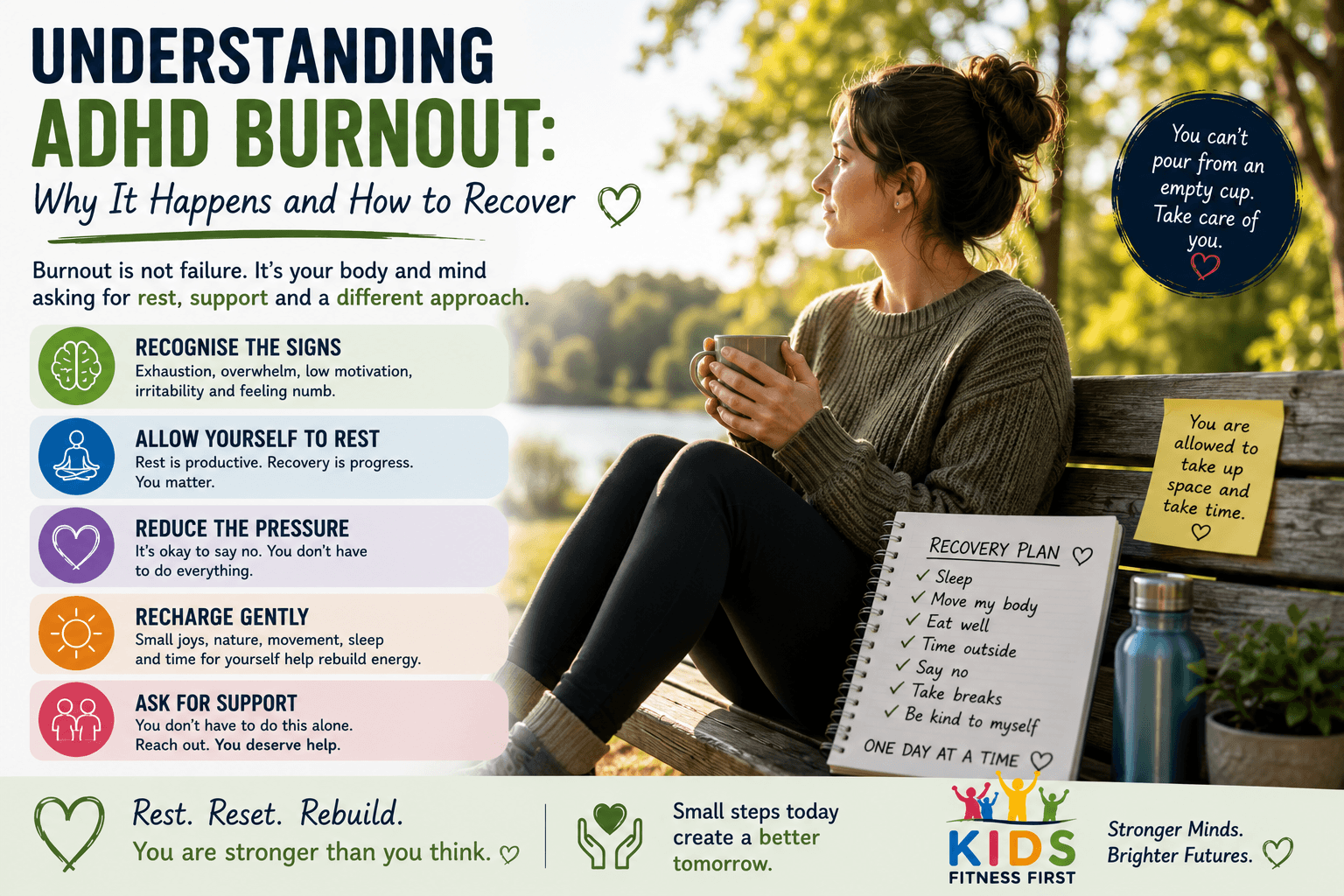
Understanding ADHD Burnout: Why It Happens and How to Recover
Many adults living with ADHD know what it feels like to push themselves far beyond their limits. They work harder to stay organised, remember appointments, manage responsibilities and meet other people’s expectations. From the outside, they may appear to be coping well. However, beneath the surface, they are often using enormous amounts of mental and emotional energy just to keep everything together. Our Adult ADHD practical guide places burnout alongside related topics such as overwhelm, routines, emotional regulation and work environment.
Eventually, that effort can become exhausting.
This state of physical, mental and emotional exhaustion is commonly known as ADHD burnout. Although everyone can experience burnout, adults with ADHD may be particularly vulnerable because they often spend years masking their difficulties, overcompensating for challenges and constantly feeling that they have to prove themselves.
Burnout should not be treated as a personal failing. Persistent exhaustion or reduced functioning can have different causes, so significant or ongoing symptoms deserve appropriate professional assessment rather than being automatically attributed to ADHD.
This page provides a broad introduction to ADHD burnout across everyday life. If your difficulties are primarily connected with employment, our separate guide to Adult ADHD and Burnout Recovery focuses specifically on sustained work-related overload and changing the conditions you return to.
What Is ADHD Burnout?
Burnout is more than simply feeling tired after a busy week.
Instead, it is a prolonged state of exhaustion that affects your energy, concentration, motivation and emotional wellbeing.
You may notice that tasks which once felt manageable suddenly become overwhelming. Decisions feel harder to make, emotions become more intense and even simple daily routines can seem impossible.
Rather than recovering after a night’s sleep, the exhaustion often continues for weeks or even months.
Why Adults With ADHD Experience Burnout
There is rarely a single cause.
Instead, burnout often develops gradually through a combination of factors.
These may include:
- Constantly masking ADHD symptoms.
- Trying to meet unrealistic expectations.
- Perfectionism.
- Overcommitting to responsibilities.
- Poor sleep.
- Chronic stress.
- Feeling misunderstood.
- Never allowing yourself proper recovery time.
Although each factor may seem manageable on its own, together they can gradually drain your emotional and physical reserves.
Common Signs of ADHD Burnout
Burnout can affect people in different ways. However, many adults recognise several of these experiences:
- Feeling mentally exhausted every day.
- Losing motivation for activities you once enjoyed.
- Increased forgetfulness.
- Difficulty concentrating.
- Feeling emotionally numb or unusually sensitive.
- Becoming easily irritated.
- Withdrawing from family or friends.
- Feeling overwhelmed by everyday responsibilities.
- Struggling to start even simple tasks.
Recognising these signs early gives you the opportunity to make changes before burnout becomes more severe.
Stop Measuring Your Worth by Productivity
Many adults with ADHD believe they must always be achieving something.
However, your value is not measured by how much you complete in a single day.
Rest is productive.
Recovery is productive.
Looking after yourself allows you to contribute more effectively in the long term.
Giving yourself permission to slow down is often one of the most important steps towards recovery.
Allow Yourself Time to Recover
Burnout cannot usually be solved by working harder.
Instead, recovery often requires the opposite approach.
You may benefit from:
- Reducing unnecessary commitments.
- Improving your sleep routine.
- Spending time outdoors.
- Gentle physical activity.
- Taking regular breaks.
- Saying “no” more often.
- Speaking with supportive people.
- Asking for professional support if needed.
Recovery does not happen overnight.
However, every small step helps rebuild your energy.
Reduce the Need to Mask
Many adults spend years hiding their ADHD because they worry about being judged.
Unfortunately, constantly pretending everything is fine requires enormous mental effort.
Where possible, allow yourself to be more authentic.
This does not mean sharing your diagnosis with everyone.
Instead, it means recognising that you do not need to appear perfect all the time.
Being yourself is often far less exhausting than trying to become someone else.
Rebuild Your Energy Gradually
Recovery is rarely a straight line.
Some days you will feel stronger.
Other days you may need additional rest.
Both are part of the process.
Rather than trying to return immediately to your previous workload, focus on rebuilding slowly.
Small improvements made consistently often last much longer than dramatic changes.
Burnout Is Not the End of Your Story
Experiencing burnout does not mean you have failed.
In many cases, it means you have been trying to carry too much for too long.
Your diagnosis gives you an opportunity to understand yourself differently.
Instead of constantly fighting your brain, you can begin creating a lifestyle that supports it.
With time, patience and self-compassion, recovery is possible.
Final Thoughts
ADHD burnout can feel frightening, particularly if you have spent years believing you simply needed to try harder.
Fortunately, recovery is not about becoming stronger through endless effort.
Instead, it is about understanding your limits, respecting your needs and building a life that allows you to thrive without constant exhaustion.
Remember, looking after yourself is not a weakness.
It is one of the strongest decisions you can make.
Reflection Questions
- What situations leave you feeling most emotionally exhausted?
- Have you been expecting too much from yourself recently?
- Which responsibilities could you reduce or postpone?
- What helps you feel genuinely rested?
- How can you be kinder to yourself this week?
Internal Links
Disclaimer
This article is for educational purposes only and should not be
considered medical, psychological or therapeutic advice. If you are experiencing severe stress, burnout or concerns about your mental health, please seek support from a qualified healthcare professional.