
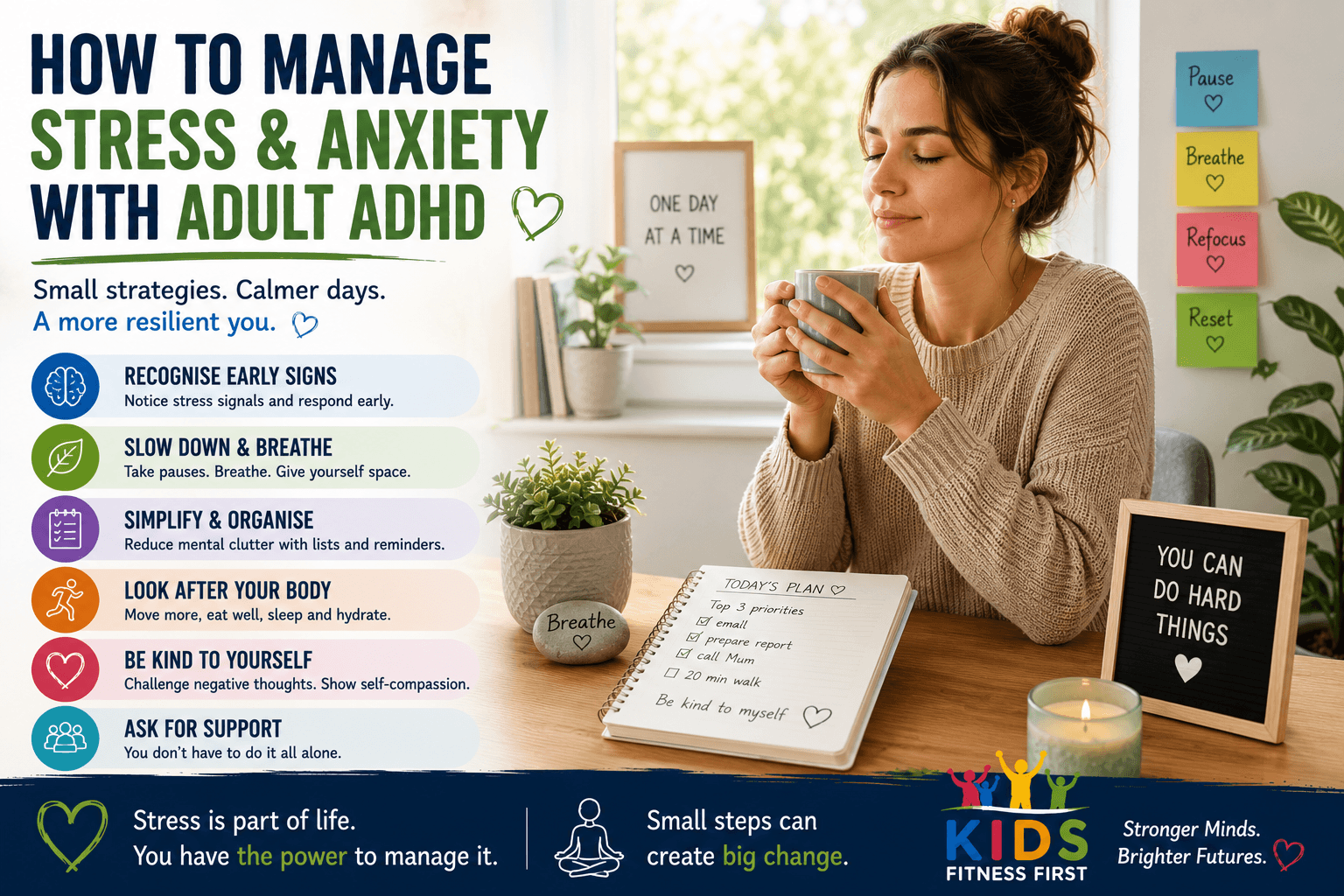
How to Manage Stress and Anxiety With Adult ADHD
Many adults describe receiving an ADHD diagnosis as both a relief and an emotional turning point. On one hand, it explains years of confusion and frustration. On the other hand, it can raise new questions about how to manage everyday life more effectively.
One of the biggest challenges many adults face is stress. Whether it comes from work, relationships, finances or daily responsibilities, stress can quickly become overwhelming when combined with the unique challenges of ADHD.
Fortunately, there are practical ways to reduce stress and build resilience. While you cannot remove every challenge from life, you can learn strategies that help you respond more calmly and confidently.
Why Adults With ADHD Often Experience More Stress
Living with ADHD can sometimes mean working harder just to keep up with everyday demands.
For example, you may find yourself:
- Forgetting appointments.
- Losing important items.
- Missing deadlines.
- Struggling to prioritise tasks.
- Feeling mentally exhausted after concentrating.
- Becoming overwhelmed by busy environments.
Over time, these experiences can create constant pressure.
In addition, repeated criticism or misunderstanding during childhood and adulthood may increase anxiety and reduce self-confidence. As a result, many adults begin expecting things to go wrong, even when they are doing their best.
Recognising these patterns is important because it helps separate ADHD-related challenges from personal failure.
Recognise Your Early Stress Signals
Stress rarely appears all at once.
Instead, it usually builds gradually.
You might notice:
- Racing thoughts.
- Muscle tension.
- Irritability.
- Difficulty concentrating.
- Restlessness.
- Trouble sleeping.
- Feeling emotionally overwhelmed.
Learning to recognise these early signs allows you to respond before stress becomes unmanageable.
The earlier you notice the warning signs, the easier they are to address.
Slow Down Before Reacting
Adults with ADHD sometimes react quickly to stressful situations.
Although this can be helpful in genuine emergencies, it may also lead to decisions or conversations that are later regretted.
When you notice stress increasing, pause for a moment.
Take a slow breath.
Walk away briefly if possible.
Drink a glass of water.
Give yourself permission to think before responding.
Creating even a small pause between emotion and action can reduce conflict and improve decision-making.
Reduce Mental Clutter
Many adults with ADHD carry dozens of unfinished thoughts throughout the day.
Consequently, the brain rarely feels fully at rest.
Instead of trying to remember everything, move information out of your mind and into trusted systems.
For example:
- Keep a notebook nearby.
- Use a digital calendar.
- Write short to-do lists.
- Record ideas as soon as they appear.
- Set reminders for important tasks.
External systems reduce the pressure on working memory and free up mental energy for more important decisions.
Focus on One Task at a Time
When stress increases, multitasking often becomes less effective.
Although it may feel productive, constantly switching between tasks usually increases mental fatigue.
Instead, choose one priority.
Complete one step before moving to the next.
Even five or ten minutes of uninterrupted focus can create meaningful progress.
Small achievements also reduce feelings of overwhelm.
Look After Your Body
Physical wellbeing has a powerful effect on mental wellbeing.
Simple daily habits can significantly reduce stress over time.
These include:
- Regular physical activity.
- Drinking enough water.
- Eating balanced meals.
- Maintaining a consistent sleep routine.
- Spending time outdoors.
- Taking short movement breaks throughout the day.
You do not need to make dramatic changes overnight.
Instead, focus on improving one habit at a time.
Create Recovery Time
Many adults with ADHD spend so much energy managing daily life that they forget to recover.
However, recovery is not laziness.
It is essential.
Recovery might include:
- Walking in nature.
- Reading.
- Listening to calming music.
- Spending time with supportive people.
- Practising mindfulness.
- Enjoying a favourite hobby.
- Sitting quietly without distractions.
Making time for recovery helps reduce stress before it becomes overwhelming.
Challenge Negative Self-Talk
Years of struggling without understanding ADHD can create harsh self-criticism.
You may find yourself thinking:
“I’m always behind.”
“I’ll never get organised.”
“I always mess things up.”
These thoughts often feel true.
However, they are rarely accurate.
Instead, ask yourself:
“Would I say this to a friend?”
If the answer is no, consider speaking to yourself with the same kindness and understanding you would offer someone else.
Self-compassion is not making excuses.
It is recognising that progress becomes easier when criticism is replaced with encouragement.
Know When to Ask for Help
Managing stress does not mean facing every challenge alone.
Support may come from:
- Family.
- Friends.
- Employers.
- ADHD coaches.
- Support groups.
- Healthcare professionals.
Reaching out for help is a sign of strength, not weakness.
Often, one conversation can provide new ideas, reassurance or practical solutions.
Stress Does Not Have to Control Your Life
Everyone experiences stress.
However, adults with ADHD often benefit from recognising stress earlier and responding differently.
Small daily actions can make a significant difference over time.
Better sleep.
Better routines.
Better boundaries.
Better self-understanding.
These changes gradually build greater resilience.
Although stressful days will still happen, they no longer have to control your future.
Final Thoughts
Managing stress with adult ADHD is not about eliminating every difficulty.
Instead, it is about building habits that help you respond more calmly, recover more quickly and treat yourself with greater understanding.
Progress may sometimes feel slow.
Nevertheless, every positive change strengthens your ability to cope with future challenges.
Remember, resilience is built one day at a time.
Reflection Questions
- What situations cause you the most stress?
- How does your body usually tell you that stress is building?
- Which strategy from this article could you try this week?
- Who could you ask for support when life feels overwhelming?
- What small habit could help reduce your daily stress?
Internal Links
Disclaimer
This article is intended for educational and informational purposes only. It should not replace professional medical, psychological or therapeutic advice. If stress, anxiety or ADHD symptoms are significantly affecting your daily life, please seek guidance from a qualified healthcare professional.