
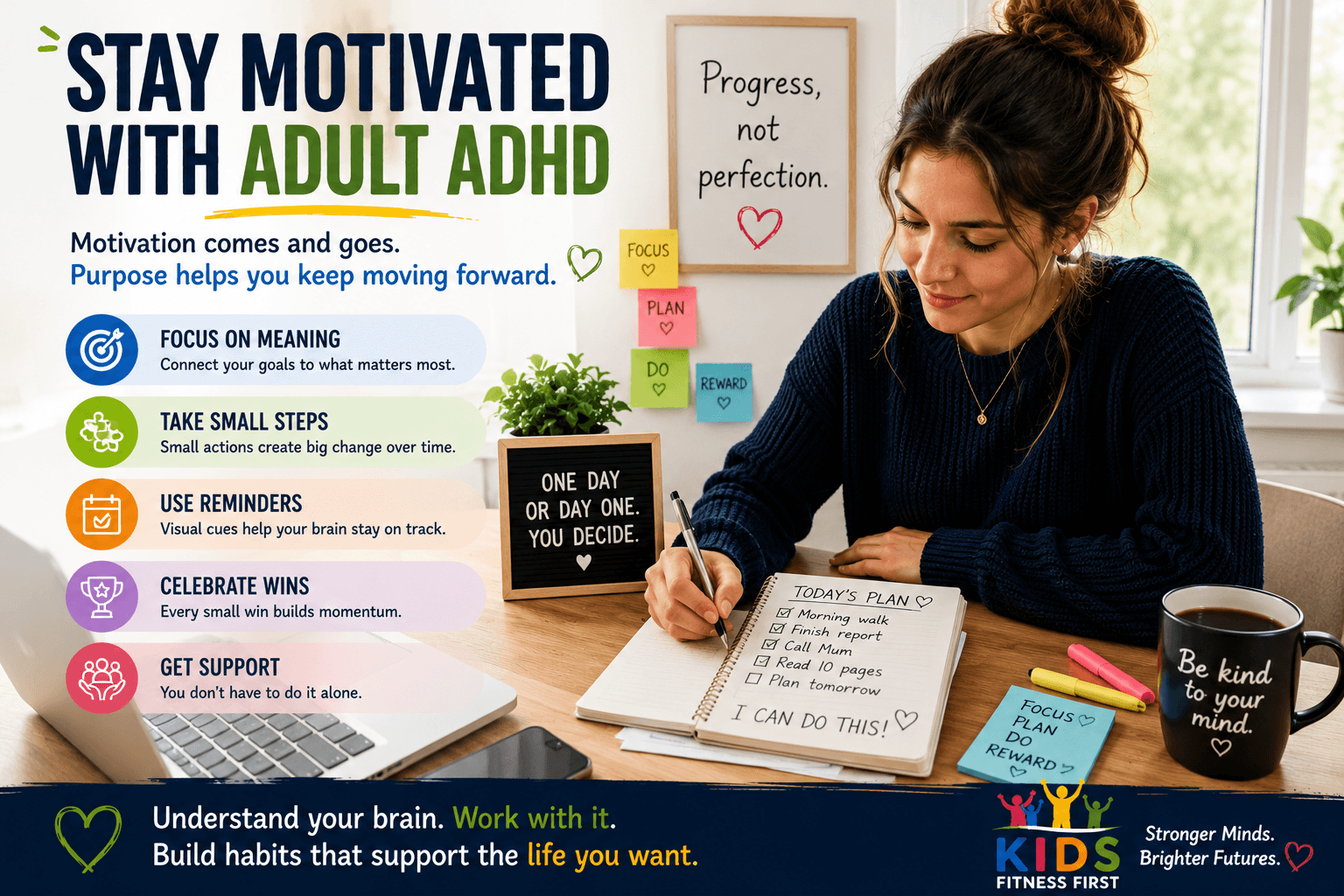
How to Stay Motivated With Adult ADHD
Many adults receive an ADHD diagnosis and feel optimistic about the future. For the first time, they understand why certain aspects of life have always felt more difficult than they seemed for other people.
However, after the initial relief, another challenge often appears.
How do you stay motivated when everyday life returns to normal?
This question is incredibly common. Many adults begin new projects full of enthusiasm, only to lose interest a few weeks later. As a result, unfinished goals, abandoned hobbies and feelings of frustration can quickly build up.
Fortunately, losing motivation does not mean you are lazy or incapable. More often, it reflects the way an ADHD brain responds to interest, novelty and reward.
Understanding this difference is the first step towards creating a more sustainable way of working and living.
Why Motivation Feels Different
Many people believe motivation should remain constant.
Unfortunately, that is rarely true for anyone, and it is particularly unrealistic for many adults with ADHD.
Rather than depending on long-term rewards, ADHD brains often respond more strongly to:
- Interest
- Curiosity
- Urgency
- Novelty
- Immediate feedback
- Personal meaning
Consequently, a task that feels exciting today may feel almost impossible next week, even though the goal itself has not changed.
Recognising this pattern allows you to stop blaming yourself and begin working with your natural strengths.
Stop Waiting to Feel Motivated
One of the biggest mistakes people make is believing they must feel motivated before taking action.
In reality, action often creates motivation—not the other way around.
For example, taking a five-minute walk may increase your energy enough to continue for twenty minutes. Likewise, writing one paragraph can make it easier to write the next.
Therefore, instead of waiting for the perfect moment, focus on taking the smallest possible first step.
Momentum usually follows movement.
Choose Meaning Over Obligation
Motivation lasts longer when a task feels personally meaningful.
Instead of asking:
“What should I be doing?”
Try asking:
“Why does this matter to me?”
Perhaps you want to become healthier so you have more energy for your family.
Maybe you’re organising your finances to reduce stress.
Or perhaps you’re learning a new skill because it opens opportunities for the future.
Connecting daily actions to personal values often creates stronger motivation than simply following a checklist.
Break Big Goals Into Small Wins
Large goals can feel exciting at first.
However, they can also become overwhelming.
Instead of focusing on completing an entire project, divide it into smaller milestones.
For example:
- Write one page instead of an entire chapter.
- Organise one shelf instead of the whole house.
- Walk for ten minutes instead of running five miles.
- Reply to one email instead of clearing your entire inbox.
Each completed task creates progress.
More importantly, it creates confidence.
Create an Environment That Supports You
Motivation does not exist in isolation.
Your surroundings influence your behaviour every day.
For example:
- Keep healthy snacks within easy reach.
- Leave exercise clothes where you’ll see them.
- Remove unnecessary distractions from your workspace.
- Keep important tasks visible.
- Use reminders and alarms when appropriate.
A supportive environment reduces the effort needed to begin.
As a result, motivation becomes easier to maintain.
Celebrate Progress Regularly
Many adults only celebrate major achievements.
Unfortunately, waiting for huge milestones means missing hundreds of smaller successes.
Finished today’s exercise?
Celebrate.
Completed an important phone call?
Recognise it.
Remembered your appointment?
Acknowledge your progress.
Every small achievement reinforces the habit you’re trying to build.
Accept That Motivation Will Change
Even the most successful people experience days when motivation disappears.
That is completely normal.
Rather than seeing low motivation as failure, view it as part of the process.
Some days you’ll feel productive.
Other days you’ll simply complete the basics.
Both days still move you forward.
Consistency matters far more than perfection.
Use Other People as Positive Support
Motivation often increases when other people are involved.
Consider:
- Joining a walking group.
- Working alongside a friend.
- Sharing your goals with someone you trust.
- Finding an accountability partner.
- Participating in a support group.
Encouragement can help you continue, especially on difficult days.
Avoid Comparing Yourself to Others
One of the quickest ways to lose motivation is constant comparison.
Social media often shows finished results.
It rarely shows setbacks, mistakes or slow progress.
Instead of comparing yourself with someone else’s journey, compare yourself with where you were six months ago.
Notice the progress you’ve already made.
Celebrate how far you’ve come.
Keep Moving Forward
You do not need endless motivation.
You only need enough motivation to take the next step.
Some days that step will be large.
Other days it will be incredibly small.
Both count.
Building a successful life with adult ADHD is not about becoming perfect.
It is about understanding yourself, adapting your environment and creating systems that support long-term progress.
Small actions repeated consistently often achieve far more than occasional bursts of motivation.
Final Thoughts
Living with adult ADHD does not mean you lack ambition.
It simply means your motivation may work differently.
Once you understand what drives you, you can stop relying on willpower alone and start building routines that make success easier.
Remember, motivation comes and goes.
Purpose, however, can keep you moving forward.
Reflection Questions
- What activities naturally keep your attention?
- Which current goal feels most meaningful to you?
- What is the smallest step you could take today?
- How could you make your environment more supportive?
- Who encourages you to keep moving forward?
- How do you usually respond when motivation disappears?
- Which small success could you celebrate today?
Internal Links
- How to Build New Habits When You Have Adult ADHD
- Relief and Grief After an ADHD Diagnosis: Why Both Feelings Can Exist Together
Disclaimer
This article is provided for educational purposes only and should not be considered medical, psychological or therapeutic advice. If you believe you may have ADHD or require support, please seek guidance from a qualified healthcare professional.