How to Build New Habits When You Have Adult ADHD
Receiving an adult ADHD diagnosis can answer questions you’ve carried with you for years. Suddenly, experiences that once felt confusing often begin to make sense. You may finally understand why certain everyday tasks seemed far more challenging than they appeared for other people, despite your best efforts.
For many adults, this new understanding brings both relief and hope. However, understanding ADHD is only the first step. The next challenge is learning how to build daily habits that genuinely work with your brain rather than against it.
Although changing long-established routines can feel overwhelming, it is entirely possible. Fortunately, lasting habits don’t require perfection—they simply require the right approach.
Instead of forcing yourself into systems designed for other people, focus on creating routines that suit the way your ADHD brain naturally works. By doing so, everyday life can gradually become more manageable, less stressful and far more rewarding.
Why Habits Can Feel So Difficult
Many successful habits rely on consistency. Unfortunately, many people believe consistency comes from willpower alone. For adults with ADHD, that simply isn’t the whole story.
Instead, consistency often grows from environments and routines that support the way the ADHD brain functions. For example, habits become much easier to maintain when they include:
- Genuine interest
- Enjoyment
- Simple, achievable steps
- Visual reminders
- Immediate rewards
- Supportive people and environments
As a result, routines feel less like a struggle and more like a natural part of everyday life.
This doesn’t mean you lack discipline or motivation. Rather, it means your brain processes attention, motivation and rewards differently. Once you understand that difference, you can stop blaming yourself and begin building habits that play to your strengths instead of constantly fighting against them.
Make Habits Easy
Ask yourself:
“How can I make this easier?”
Rather than:
“I’ll exercise for an hour every morning.”
Try:
“I’ll walk for ten minutes.”
Rather than:
“I’ll completely reorganise the house.”
Try:
“I’ll tidy one drawer.”
Success creates motivation.
Motivation rarely creates success.
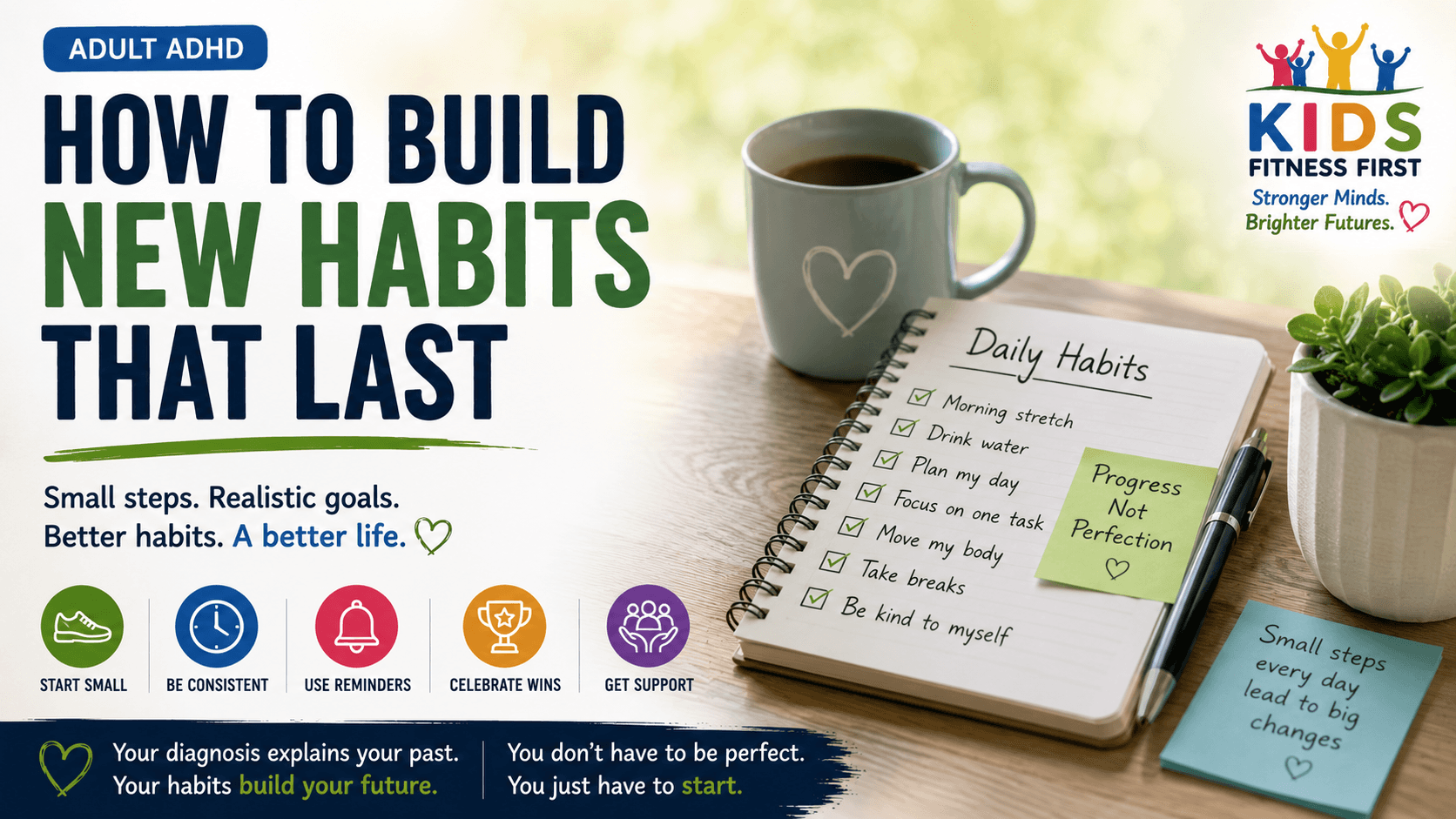
Build Around Existing Habits
One of the easiest ways to remember a new habit is attaching it to something you already do.
For example:
After making coffee…
Stretch for two minutes.
After brushing your teeth…
Check tomorrow’s calendar.
After dinner…
Prepare your clothes for the next morning.
These small connections make habits easier to remember.
Use Visual Cues
ADHD often means “out of sight, out of mind.”
Visible reminders are incredibly powerful.
Examples include:
- Whiteboards
- Sticky notes
- Calendar reminders
- Phone alarms
- Open checklists
- Water bottles left where you’ll see them
- Exercise shoes by the front door
Your environment should remind you.
Not your memory.
Celebrate Small Wins
Many adults with ADHD rarely acknowledge progress.
Instead they think:
“I should have done that anyway.”
But celebrating achievements matters.
Finished an important email?
Celebrate.
Completed your walk?
Celebrate.
Remembered your medication?
Celebrate.
Small successes strengthen future habits.
Expect Setbacks
Nobody follows every habit perfectly.
Missing one day doesn’t erase your progress.
The goal isn’t perfection.
The goal is returning to the habit without criticising yourself.
One missed day becomes a pause.
Not the end.
Ask for Support
Building habits becomes easier when someone else knows your goals.
This might be:
- A partner
- A friend
- A colleague
- A coach
- A support group
Encouragement often makes consistency easier.
Habits That Make the Biggest Difference
Many adults find these habits have the greatest long-term impact:
- Regular sleep
- Daily movement
- Drinking enough water
- Time outdoors
- Planning tomorrow today
- Limiting unnecessary distractions
- Taking regular breaks
- Asking for help when needed
You don’t need every habit immediately.
Choose one.
Then build from there.
Your ADHD Doesn’t Define Your Future
Your diagnosis explains your past.
It doesn’t limit your future.
Every positive habit is another step towards greater confidence, better wellbeing and a life that works with your strengths.
Progress won’t always be fast.
It doesn’t need to be.
Small actions repeated consistently can transform your life over time.
Remember, the goal isn’t becoming someone else.
It’s becoming the best version of yourself.
Reflection Questions
- Which habit would make the biggest positive difference in your daily life?
- What is one small step you could take today?
- How can you make that habit easier to remember?
- Who could support you as you build this new routine?
- How will you celebrate your progress, even when it feels small?
Internal Links
- Rewriting Your Life Story After an Adult ADHD Diagnosis
- Your Brain on ADHD: Understanding How the ADHD Brain Really Works
Disclaimer
This article is for educational purposes only and should not replace professional medical, psychological or therapeutic advice. If you have concerns about ADHD or your mental health, please seek advice from a qualified healthcare professional.