Nutrition and Adult ADHD: How Healthy Eating Can Support Your Brain
Many adults with ADHD know what it feels like to become completely absorbed in a task and suddenly realise they have forgotten to eat. Others experience the opposite, reaching for sugary snacks or convenience foods when they feel stressed, overwhelmed or mentally exhausted.
If this sounds familiar, you are not alone.
Eating patterns can sometimes be affected by ADHD. Difficulties with planning, organisation, time management and impulsive decision-making may all influence what, when and how you eat.
Fortunately, healthy eating does not have to involve strict diets or unrealistic rules.
Instead, small, consistent improvements can support your energy, concentration and overall wellbeing.
Although nutrition is not a treatment for ADHD, looking after your body gives your brain the best opportunity to perform at its best.
Why Nutrition Matters
Your brain depends on a steady supply of nutrients to function well.
When meals are skipped or your energy levels rise and fall quickly, you may notice:
- reduced concentration
- irritability
- tiredness
- poor decision-making
- increased stress
- difficulty completing tasks
- reduced motivation
While everyone experiences these effects occasionally, adults with ADHD may find them particularly challenging.
Supporting your body through regular, balanced meals can help create a more stable foundation for the rest of your day.
Forget Perfect Diets
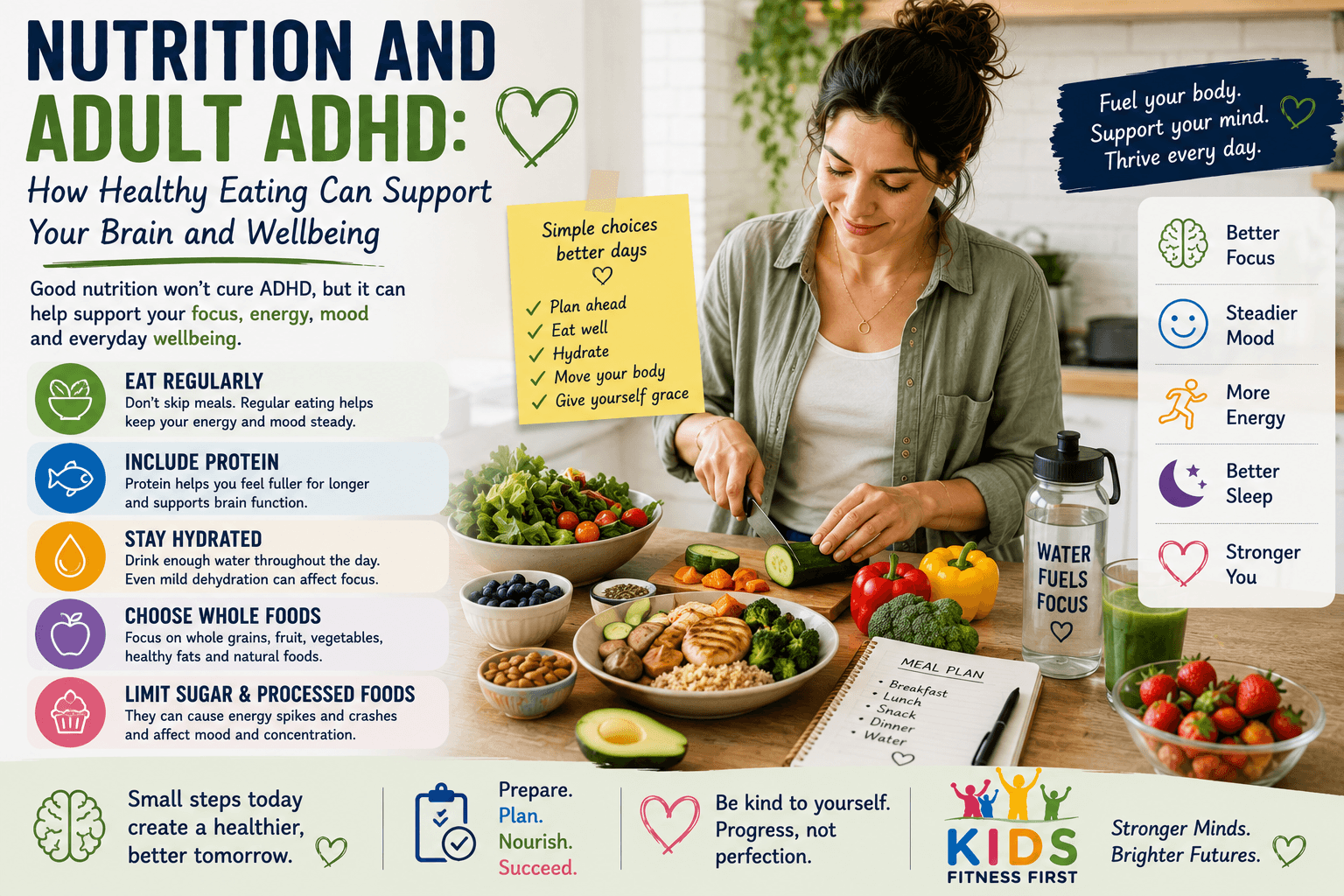
There is no single “ADHD diet” that works for everyone.
Unfortunately, many people become overwhelmed by conflicting advice online.
Some diets promise dramatic improvements, while others recommend cutting out large groups of foods without strong scientific evidence.
Rather than chasing perfection, aim for balance.
Simple improvements are usually easier to maintain than extreme changes.
For example:
- eat regularly
- include fruit and vegetables
- choose whole grains where possible
- include sources of protein
- drink enough water
- limit highly processed foods when practical
Small improvements repeated consistently often make a greater difference than short periods of strict dieting.
Don’t Skip Breakfast
For many adults, mornings can feel rushed.
As a result, breakfast is often forgotten.
However, starting the day without eating may leave you feeling tired, distracted or more likely to snack later.
A simple breakfast does not need to take long.
Ideas include:
- porridge with fruit
- wholegrain toast with eggs
- natural yoghurt with berries
- overnight oats
- peanut butter on wholegrain toast
- a fruit smoothie with protein
Choose something realistic that fits your routine.
Protein Can Help You Feel Fuller for Longer
Including protein in meals may help you stay satisfied and maintain more consistent energy.
Examples include:
- eggs
- fish
- chicken
- beans
- lentils
- Greek yoghurt
- nuts
- seeds
- tofu
You do not need large portions.
Instead, try including a source of protein with each main meal where possible.
Stay Hydrated
Many adults underestimate how important hydration can be.
Even mild dehydration may affect concentration and energy.
Simple ideas include:
- carrying a reusable water bottle
- drinking water with each meal
- setting reminders
- flavouring water with fruit if preferred
If you often forget to drink, place your bottle somewhere visible.
Visual reminders can be surprisingly effective.
Plan Ahead When Possible
Planning meals can reduce stress and make healthier choices easier.
For example:
- prepare lunches the night before
- keep healthy snacks nearby
- freeze homemade meals
- create a simple weekly meal plan
- keep a shopping list on your phone
Preparing even one or two meals in advance each week can make busy days much easier.
Be Careful With Sugar and Energy Drinks
Many adults notice that sugary snacks provide a quick burst of energy followed by a noticeable drop.
Similarly, excessive energy drinks may temporarily increase alertness but can also affect sleep, increase anxiety or lead to energy crashes later.
Rather than relying on quick fixes, aim for meals and snacks that provide more consistent energy throughout the day.
Healthy Snacks Matter Too
Long gaps between meals can leave you feeling tired or irritable.
Healthy snacks may include:
- fruit
- unsalted nuts
- yoghurt
- vegetable sticks
- hummus
- wholegrain crackers
- cheese
- boiled eggs
Keeping healthier options within easy reach makes them easier to choose.
Create Simple Eating Habits
Healthy eating becomes easier when it forms part of your daily routine.
You could:
- eat lunch at the same time each day
- prepare tomorrow’s breakfast before bed
- keep fruit visible on the kitchen counter
- shop with a written list
- batch cook on weekends
These small habits reduce decision fatigue and make healthier choices feel automatic.
Be Kind to Yourself
Everyone has days when healthy eating becomes difficult.
Busy schedules, illness, stress and unexpected events affect all of us.
One takeaway meal or missed breakfast does not undo your progress.
Avoid all-or-nothing thinking.
Instead, focus on your next meal.
Every healthy choice is another step forward.
Nutrition Supports Wellbeing
Good nutrition supports much more than physical health.
Looking after your body may also help support:
- energy
- mood
- concentration
- confidence
- sleep
- recovery after exercise
- overall wellbeing
Combined with good sleep, regular movement and healthy routines, nutrition becomes another valuable building block for living well with adult ADHD.
Final Thoughts
Nutrition and adult ADHD are closely connected because your brain relies on a steady supply of energy to function effectively.
Although no single food can cure ADHD, realistic eating habits may support concentration, emotional wellbeing and daily energy.
Start with one small improvement.
Drink more water.
Add fruit to breakfast.
Prepare tomorrow’s lunch.
Choose one habit and build from there.
Small changes repeated consistently often create the biggest long-term results.
Reflection Questions
- Do you often forget to eat?
- What healthy breakfast could you prepare more easily?
- How much water do you usually drink each day?
- Which healthy snack could you keep nearby?
- What small nutrition habit could you improve this week?
- How could meal planning reduce your daily stress?
- Which eating habit would make the biggest difference to your energy?
Internal Links
- Exercise and Adult ADHD
- ADHD and Sleep
Disclaimer
This article is for educational and informational purposes only. It should not replace medical or nutritional advice from a qualified healthcare professional. If you have specific dietary requirements, medical conditions or concerns about your nutrition, please seek personalised advice from a registered dietitian or healthcare provider.