
Practical guide for parents, carers and teachers. Explore sensory-friendly physical activities for autistic and neurodivergent children, with adaptable ideas for sound, movement, space and choice. These ideas are flexible, inclusive and intended for everyday participation rather than diagnosis or treatment.
Start with the child’s sensory preferences
Autistic and other neurodivergent children have varied sensory experiences. Some seek movement or pressure; others are sensitive to noise, light, touch or unpredictable activity. The most useful approach is to ask, observe and adapt. No activity is universally calming or stimulating.
Eight sensory-considerate activity ideas
- Quiet walking route: Follow a familiar indoor or outdoor path at a chosen pace.
- Gentle wall pushes: Push against a stable wall for a few seconds if comfortable.
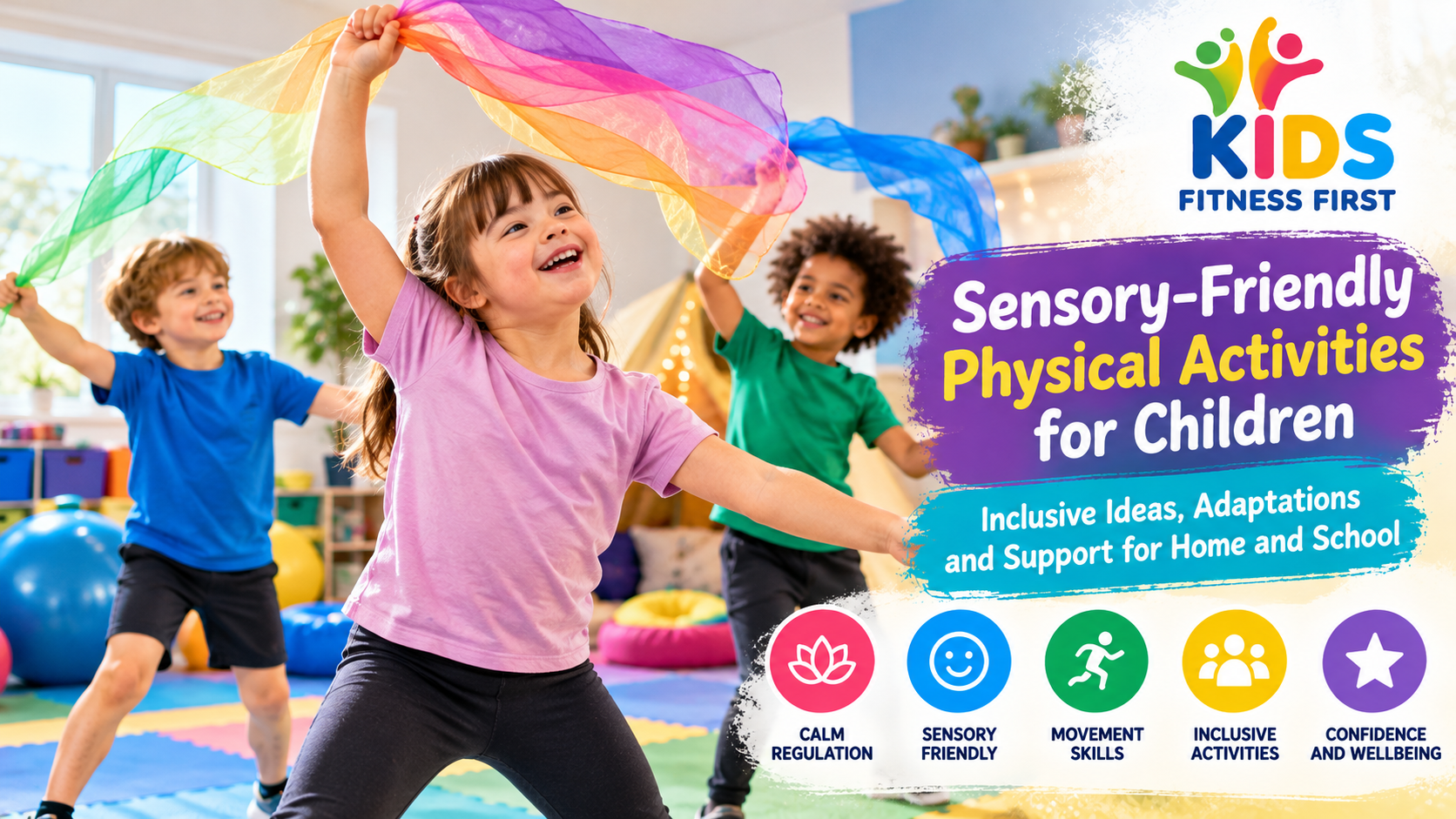
- Scarf movement: Wave lightweight scarves in slow patterns without loud music.
- Floor-marker pathway: Step, wheel or reach between coloured markers.
- Stretch and choose: Offer a small menu of comfortable seated or standing stretches.
- Soft-ball rolling: Roll a ball between partners, avoiding unexpected throws.
- Nature observation walk: Find a preferred colour or texture without pressure to touch.
- Solo obstacle trail: Navigate a simple predictable route with optional support.
Adjust the environment
Reduce competing noise, harsh lighting and crowding where possible. Show the activity sequence visually and explain transitions in advance. Provide a quiet exit route and allow headphones or familiar aids when safe. Ask permission before touch or physical guidance.
Offer meaningful choices
Let a child choose the activity, duration, equipment and whether to participate with others. A child may prefer repeating one movement rather than rotating through stations. Repetition can be a legitimate preference, not a problem to correct.
Recognise signs to stop or change
A child may communicate discomfort by leaving, becoming quieter, covering ears, changing movement patterns or expressing distress. Avoid interpreting every response as defiance. Pause, reduce demands and offer a preferred alternative. Never force sensory exposure as an informal treatment.
Plan a predictable session
- Show two available activities using pictures or words.
- Let the child choose where to begin.
- Offer a brief activity with an easy way to pause.
- Check whether to continue, switch or finish.
- End with a familiar transition.
Working with schools and families
Share information about preferred cues, sensory triggers and successful adaptations with the child’s consent and appropriate privacy safeguards. Teachers and SENCOs can support accessible PE and play. Occupational therapists or other clinicians may provide individual advice where appropriate.
Avoid one-size-fits-all claims
Sensory-friendly movement is about access and enjoyment, not ‘fixing’ autism or forcing a particular behaviour. If an activity causes pain, dizziness or marked distress, stop and seek suitable professional guidance.
Explore related Kids Fitness First guides
- Why Movement Matters: 10 Simple Activities
- Movement Breaks for Children with ADHD: Practical Ideas for Home and School
- 10 Coordination and Balance Activities for Children of Different Abilities
- How Physical Activity Can Help Children Build Confidence and Social Skills
Further information
See the NHS physical activity guidelines for children and young people and UK Chief Medical Officers’ physical activity guidelines. For individual concerns, consult a qualified professional.
This article provides general educational information and is not medical or diagnostic advice.