
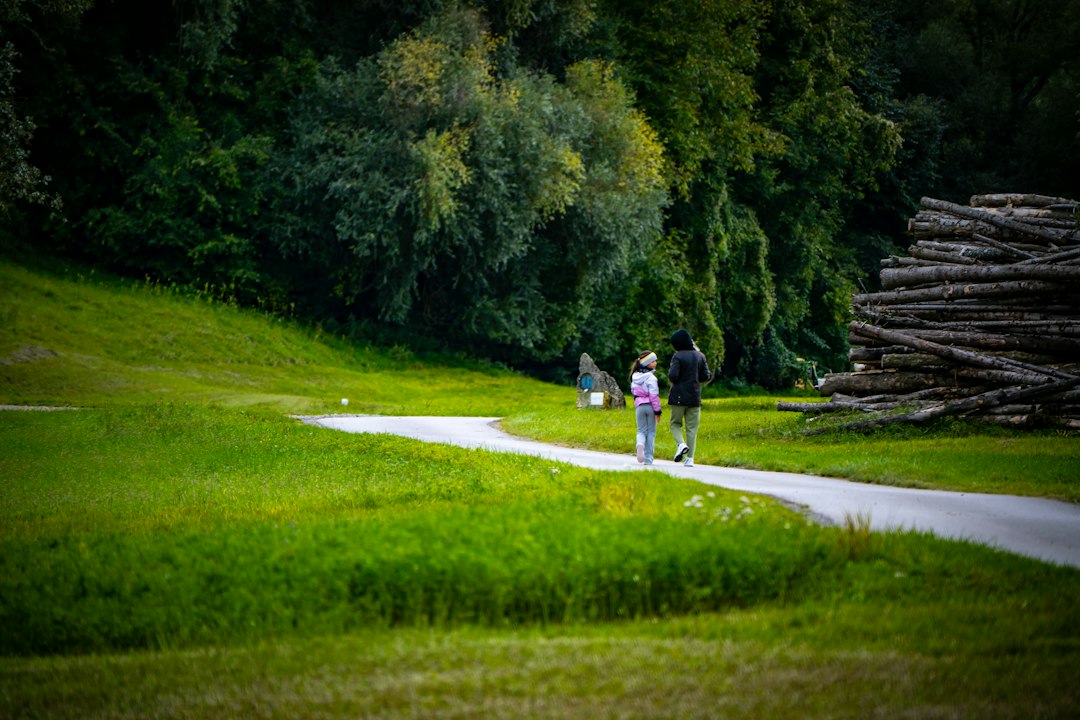
Nature movement bingo turns an ordinary family walk into a gentle game of noticing and choosing. Children can move in ways that suit them, with no racing, scores or pressure to finish. The aim is to enjoy the outdoors while exploring different movements and noticing the world around us.
How to play nature movement bingo
Draw a grid of eight boxes on paper, or use a notes app. Put one activity in each box. A child chooses any prompt, tries it in their own way and marks it when ready. Completing one or two boxes is enough. Take breaks whenever needed.
Eight child-led outdoor prompts
1. Follow a winding path
Choose a safe path with a gentle curve. Walk or wheel along it and notice how the direction changes.
2. Spot three colours
Look for three colours in plants, buildings or clothing. Point to them, say their names or take a photograph. This offers a participation option when movement needs to be limited.
3. Make a tree shape
Stand or sit tall, then gently stretch your arms like branches. Children can use one arm or simply turn their palms upwards.
4. Listen and turn
Pause to notice a bird, rustling leaves or another comfortable sound. Turn towards it if safe. For children sensitive to noise, replace listening with looking for a shape.
5. Choose a new route
At a safe junction, invite the child to pick between two accessible routes. Adults remain responsible for road and environmental safety.
6. Copy the breeze
Move hands or shoulders slowly like grass in the wind. A child can invent a seated or standing version.
7. Find a texture without touching
Look at smooth stones, rough bark or soft-looking grass. Describe the texture or point to it. There is no need to touch unfamiliar plants or surfaces.
8. Finish with a favourite movement
Invite the child to repeat a movement they enjoyed, or choose a quiet pause instead. Ask which part of the outing they would like to do again.
Make bingo inclusive and safe
Choose routes suitable for pushchairs, mobility aids and the child’s stamina. Avoid uneven ground if it is not appropriate. Supervise children, dress for the weather and bring water when needed. Follow any individual medical advice.
For children who prefer predictability, show the first two prompts before setting off. For those who enjoy choice, let them rearrange the boxes. An adult can record a child’s choices without expecting them to write or speak.
Does a short walk count as activity?
Yes. UK guidance encourages children to be active in different ways throughout the week, including walking and active play. Disabled children may benefit from manageable activity broken into smaller chunks. The right amount and intensity will depend on the individual child.
Keep exploring
See our simple movement activities and physical activity and confidence guide.
Further reading: NHS guidance for children and young people; UK disabled children’s activity guidance.
Featured photograph: adult and child walking in nature, by Scorn Pion, via Unsplash.