
Holding a page still while drawing, fastening a zip and carrying a tray all involve two sides of the body working together. This is called bilateral coordination. Children develop these skills through everyday play, and there is no need to turn practice into a test.
What does two-handed coordination mean?
Sometimes both hands do the same thing, such as rolling dough. Sometimes they alternate, as when winding a ribbon. At other times one hand leads while the other steadies an object. NHS children’s therapy resources describe these patterns as important for play and practical activities. Children develop at different rates; a single difficult task is not a diagnosis.
Six activities using ordinary household items
1. Roll a pretend bakery
Use soft playdough or a clean piece of bread dough. Ask the child to roll it into a sausage with two palms, then flatten it gently with a small rolling pin. Try short rolls first. If a child finds pressing hard uncomfortable, use softer dough or let them pat it instead.
2. Fold a towel together
Place a small towel on a table. The child finds two corners, brings them together and smooths the fold. Turn it into a “towel shop” where they choose which colour to fold next. A seated position with elbows supported may make this easier.
3. Steady and stir
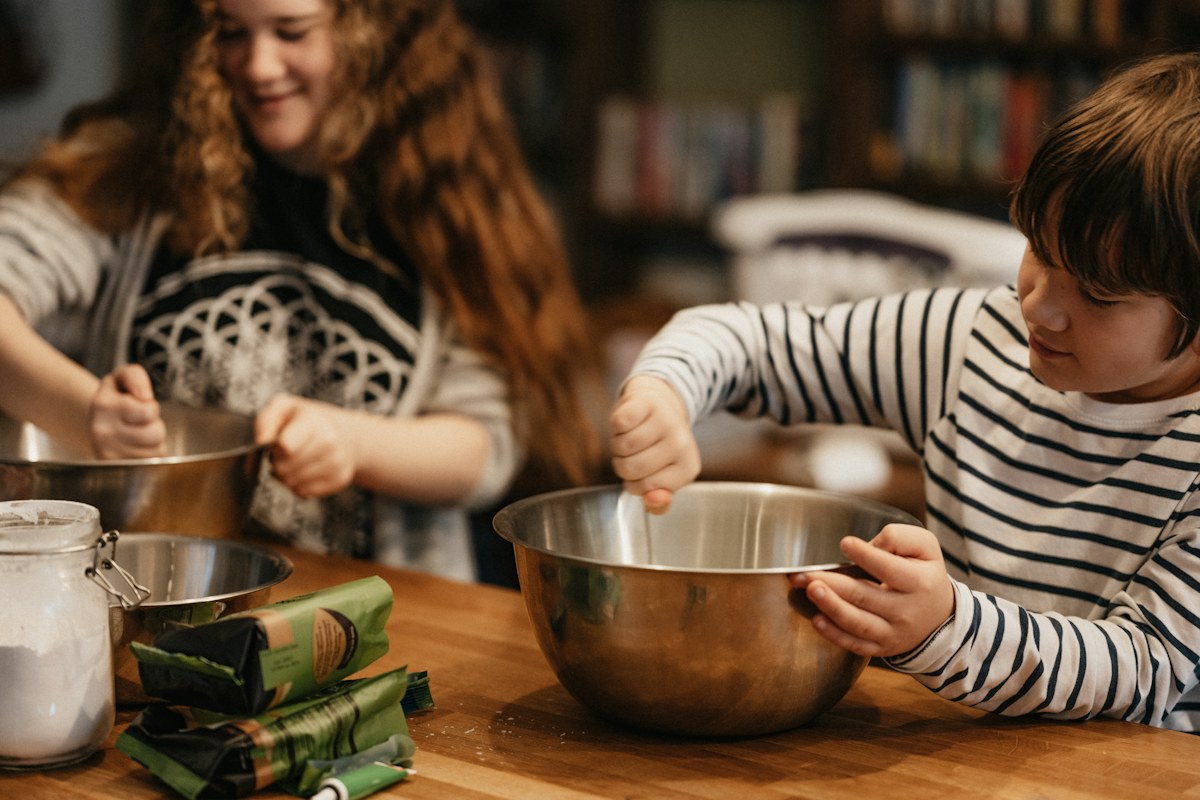
Put a little cool water and a spoon in an unbreakable bowl. One hand steadies the bowl while the other stirs slowly. Switch the direction of stirring, not the child’s natural hand preference. Keep the bowl stable and avoid hot liquids, sharp tools or small loose objects.
4. Build and separate
Use large interlocking bricks: one hand holds the tower and the other adds or removes a brick. Begin with pieces that connect easily. For children with reduced grip, larger blocks or magnetic-free foam pieces can be more manageable. Adults should check all materials for age-appropriate choking risks.
5. Ribbon reel
Give the child a short, wide fabric strip and a cardboard tube. One hand holds the tube while the other wraps the strip around it. Reverse the task by unrolling slowly. Do not use long cords around young children, and supervise closely.
6. Shared sheet balance
Two people hold the edges of a small towel and gently move a large soft ball towards the middle. The goal is cooperation, not keeping score. A child can sit, stand or work with a partner who holds part of the towel. Keep movements low and away from faces.
Make the difficulty adjustable
Begin with larger, lighter objects and a comfortable working height. Reduce the number of steps if the child loses track. Demonstrate the movement and invite the child to copy only if they wish. Do not insist on using a particular “dominant” hand: allow the child to find a comfortable way to take part.
For more whole-body activities, explore coordination and balance games. Children who enjoy cooperative play may also like our mirror movement games.
When to seek additional support
If coordination difficulties repeatedly interfere with dressing, eating, writing or play, discuss them with a health visitor, GP, school SENCO or children’s occupational therapy service. This article offers play ideas, not an assessment or treatment plan. Stop any activity that causes pain, distress or fatigue.
Try this three-step progression
- Show: Demonstrate the activity slowly using large, easy-to-hold objects.
- Share: Do the task together, with the adult stabilising equipment if needed.
- Choose: Invite the child to repeat, simplify or try a new version. Stop before frustration builds.
Notice what the child can do independently rather than counting perfect repetitions. Practising through play should feel useful and enjoyable.
Further reading: Berkshire Healthcare NHS: bilateral coordination and Somerset NHS: using both sides of the body.
Featured photograph: Annie Spratt / Unsplash.