
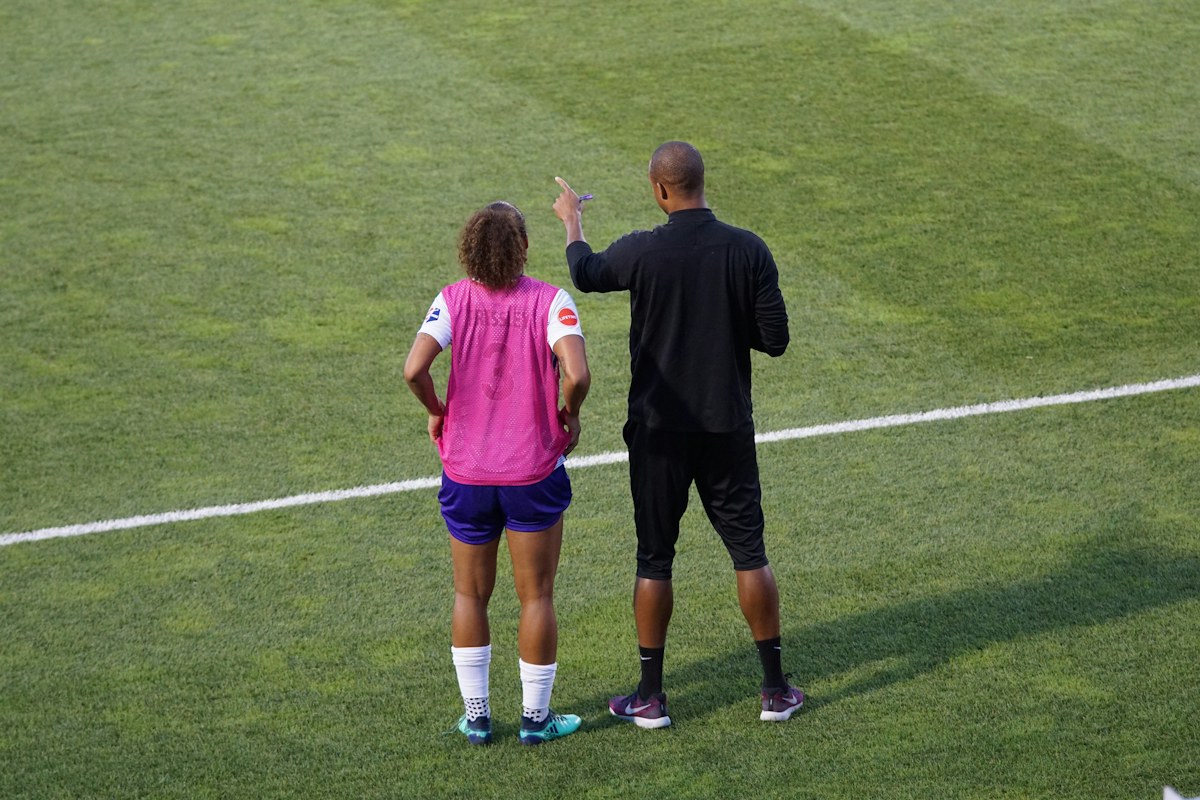
In children’s sport, a short instruction can be more useful than a long speech. A child might understand an activity immediately, need to see it demonstrated or prefer a written or pictured reminder. Noise, unfamiliar vocabulary and rapid changes can make even a simple game confusing.
Inclusive coaching starts with communication: explain the task clearly, provide more than one way to understand it, and let children show what works for them. The aim is not to create a separate set of expectations for every child, but to make participation easier for the whole group.
Begin by asking rather than assuming
Ask children how they like to receive instructions and what helps them take part. Families and support staff can share useful context, but the child’s preferences matter. Avoid assuming that every autistic child, disabled child or child with communication needs benefits from identical adjustments.
Seven communication habits for inclusive coaching
1. Say one useful thing at a time
Replace a long explanation with the immediate action: “Stand by a marker. Roll the ball towards the target. Wait for your partner.” Offer the next step after children have had time to process the first.
2. Demonstrate from a visible position
Show the movement where all participants can see, with enough space and suitable lighting. Consider how a child with visual impairment might access the demonstration through spoken description or safe, consent-based alternative guidance. Never assume that copying a physical movement is the only way to learn.
3. Use consistent start-and-stop signals
Before the activity, agree how the game starts, pauses and finishes. Depending on the group, combine spoken cues with a visible card or gesture. Make sure every participant can receive essential safety messages. Avoid relying only on a whistle if loud sounds cause distress and an alternative is practical.
4. Show the activity sequence
A small board might read “warm up → practise → game → finish”. Some children benefit from knowing how long a station will last or what happens next. Explain changes before they happen where possible.
5. Offer meaningful choices
For a target game, a child could roll or gently throw, choose a larger target or move closer. A child might play seated or standing, depending on comfort and suitability. Choices should support real involvement rather than giving a token role away from peers.
6. Check understanding without putting anyone on the spot
Instead of asking “Does everyone understand?” invite a volunteer to demonstrate, show the first action again or ask the group to point to the correct station. A child who needs clarification should not be criticised for asking.
7. Create a predictable way to pause
Agree on a word, hand gesture or card for requesting a break. Provide a suitably supervised space and a straightforward way to rejoin when ready. A break is not a penalty or a sign that a child has failed the task.
The Show–Say–Check coaching routine
- Show: demonstrate a simple version of the activity or provide an accessible alternative.
- Say: give a short instruction using familiar words.
- Check: invite children to begin, then notice whether the instructions and equipment are working.
- Adapt: adjust one feature such as distance, equipment, noise or pace based on feedback.
For example, in a rolling game, a coach might show the target, say “Roll to the blue circle”, watch children try, and then offer a larger target or a closer position if needed.
Practical adaptations for different communication needs
- For children who prefer visual structure: use cards, diagrams and a consistent activity sequence.
- For deaf or hard-of-hearing children: face the group when speaking, keep your face visible and agree on accessible start and safety signals. Ask about communication preferences.
- For children with visual impairments: give clear verbal descriptions of boundaries and equipment, check accessible routes and seek specialist advice for unfamiliar activities.
- For children who use AAC or communicate without speech: allow enough response time and treat gestures, devices and picture choices as valid communication.
- For children sensitive to noise: reduce unnecessary background noise and provide a quiet option where feasible without compromising supervision.
These suggestions align with Activity Alliance’s principles, which emphasise listening to disabled participants and making activity relevant and welcoming. They also complement the inclusive-school-sport work described in the Inclusion 2028 programme.
A coach’s two-minute pre-session checklist
- Can children see, hear or otherwise access the key instructions?
- Are start, stop and safety signals agreed and accessible?
- Can children choose a suitable way to complete the activity?
- Is there an appropriate supervised pause option?
- Is there a way to ask for clarification without embarrassment?
- Have safeguarding, individual support plans and environmental risks been checked?
Frequently asked questions
Do accessible instructions mean making every game easy?
No. The aim is to remove unnecessary barriers while keeping the activity suitably challenging and meaningful for each participant.
What if a child cannot follow a spoken instruction?
Offer a demonstration, visual support or another communication format, and ask what works best for them.
Should coaches use the same adaptation for every child with a diagnosis?
No. Needs and preferences differ. Start with the individual child and review what actually helps.
Related reading: See our guide to adapting equipment, space and rules and sensory-friendly PE checklist.
General guidance for appropriately trained and supervised coaches. Follow your organisation’s safeguarding, accessibility and safety procedures and any individual support plans.