
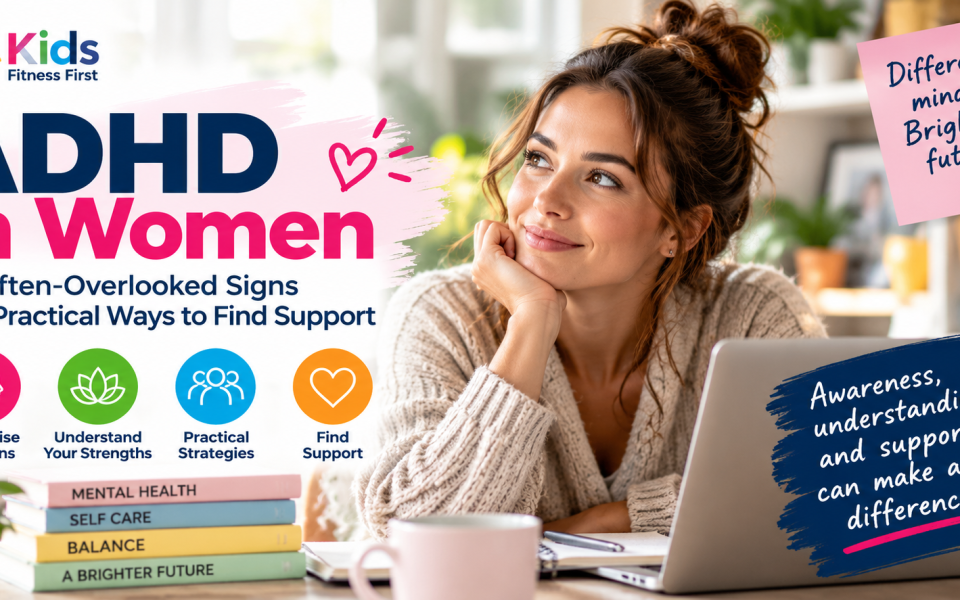
ADHD in Women: 10 Often-Overlooked Signs and Practical Ways to Find Support
Explore how ADHD can appear in women, why signs are sometimes overlooked, and practical strategies for daily life.
Article archive
Explore how ADHD can appear in women, why signs are sometimes overlooked, and practical strategies for daily life.
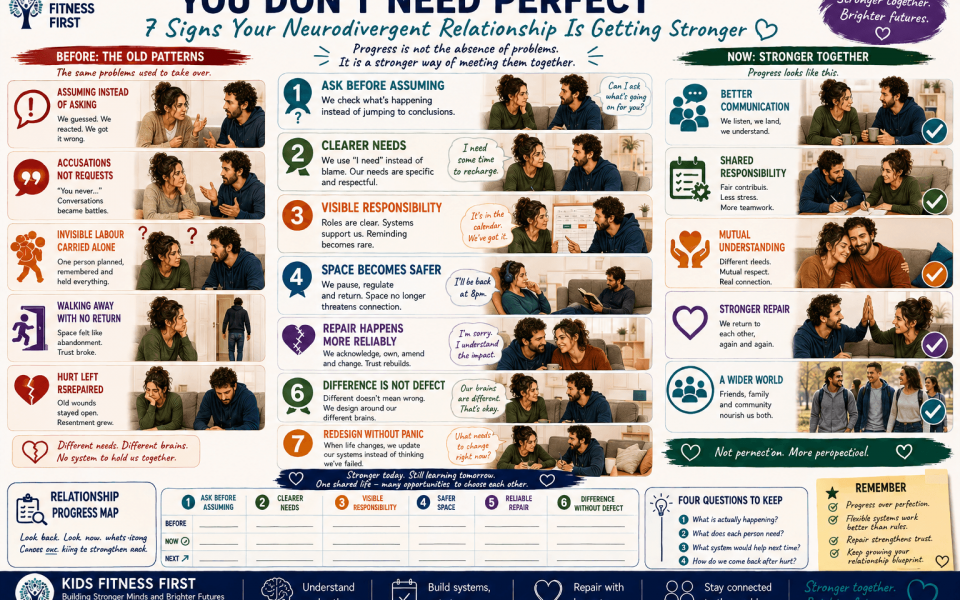
Neurodivergent relationship progress is rarely a dramatic transformation. Instead, it often appears in smaller changes: fewer assumptions, clearer requests, faster repair, fairer responsibility and more confidence that difficult moments can be handled together. These seven signs can help couples recognise growth they may otherwise overlook.
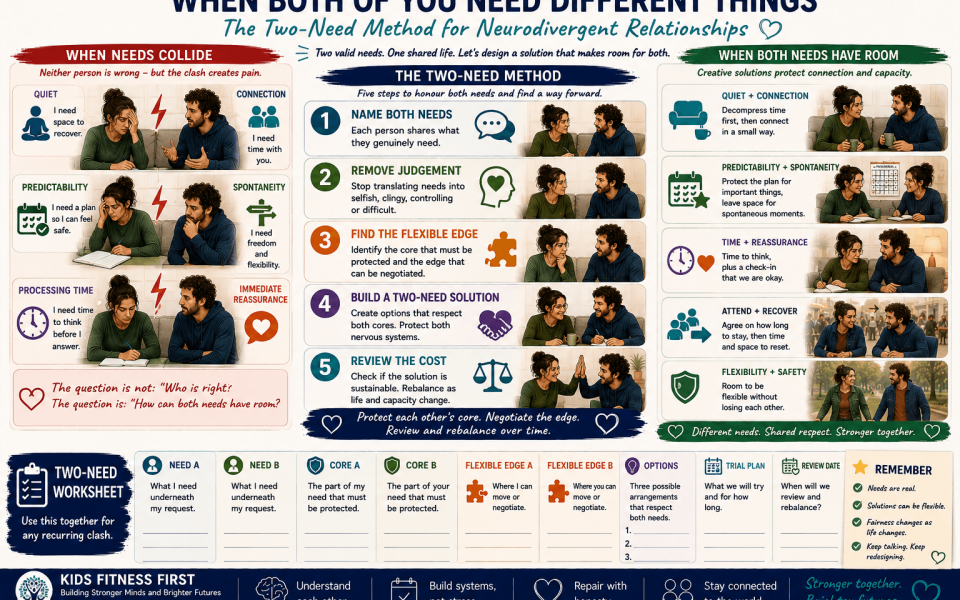
Neurodivergent relationship needs can pull in opposite directions. One partner may need quiet while the other needs connection; one may need predictability while the other needs flexibility. The Two-Need Method helps couples stop arguing about whose need is more legitimate and start designing a solution that respects both.
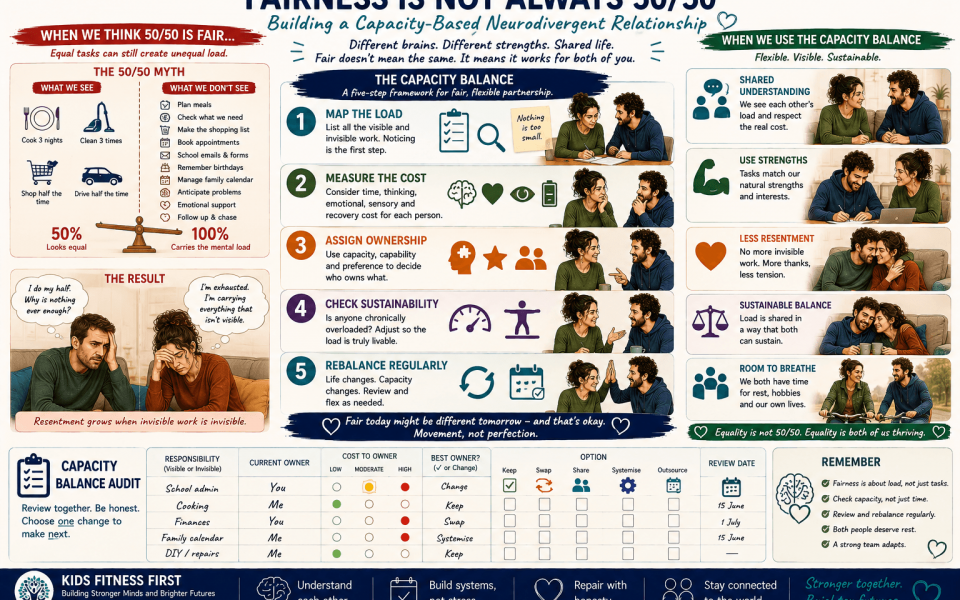
Neurodivergent relationship fairness does not always mean splitting every task exactly in half. Different brains, energy levels, skills and life demands mean that equal partnership may require different contributions at different times. The Capacity Balance helps couples distinguish healthy flexibility from chronic imbalance.
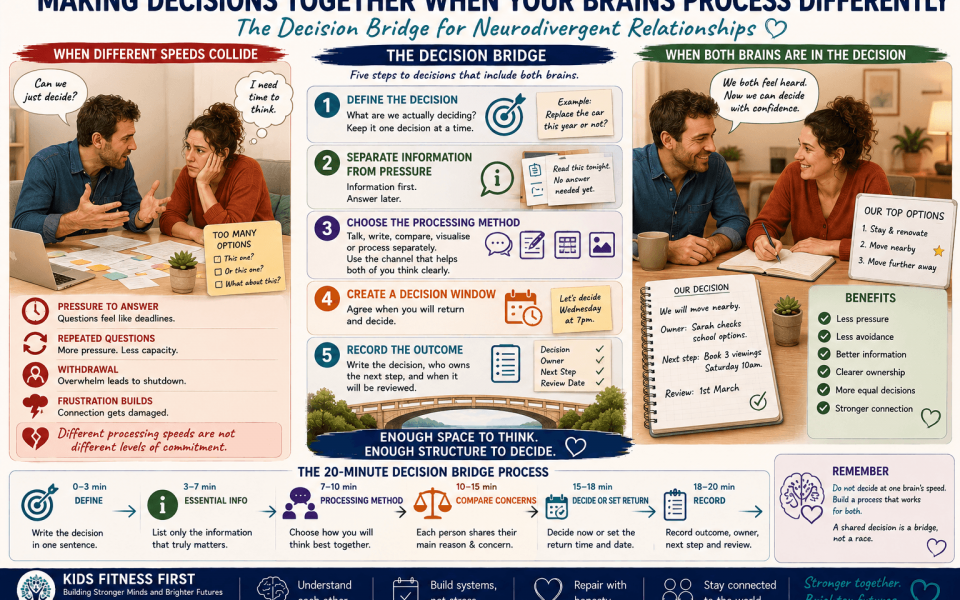
Neurodivergent relationship decision making can become frustrating when one partner thinks aloud and wants an answer quickly while the other needs time, structure or written information before responding. The five-step Decision Bridge helps couples make shared decisions without turning different processing styles into pressure, avoidance or conflict.

Taking space during conflict can be healthy, especially when a neurodivergent nervous system becomes overloaded. However, disappearing without explanation can feel like rejection or punishment. The Safe Pause Protocol helps couples pause, regulate and return without turning necessary space into emotional distance.
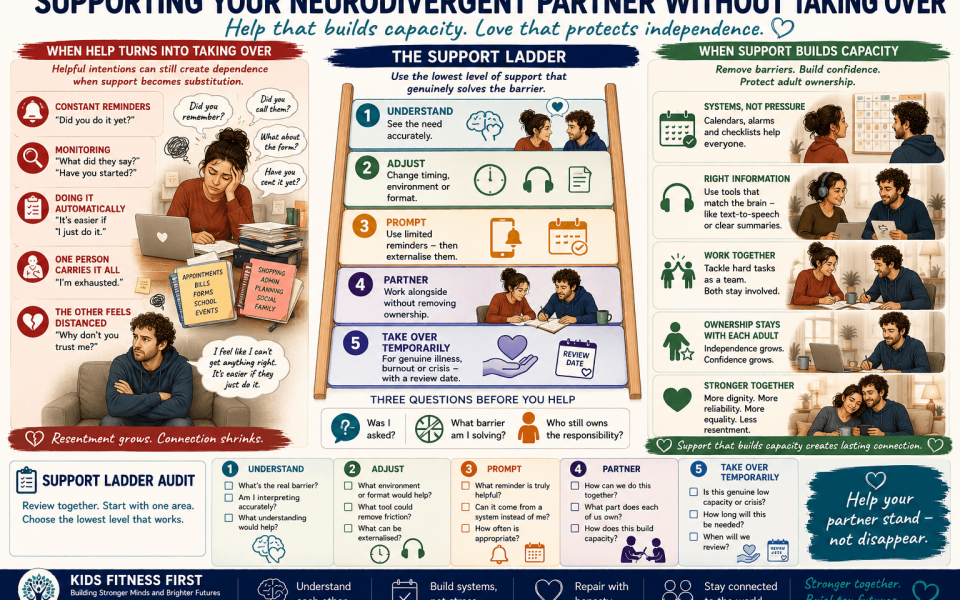
Supporting your neurodivergent partner can become complicated when helpful actions gradually turn into reminders, monitoring, rescuing and taking over. The Support Ladder offers five levels of help so couples can match support to the actual need while protecting adult responsibility and relationship equality.
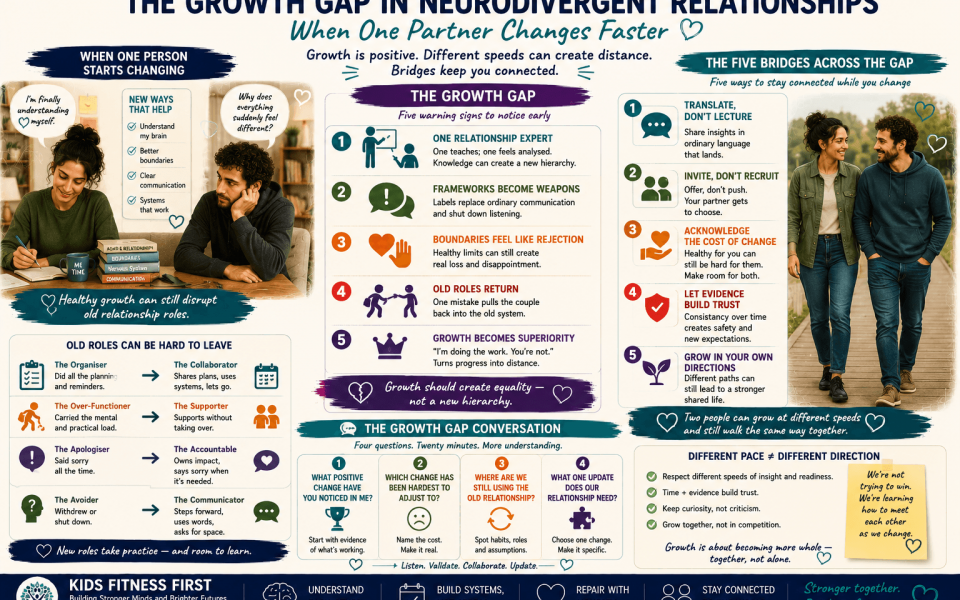
A neurodivergent relationship growth gap can appear when one person begins understanding their brain, setting boundaries, using new systems or communicating differently while the other partner remains more comfortable with the old relationship. Growth is positive. However, when change happens at different speeds, it can create confusion, resentment and distance unless both people understand what is happening.
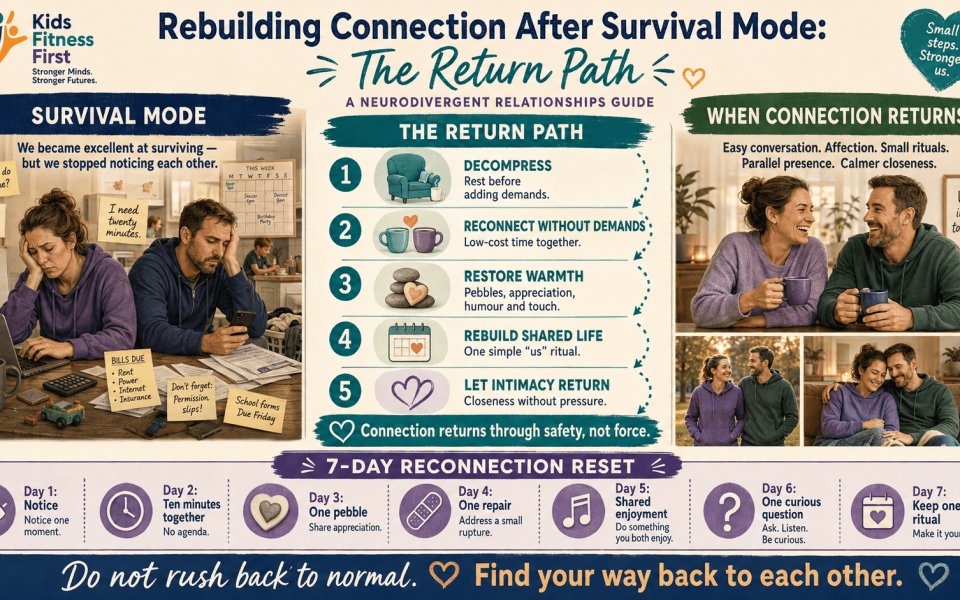
Rebuilding connection after survival mode can feel surprisingly difficult. Although the crisis may be easing, couples often discover that practical functioning returns before affection, curiosity or intimacy. A five-stage Return Path can help two exhausted nervous systems find their way back without forcing closeness too quickly.
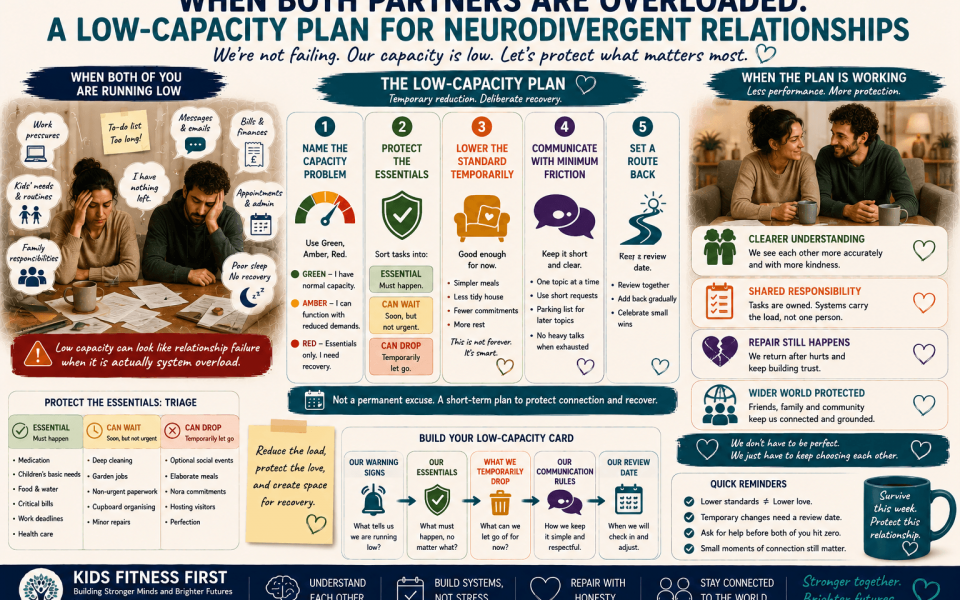
Neurodivergent relationship overload becomes particularly difficult when neither partner has enough capacity to compensate for the other. Instead of demanding normal performance during an abnormal period, couples can temporarily reduce expectations, protect essential responsibilities, communicate capacity clearly and create a planned route back.
Download the FREE first chapter of The X Variable and discover every child’s hidden strengths.
Instant PDF Download
Practical Guidance