
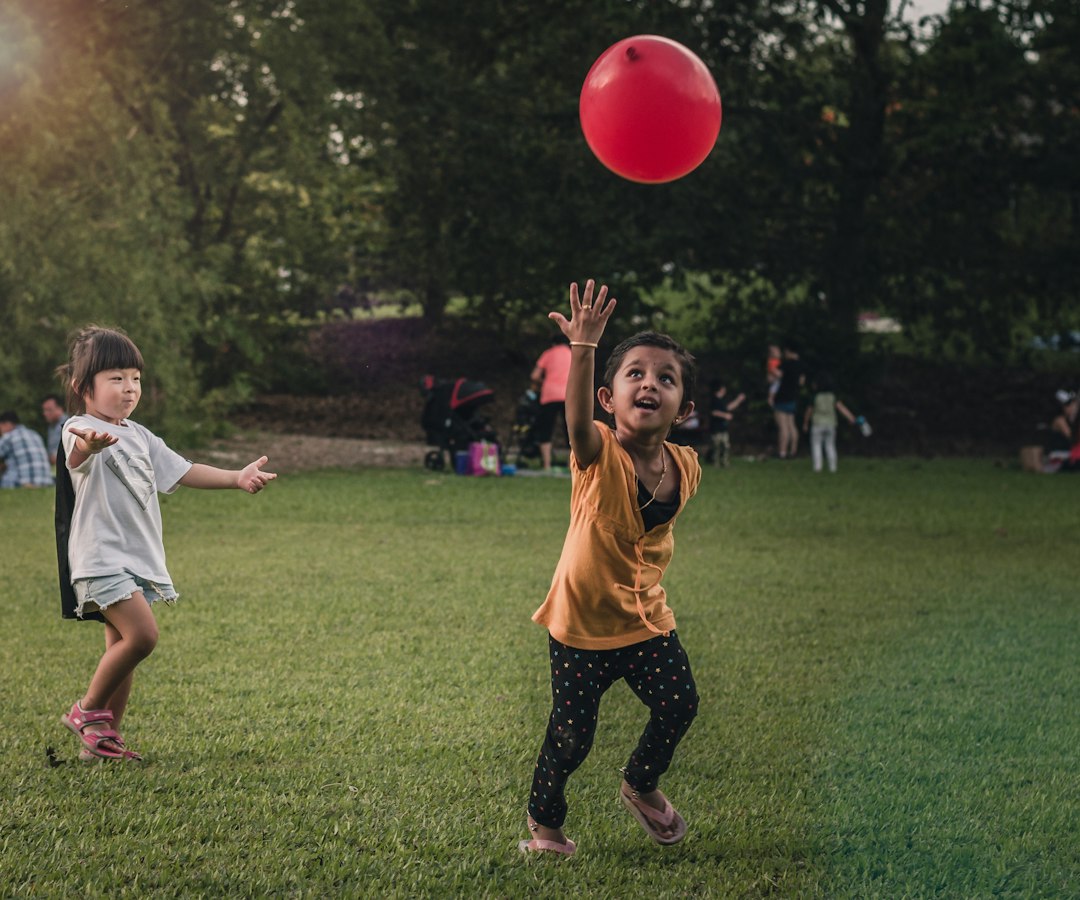
A five-year-old and a twelve-year-old may enjoy very different things. One wants to run; the other wants to organise. One likes loud games; the other needs quiet. When siblings of different ages play together, the aim should not be to make everyone perform the same movement at the same speed.
These eight cooperative games give each child a role, with ideas for adapting activities to different abilities, energy levels and communication preferences.
Start with one shared rule: everyone belongs
Before choosing a game, explain that nobody will be eliminated for moving slowly or choosing a different role. Give children permission to pause, watch or suggest changes. Supervise according to age and needs, and make sure older siblings are not automatically expected to act as carers or coaches.
Eight mixed-age movement games
1. Build-a-path
Use cushions, paper markers or safe floor spots to create a pathway through a room. One child chooses the route, another decides which movements happen at each stop, and another demonstrates. Children can walk, wheel, reach or point along the path. Avoid unstable obstacles, clutter and trip hazards.
2. The shared treasure delivery
Move soft toys or beanbags from one basket to another together. A younger child might choose the toy while an older child plans the route. Swap jobs between rounds. A seated player can be in charge of sorting, tossing gently into a nearby basket or giving directions.
3. Animal-movement storyteller
Take turns inventing a story in which each character moves differently. The “owl” might open its arms; the “tortoise” might move slowly. Adapt every action so children can take part comfortably, including upper-body or hand movements.
4. Mirror and switch
One child chooses a slow movement, and the group copies it. After a few turns, another child leads. Keep movements gentle and allow children to opt for gestures rather than full-body copies. There is no need to make the moves increasingly difficult.
5. Colour-spot missions
Place large coloured cards around a suitable space. Call a colour and let children choose how to travel towards it or point to it. Older children can invent new instructions, such as “Find two colours next to each other.” Keep floor cards securely positioned to prevent slipping.
6. Make-a-pattern movement
Build a three-part sequence: clap, reach, turn. Everyone contributes one move. A child who finds sequencing difficult can lead with a single action, use pictures or join just part of the pattern. Keep the routine short enough for everyone to enjoy.
7. Together-time target game
Set up a large soft target, such as a basket. Children take turns rolling or gently throwing a soft ball from distances that suit them. Instead of comparing scores, celebrate the number of different ways the group can make the game work.
8. Family mini-adventure
Choose three “stations”: a safe place to stretch, a spot to look for colours and a place to tell a short story. Let each child choose a station. The whole adventure might last ten minutes, or less if attention and comfort call for a shorter activity.
Make the games fair without making them identical
Fairness does not mean every child gets the same equipment, time limit or job. It means everyone has a meaningful opportunity to contribute. Try changing one feature at a time:
- Equipment: use larger or softer objects, a closer target, or a textured item where suitable.
- Space: shorten routes or provide more room for mobility aids.
- Communication: show pictures, demonstrate each step or offer a non-speaking response option.
- Roles: include builder, mover, caller, observer and storyteller roles.
- Pace: remove countdowns and races if they make the game less welcoming.
This approach reflects the broader principle of listening to each participant and adapting activity to their preferences, as discussed in Activity Alliance’s Ten Principles.
A ten-minute example for a busy afternoon
- Minute 1–2: each child chooses one movement or role.
- Minute 3–5: play Build-a-path together.
- Minute 6–8: switch to Treasure delivery or Mirror and switch.
- Minute 9–10: let each child say or show what they liked, then finish.
The minutes are suggestions, not a performance goal. If children want to stop, allow that. The NHS family movement guidance encourages families to find small, enjoyable opportunities to be active together.
Frequently asked questions
What if one sibling always takes over?
Assign rotating roles before starting. Let each child make one choice and avoid making the older child responsible for the younger one’s behaviour.
Can a child participate without running?
Yes. Seated actions, pointing, choosing equipment or making up the story can all be meaningful contributions.
What if siblings have very different sensory needs?
Offer quiet and lively options and agree on volume and space before playing. Short separate turns may work better than forcing one activity on everyone.
Related activities: Explore inclusive partner-passing games and our scarf and beanbag games for more adaptable family ideas.
Choose age-appropriate equipment and supervision. Adapt activities to any existing individual support or safety plans.