

Sensory-Friendly Physical Activities for Autistic and Neurodivergent Children
Explore sensory-friendly physical activities for autistic and neurodivergent children, with adaptable ideas for sound, movement, space and choice.
Article archive
Explore sensory-friendly physical activities for autistic and neurodivergent children, with adaptable ideas for sound, movement, space and choice.

A strengths-based guide for parents and educators supporting neurodivergent children and different learning needs.

Explore how ADHD can appear in women, why signs are sometimes overlooked, and practical strategies for daily life.
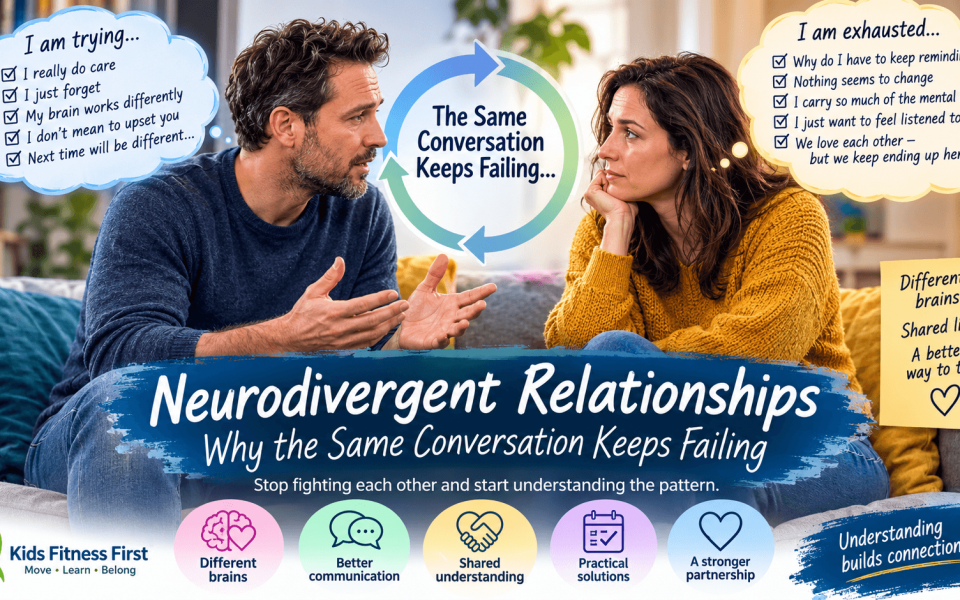
In neurodivergent relationships, the most damaging arguments are often not the biggest ones. Instead, they are the conversations that return again and again without producing a different outcome. Understanding the pattern behind those conversations can be the first step towards changing them.

Adult ADHD and sustainable change is not about becoming a different person. It is about understanding what helps you function well and building practical systems around your attention, energy, time and priorities. In this final article of The X Blueprint series, we bring the strategies together into a realistic plan for lasting progress.

Adult ADHD and digital overload can make it difficult to protect attention when messages, apps, alerts and endless scrolling compete for focus. By reducing unnecessary notifications, simplifying your digital environment and creating clear screen boundaries, you can make technology work for you rather than against you.
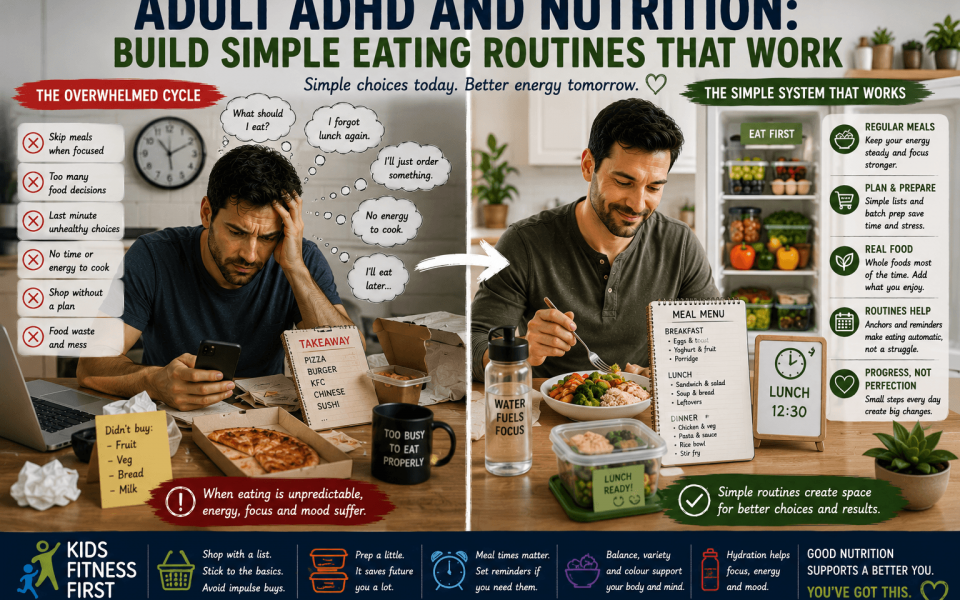
Adult ADHD and nutrition can become difficult when busy days, forgotten meals, decision fatigue and low energy make eating regularly harder. Simple meal routines, visible food, easy options and a small amount of preparation can reduce daily decisions and make eating well feel more manageable.
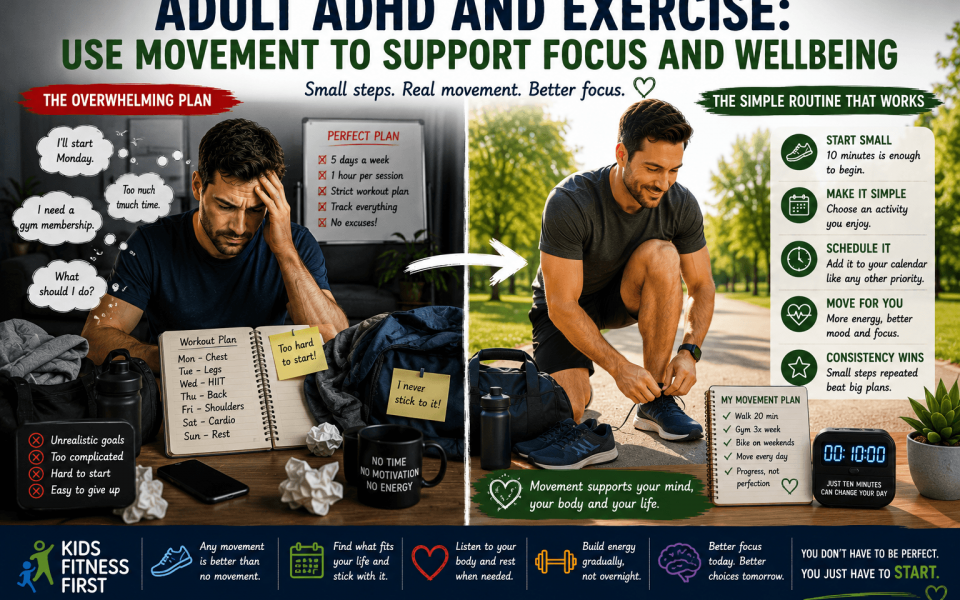
Adult ADHD and exercise can be a useful combination when movement is realistic, enjoyable and easy to repeat. By reducing barriers, matching activity to your energy and using short, manageable sessions, you can make movement a more natural part of everyday life.
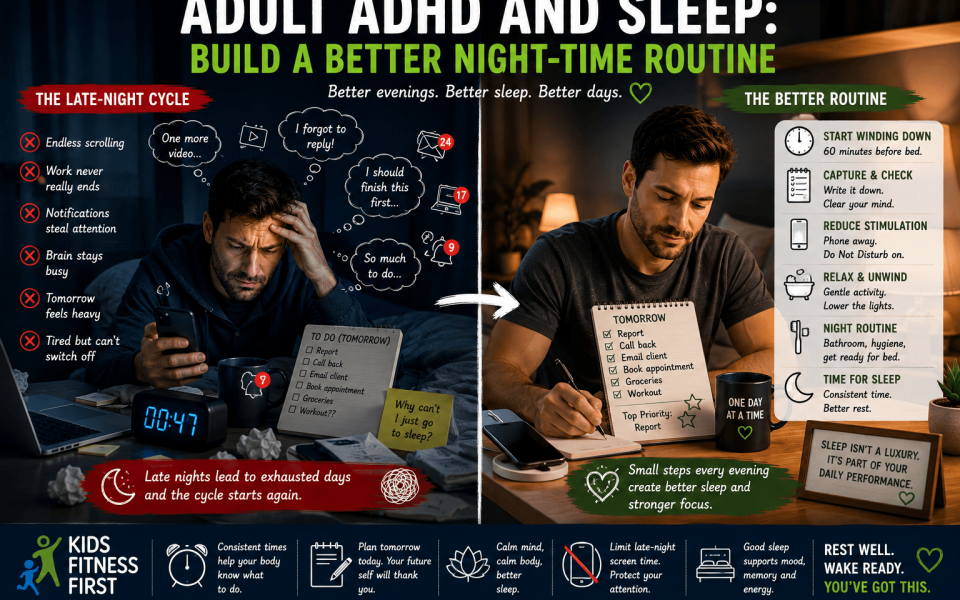
Adult ADHD and sleep can become difficult when a busy mind, poor sense of time and late-night distractions make it hard to switch off. By creating a realistic wind-down routine, reducing stimulation and preparing for tomorrow earlier, you can build a calmer and more consistent approach to bedtime.
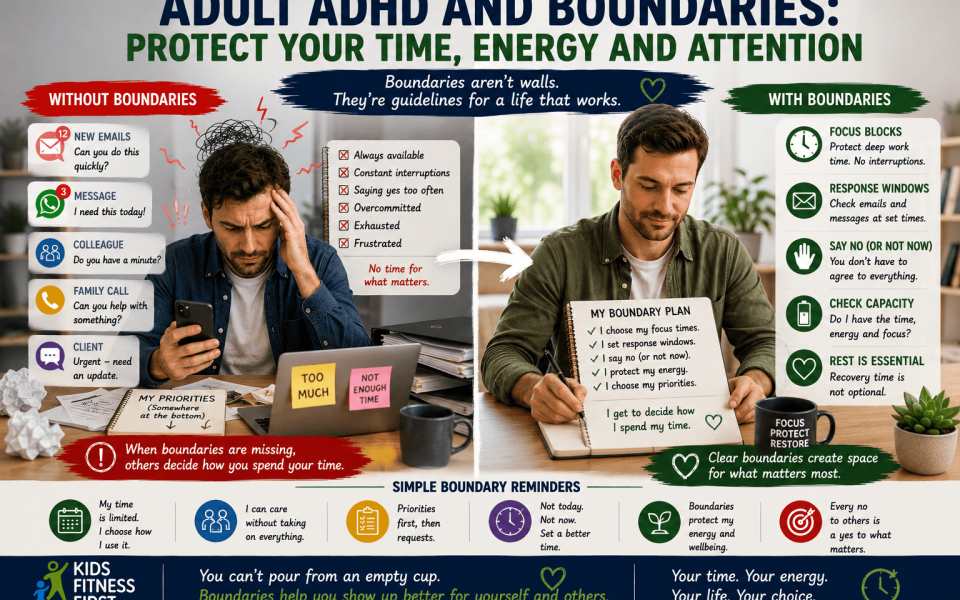
Adult ADHD and boundaries can become difficult when other people’s requests, interruptions and expectations constantly compete for your attention. By creating clearer limits around time, communication and availability, you can protect energy, reduce overwhelm and make space for the things that matter most.
Download the FREE first chapter of The X Variable and discover every child’s hidden strengths.
Instant PDF Download
Practical Guidance